Giriraj Singh spotlights Maharashtra weaver Chaitali under Samarth
Synopsis
Union Textiles Minister Giriraj Singh spotlighted Chaitali Arvind, a Maharashtra woman who used Samarth scheme training to master traditional handloom weaving, secure her livelihood, and inspire other village women — showcasing grassroots impact of the Ministry's flagship skilling programme.
Key Takeaways
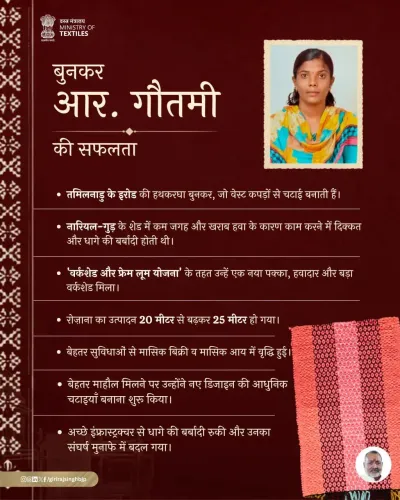
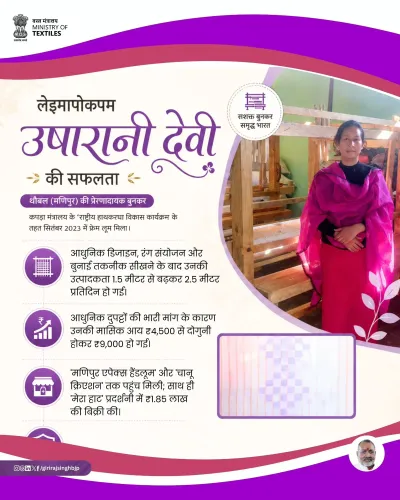
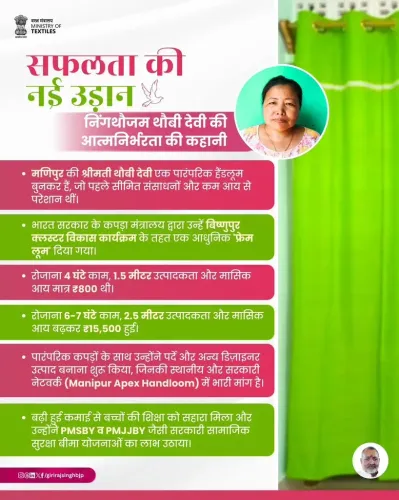
Chaitali Arvind from Maharashtra was trained in traditional handloom weaving under the Samarth scheme run by the Ministry of Textiles.
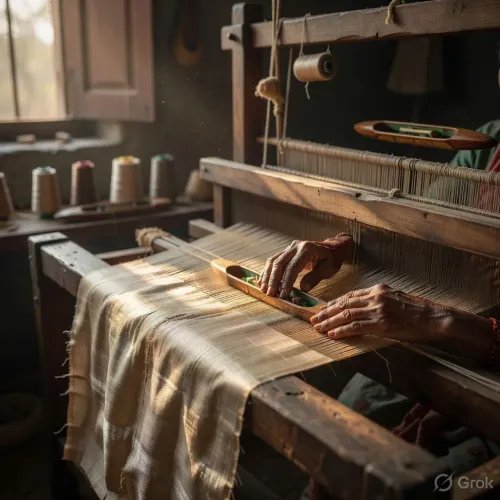
She has used the training to build her own livelihood and is now mentoring other women in her village to take up the craft.
The Samarth scheme was launched in 2017 to provide vocational skilling across the textile value chain, with a strong focus on women in rural areas.
Handloom weaving remains one of India's largest rural employment sectors, with women forming the majority of its workforce.
Minister Giriraj Singh framed Chaitali's story as an example of traditional craft becoming the foundation of Aatmanirbhar (self-reliant) livelihoods.
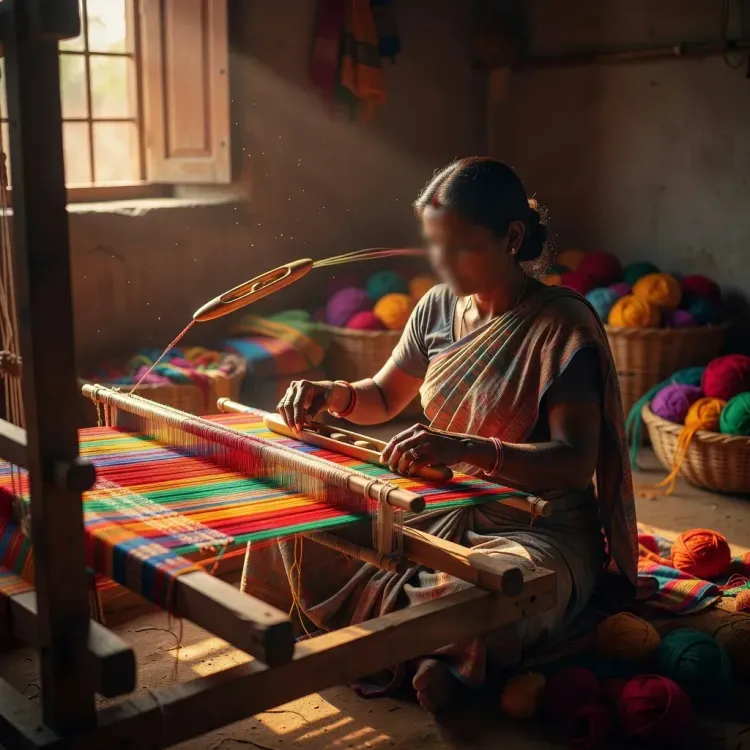
A woman from rural Maharashtra turned a loom into a ladder — and now she is pulling others up with her. Union Textiles Minister Giriraj Singh on Tuesday, 13 October 2026 highlighted the story of Chaitali Arvind, a Maharashtra-based handloom weaver who leveraged government skill training to build economic independence and became a local mentor in the process.
Sharing her journey on X, the Minister wrote: 'महाराष्ट्र की चैताली अरविंद जी ने पारंपरिक हथकरघा बुनाई को आत्मनिर्भरता का आधार बनाया' — 'Chaitali Arvind of Maharashtra has made traditional handloom weaving the foundation of her self-reliance.' He added that, trained under the Samarth scheme, she is today not only securing her own livelihood but also inspiring other women in her village to join the craft.
What the Samarth scheme actually does for weavers like Chaitali
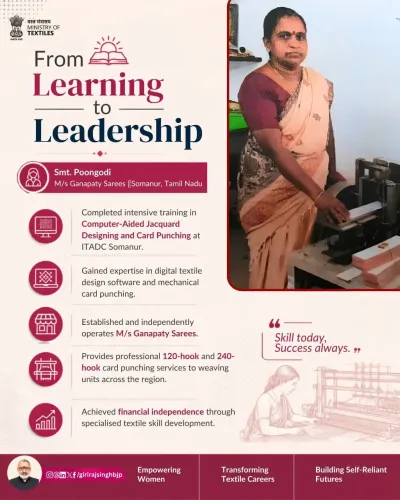
The Samarth (Scheme for Capacity Building in Textile Sector) was launched in 2017 by the Ministry of Textiles to deliver vocational training across the entire textile value chain — from spinning and weaving to garmenting and technical textiles. Its explicit focus on women in rural and semi-urban clusters makes it one of the more targeted skilling instruments in the sector.
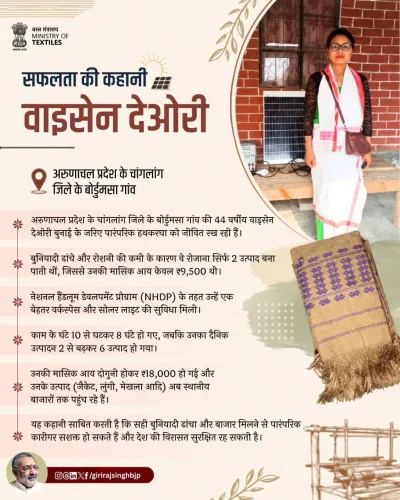
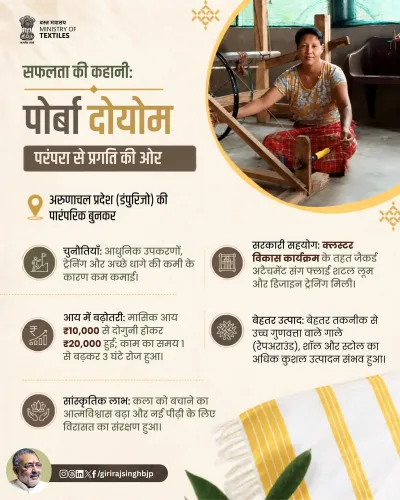
Handloom weaving sits at the heart of that mandate. India's handloom sector — one of the largest in the world — employs millions, the majority of them women. Yet generational knowledge of traditional weaves has long struggled to translate into stable incomes, squeezed by cheap power-loom alternatives and limited market access. Samarth attempts to bridge that gap by giving artisans not just technique, but livelihood pathways.
One weaver, one village — and the ripple effect
What makes Chaitali's story politically useful to the Ministry — and genuinely worth watching — is the multiplier dimension. She is not simply a beneficiary; she is a recruiter. By inspiring neighbouring women to take up the craft, she extends the scheme's reach without additional government outreach costs. This peer-led diffusion is exactly the grassroots model policymakers hope Samarth will trigger at scale across Maharashtra's handloom clusters.
Maharashtra has a rich tradition of handloom textiles — from the Paithani silk saree of Aurangabad to the Yeola brocade weaves — and state-level cluster development programmes have periodically complemented central schemes. Progress on Samarth's training targets in the state, and whether cluster-level infrastructure investments follow individual skill grants, will determine how many more Chaitalis the programme can produce.
For now, one woman with a loom and a sense of purpose is doing what policy documents rarely can: making the abstract idea of Aatmanirbhar Bharat visible, thread by thread, in a Maharashtra village.
Point of View
So amplifying a self-sustaining success story serves a dual purpose: political optics and a policy nudge toward peer-led community outreach as a cost-effective scale model. The emphasis on a woman who both earns and mentors also feeds neatly into the ruling party's dual narrative of women's empowerment and revival of traditional crafts — two threads the BJP has consistently woven together since the launch of the National Handloom Day in 2015.
NationPress
13 Oct 2026
Frequently Asked Questions
What is the Samarth scheme in India?
The Samarth (Scheme for Capacity Building in Textile Sector) is a Ministry of Textiles programme launched in 2017 to provide vocational skill training across the textile value chain — including handloom weaving, garmenting, and technical textiles — with a focus on women in rural areas.
Who is Chaitali Arvind from Maharashtra?
Chaitali Arvind is a Maharashtra-based woman who received handloom weaving training under the Samarth scheme and has since built her livelihood around traditional weaving while inspiring other women in her village to join the craft.
What did Giriraj Singh post about Maharashtra handloom weavers?
Union Textiles Minister Giriraj Singh shared the story of Chaitali Arvind on X on 13 October 2026, highlighting how Samarth scheme training helped her turn traditional handloom weaving into a path to self-reliance and community leadership.
How does the Samarth scheme help women weavers?
Samarth provides structured vocational training in textile skills including handloom weaving, helping women in rural and semi-urban areas convert traditional craft knowledge into stable incomes and formal livelihood pathways.
What are Maharashtra's famous handloom traditions?
Maharashtra is known for several traditional handloom textiles, including the Paithani silk saree from Aurangabad and the Yeola brocade weaves — crafts that state and central government programmes have sought to revive and sustain.