Giriraj Singh Highlights Manipur Weaver Empowered by Bishnupur Cluster Scheme
Synopsis
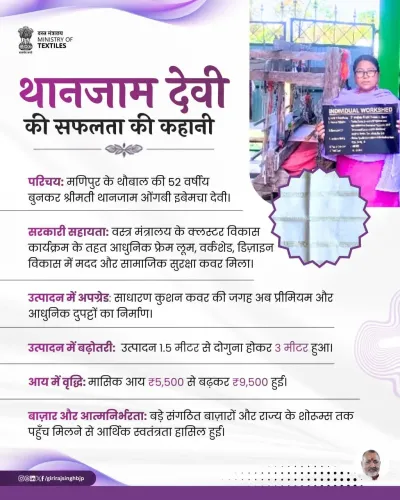
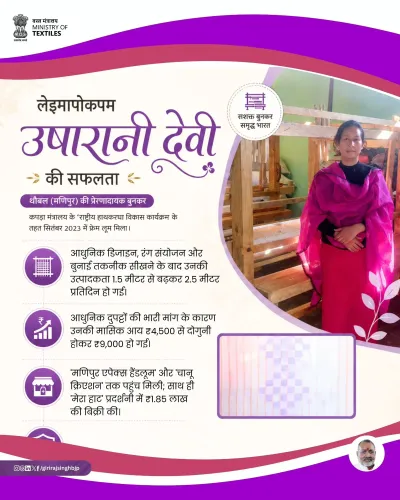
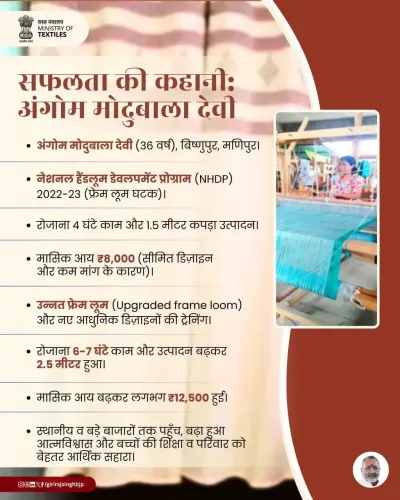
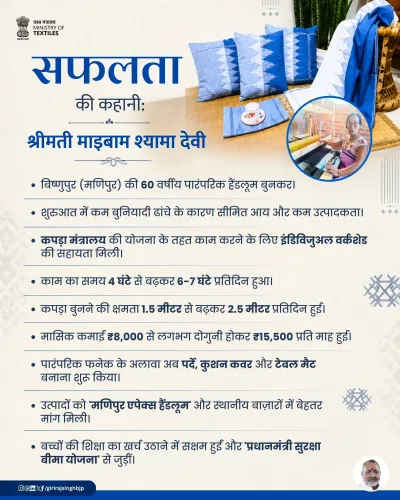
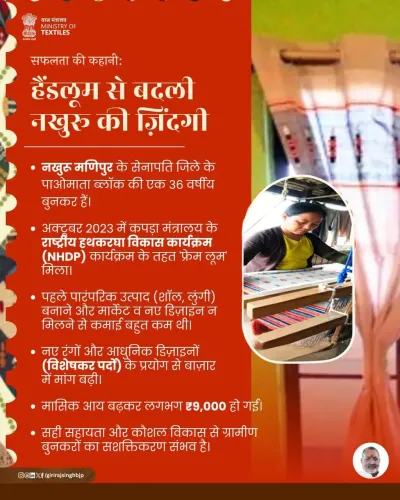
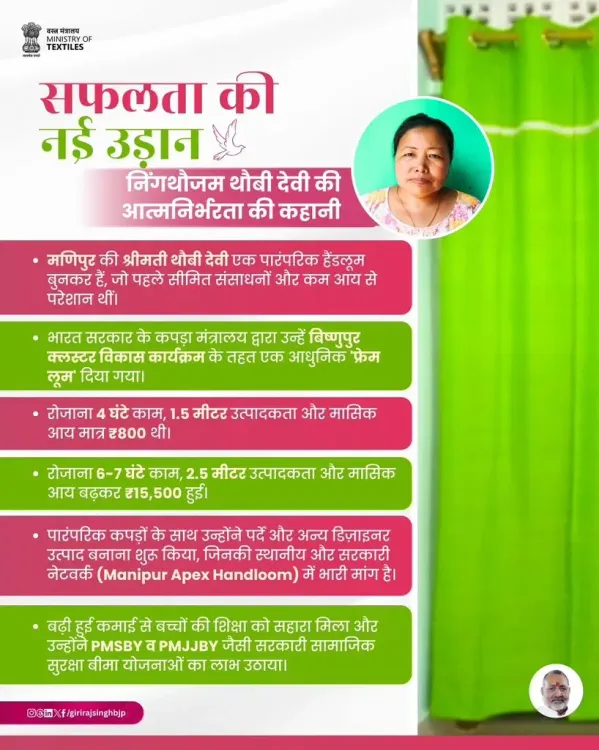
Union Textiles Minister Giriraj Singh has highlighted the story of Manipur weaver Thaobi Devi, whose livelihood was transformed by a modern frame loom provided under the Ministry of Textiles' Bishnupur Cluster Development Programme, citing her as an example of women-led self-reliance under the Viksit Bharat vision.
Key Takeaways
Union Textiles Minister Giriraj Singh highlighted the case of Smt.
Thaobi Devi , a traditional weaver from Manipur , on 31 May 2026 .
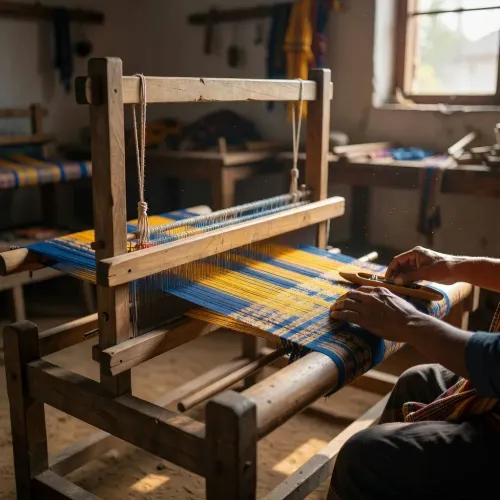
Thaobi Devi received a modern frame loom under the Bishnupur Cluster Development Programme run by the Ministry of Textiles .
The equipment is credited with raising her monthly income and linking her craft to larger markets.
The cluster programme draws on a policy lineage dating to the Integrated Handloom Cluster Development Scheme of the 11th Five Year Plan and the National Handloom Development Programme launched in 2015 .
The Northeast has been a priority region for handloom modernisation given its predominantly women-led weaving workforce.
The ministry is expected to announce further cluster expansions; handloom budget allocations in the forthcoming Union Budget will be a key signal for the sector.
Union Textiles Minister Giriraj Singh on Sunday, 31 May 2026, highlighted the story of Smt. Thaobi Devi, a traditional handloom weaver from Manipur, crediting the Ministry of Textiles' Bishnupur Cluster Development Programme with transforming her livelihood through the provision of a modern frame loom.
Context
In his post, the Minister wrote: 'मणिपुर की पारंपरिक बुनकर श्रीमती थौबी देवी जी के हौसले और कड़ी मेहनत ने आत्मनिर्भरता का एक नया अध्याय लिखा है' ('The courage and hard work of Manipur's traditional weaver Smt. Thaobi Devi has written a new chapter of self-reliance'). He noted that the modern 'frame loom' provided under the cluster programme had not only raised her monthly income to new heights but also connected her skills to larger markets.
Singh concluded with a call to action: 'Let us together honour the unique skill of our country's weavers,' framing women's empowerment as the 'true identity of a Viksit Bharat' (developed India). The post was tagged with #VocalForLocal, #EmpoweringWomen, #HandloomWeavers, #ManipurCrafts, and #MinistryOfTextiles.
Policy Backdrop
The Bishnupur handloom cluster in Manipur is supported under the central government's cluster-based handloom development framework, whose lineage traces to the Integrated Handloom Cluster Development Scheme introduced during the 11th Five Year Plan. The National Handloom Development Programme, launched in 2015, further consolidated these efforts by providing technology support, skill upgradation, and market linkages to weavers across the country.
The Northeast has been a particular focus of these interventions, given the region's deep-rooted weaving traditions and the predominantly women-led nature of its handloom workforce. Providing modern equipment such as frame looms is a central pillar of the ministry's technology upgradation strategy, aimed at improving productivity without displacing traditional craft identity.
Stakeholders and Impact
Women artisans in Manipur and the broader Northeast constitute the primary beneficiaries of cluster development programmes. By connecting individual weavers like Thaobi Devi to larger markets through organised clusters, the ministry aims to reduce dependence on middlemen and improve net income at the household level.
The Vocal for Local and Atmanirbhar Bharat frameworks have provided political and policy momentum to such initiatives, positioning handloom products as symbols of cultural identity with viable commercial futures. Buyer-seller meets and e-commerce linkages have been used alongside equipment support to widen market access for cluster beneficiaries.
What's Next
The Ministry of Textiles is expected to announce the next round of cluster programme expansions and buyer-seller meets in the coming months. Allocations for handloom modernisation in the forthcoming Union Budget will be closely watched by weaver communities and industry stakeholders as an indicator of the government's continued commitment to the sector.
The spotlight on individual beneficiaries such as Thaobi Devi signals a broader communications strategy by the ministry to document and publicise ground-level outcomes of cluster schemes, reinforcing the government's narrative around inclusive, women-led economic growth in India's textile heartlands.
Point of View
Two themes that have been central to BJP's welfare communication since 2020. The focus on Manipur is politically significant: the Northeast has been a sustained outreach priority, and spotlighting a woman artisan from the region serves both developmental and electoral optics. Analysts will watch whether such social-media spotlights translate into measurable budget increases for handloom modernisation in the upcoming Union Budget.
NationPress
15 Oct 2026
Frequently Asked Questions
Who is Thaobi Devi and why is she in the news?
Smt. Thaobi Devi is a traditional handloom weaver from Manipur who came to prominence after Union Textiles Minister Giriraj Singh highlighted her story on 31 May 2026, noting that a modern frame loom provided under the Bishnupur Cluster Development Programme had significantly raised her monthly income.
What is the Bishnupur Cluster Development Programme?
The Bishnupur Cluster Development Programme is a central government initiative run by the Ministry of Textiles to support handloom weavers in Bishnupur, Manipur, by providing modern equipment, skill upgradation, and market linkages under the broader National Handloom Development Programme framework.
What is a frame loom and how does it help weavers?
A frame loom is a modern weaving device that improves productivity and output quality compared to traditional pit looms, enabling weavers to produce more fabric in less time and access larger, more organised markets — a key goal of the Ministry of Textiles' technology upgradation efforts.
What is the National Handloom Development Programme?
The National Handloom Development Programme was launched in 2015 to provide sustainable livelihoods, technology support, and market linkages to handloom weavers across India, with a particular focus on cluster-based development in states like Manipur.
What is Giriraj Singh's role in the textile sector?
Giriraj Singh is the Union Minister of Textiles, a senior BJP leader and Lok Sabha MP from Begusarai, Bihar, responsible for policy oversight of India's handloom, handicraft, and textile industry including cluster development programmes.