Assam CM Sarma Plans 11 New Small Hydropower Projects
Synopsis
Assam's Chief Minister's Office announced 11 new small hydropower projects on 16 July 2026, aiming to harness the state's river potential for decentralised clean energy. The move aligns with national MNRE frameworks and the northeastern region's long-standing push to expand electricity access with minimal ecological disruption.
Key Takeaways
The Chief Minister's Office of Assam announced 11 new small hydropower projects on 16 July 2026 .
Small hydropower projects are nationally defined as installations with a capacity of up to 25 MW .
Assam's Brahmaputra tributaries provide the geographic basis for the state's small hydro potential.
The initiative aligns with the MNRE Small Hydro Power Programme , which has supported state-level small hydro development since the early 2000s.
Key next steps include obtaining environmental clearances and securing budget allocations for project implementation.
Rural households and renewable energy developers are the primary stakeholders expected to benefit.
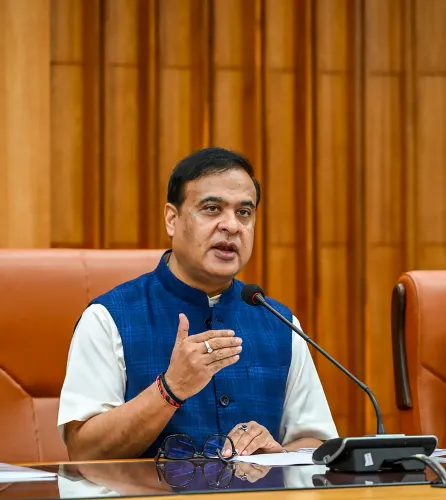
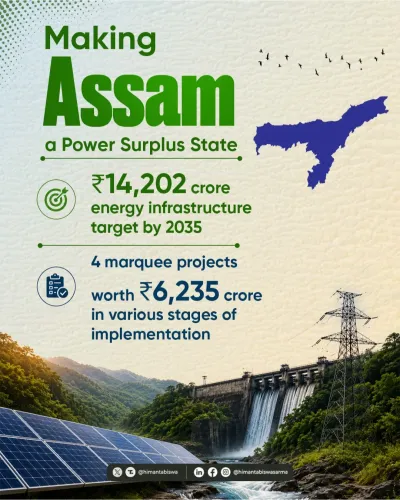
The Chief Minister's Office of Assam announced on Thursday, 16 July 2026 that the state is moving to harness its small hydropower potential through 11 new projects, signalling a push to expand clean energy generation across the northeastern state.
Context
The announcement positions Assam as an active participant in India's decentralised renewable energy drive. Small hydropower projects — defined nationally as installations with a capacity of up to 25 MW — are considered lower-impact alternatives to large dams, making them particularly suited to ecologically sensitive river systems. Assam's extensive network of Brahmaputra tributaries offers considerable untapped potential for such installations.
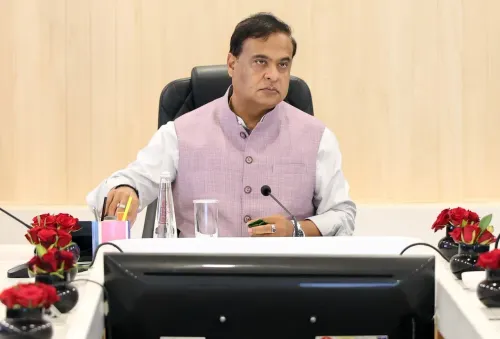
Chief Minister Himanta Biswa Sarma, who has led the state since 2021, has consistently positioned infrastructure and energy access as central planks of the government's agenda. The move to add 11 projects to the state's small hydropower portfolio reflects that continued emphasis.
Policy Backdrop
India's Ministry of New and Renewable Energy (MNRE) has promoted small hydropower development through its dedicated Small Hydro Power Programme since the early 2000s, providing policy frameworks and funding support for state-level implementation. Assam's latest initiative is consistent with that national architecture.
Northeastern states have historically pursued small hydropower as a means of expanding electricity access to remote and hilly communities while limiting the social displacement and ecological disruption associated with large dam projects in the Brahmaputra basin. The region's geography — characterised by fast-flowing hill streams and seasonal river flows — makes it structurally well-suited to run-of-river small hydro installations.
India's broader renewable energy targets have added urgency to state-level action. Decentralised generation, including small hydro, is increasingly viewed as a complement to grid-scale solar and wind capacity, particularly for last-mile electrification in geographically challenging terrain.
Stakeholders and Impact
Rural households in Assam stand to be the most direct beneficiaries if the projects are implemented successfully, gaining more reliable access to electricity without the large-scale land acquisition that major hydroelectric schemes typically require. Renewable energy developers — both public sector entities and private investors — are the other key stakeholder group, as the announcement signals new project opportunities in the state.
Environmental groups and local communities in the project catchment areas will also watch closely. While small hydropower carries a lighter ecological footprint than large dams, site selection, water diversion, and construction activity still require careful management in biodiversity-rich northeastern landscapes.
What's Next
The immediate steps for the Assam government will include securing environmental clearances and finalising funding allocations for each of the 11 projects — processes that will determine how quickly groundwork can begin. Budget provisions in forthcoming state financial cycles will be a key indicator of the administration's pace of execution.
If the projects clear regulatory and financial hurdles, Assam could meaningfully add to its installed renewable energy capacity, reinforcing the northeastern region's role in India's clean energy transition and offering a replicable model for other states in the Brahmaputra basin.
Point of View
Given difficult terrain and grid connectivity gaps, gives this announcement genuine policy weight beyond optics. Whether execution follows the announcement will hinge on the state's capacity to navigate environmental clearances and attract project developers to a region that has historically struggled with investment timelines.
NationPress
16 Jul 2026
Frequently Asked Questions
What are the 11 small hydropower projects announced by Assam?
The Chief Minister's Office of Assam announced on 16 July 2026 that the state will develop 11 new small hydropower projects to harness its river potential. Specific project names, locations, and timelines have not been officially detailed in the public domain yet.
What is a small hydropower project in India?
In India, small hydropower projects are defined by the Ministry of New and Renewable Energy (MNRE) as installations with a generation capacity of up to 25 MW . They are promoted for decentralised electricity generation with a lower environmental footprint than large dams.
Why is Assam focusing on small hydropower?
Assam has extensive river systems fed by Brahmaputra tributaries that offer significant untapped small hydro potential. Small hydro is suited to the state's geography and allows electricity access for remote communities without the large-scale ecological and social disruption of big dam projects.
Who is the Chief Minister of Assam in 2026?
Himanta Biswa Sarma is the Chief Minister of Assam. He has held the position since 2021 and has made infrastructure and energy access central priorities of his administration.
How does India support small hydropower development?
The Ministry of New and Renewable Energy runs the Small Hydro Power Programme, which has provided policy frameworks and financial support for state-level small hydropower development across India since the early 2000s. States like Assam implement projects under this national umbrella.