Arunachal Pradesh hydropower push could make it Northeast's richest state: Sarma
Synopsis
Assam CM Himanta Biswa Sarma has put a striking number on Arunachal Pradesh's hydropower ambition: if its 30,000 MW plan is realised in 10 years, the state's GDP could nearly double Assam's. The real story is how community consent — villages agreeing to relocation — is doing what policy alone rarely achieves: keeping large infrastructure on track without prolonged agitation.
Key Takeaways
Assam CM Himanta Biswa Sarma said Arunachal Pradesh could become the Northeast's richest state within 10 years if its hydropower targets are met.
Arunachal Pradesh is targeting 30,000 MW of installed hydropower capacity; projects totalling 3,000 MW are under way and work on 10,000 MW more has begun.
Sarma projected that completing these projects could make Arunachal Pradesh's GDP nearly double that of Assam.
Villages in Arunachal Pradesh have agreed to rehabilitation and relocation , enabling projects to proceed without significant public agitation.
Sarma contrasted this with Assam, where even small infrastructure projects face years of protests and delays .
The remarks were made during a budget session debate on development and infrastructure in the Assam Assembly on 15 July 2025 .
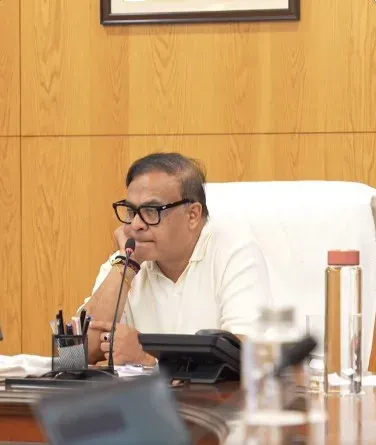
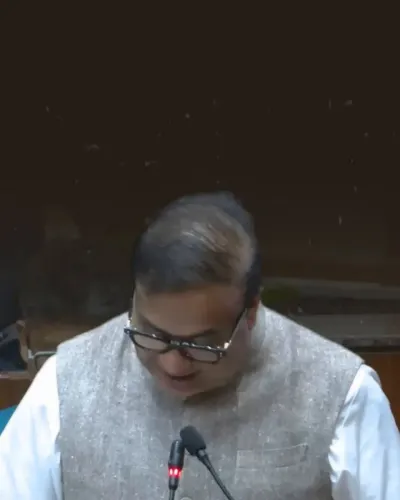
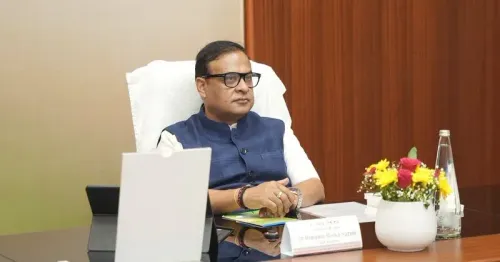
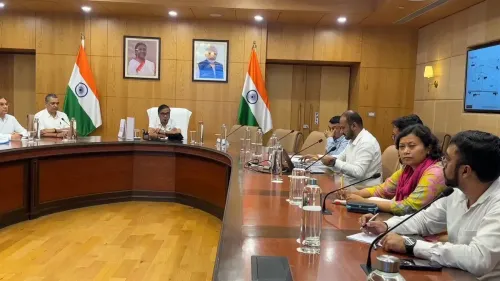
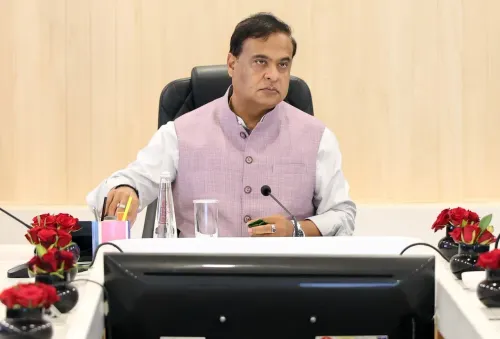
Assam Chief Minister Himanta Biswa Sarma on Wednesday said Arunachal Pradesh's ambitious hydropower programme has the potential to transform it into the wealthiest state in the Northeast within a decade — provided the momentum of public cooperation and political consensus holds. Sarma made the remarks during a debate on development and infrastructure in the ongoing budget session of the Assam Assembly in Guwahati.
The Scale of Arunachal's Hydropower Ambition
Sarma outlined the sheer scale of what Arunachal Pradesh is attempting: a target of 30,000 MW of installed hydropower capacity. Projects generating around 3,000 MW are already in progress, while work on nearly 10,000 MW of additional capacity has commenced. The state has now charted a roadmap to reach the full 30,000 MW mark.
'If these hydropower projects are completed within the next 10 years, Arunachal Pradesh's GDP will be nearly double that of Assam,' Sarma said, underlining the transformative economic stakes involved.
People's Consent as the Critical Differentiator
Sarma drew a pointed contrast between Arunachal Pradesh's execution and Assam's own infrastructure challenges. He noted that in Assam, even modest projects such as flyovers can face years of protests and delays. In Arunachal Pradesh, by contrast, large hydropower schemes are advancing with active community support, including villages that have agreed to rehabilitation and relocation in the broader interest of the state's development.
'We sometimes take years to complete a small flyover because of protests and objections. Arunachal Pradesh, on the other hand, is moving ahead with large hydropower projects with the cooperation of the people,' he said.
Why This Matters for the Northeast
Arunachal Pradesh is already considered one of the fastest-growing states in the region, according to Sarma, partly because its population has shown willingness to accept difficult short-term disruptions for long-term economic gain. The Chief Minister said the state is now competing at a national level in infrastructure and energy generation — a significant shift for a region historically underserved by large-scale investment.
This comes amid a broader national push to harness the hydropower potential of the Himalayan Northeast, where river systems offer some of the largest untapped generation capacity in Asia. Notably, Arunachal Pradesh alone is estimated to hold a substantial share of India's total hydropower potential.
The Broader Development Argument
Sarma used the Arunachal example to make a larger argument about the relationship between public consent and economic acceleration. He maintained that development-oriented policies succeed only when governments and communities work in alignment, and that such cooperation is essential for states to attract investment and sustain growth. The remarks were made in the context of a legislative debate, lending them an explicitly political dimension as Sarma's Bharatiya Janata Party (BJP)-led government seeks to frame infrastructure delivery as a governance differentiator.
Whether Arunachal Pradesh's hydropower targets translate into the projected GDP outcomes will depend on project execution timelines, grid connectivity, and power purchase agreements — variables that remain to be tested at scale.
Point of View
He implicitly concedes that protest-driven delays are a governance problem at home — one his own government has not yet resolved. The 30,000 MW target is ambitious, but the harder variables — grid evacuation, inter-state power purchase agreements, and environmental clearances — go unaddressed in the Assembly speech. The GDP doubling projection is directionally plausible but depends on execution timelines that large hydro projects in India have historically struggled to meet. The consent narrative is real and important, but it should not obscure the need for robust resettlement monitoring and ecological oversight as scale increases.
NationPress
13 Oct 2026
Frequently Asked Questions
What is Arunachal Pradesh's hydropower target and how much has been achieved so far?
Arunachal Pradesh is targeting an installed hydropower capacity of 30,000 MW. As of the statement by Assam CM Himanta Biswa Sarma on 15 July 2025, projects generating around 3,000 MW are already progressing and work on nearly 10,000 MW of additional capacity has begun.
Why did Assam CM Sarma say Arunachal Pradesh could become the Northeast's richest state?
Sarma said that if Arunachal Pradesh completes its 30,000 MW hydropower programme within 10 years, the state's GDP could be nearly double that of Assam, making it the wealthiest state in the Northeast. He attributed this potential to the state's large-scale energy generation capacity and the public cooperation enabling projects to move forward without agitation.
How is Arunachal Pradesh avoiding the delays that affect infrastructure projects in other states?
According to Sarma, communities in Arunachal Pradesh — including entire villages — have agreed to rehabilitation and relocation to facilitate hydropower projects, with no significant public agitation reported. Sarma contrasted this with Assam, where even small projects like flyovers face years of protests and delays.
What is the significance of public consent in Arunachal Pradesh's hydropower development?
Sarma argued that people's willingness to accept short-term disruptions for long-term economic gain is a key reason Arunachal Pradesh is among the fastest-growing states in the Northeast. He said development policies succeed only when governments and communities work together, and used this as a broader argument for consensus-driven infrastructure planning.
Where did Sarma make these remarks about Arunachal Pradesh's hydropower potential?
Sarma made these remarks on Wednesday, 15 July 2025, during a debate on development and infrastructure in the ongoing budget session of the Assam Assembly in Guwahati.