CM Himanta charts Assam as trade and logistics hub
Synopsis
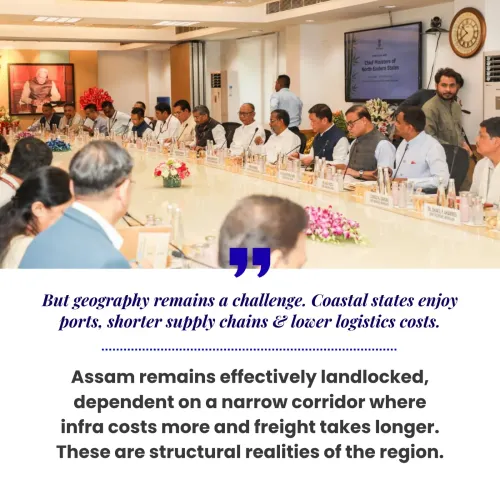
Assam Chief Minister Himanta Biswa Sarma has outlined a vision to transform Assam into a major trade and logistics hub by leveraging the Brahmaputra river and the state's strategic border location, aligning with India's Act East Policy and NEDA's regional coordination mandate.
Key Takeaways
Himanta Biswa Sarma on 13 June 2026 declared Assam's priority as becoming a hub of trade, logistics and enterprise.
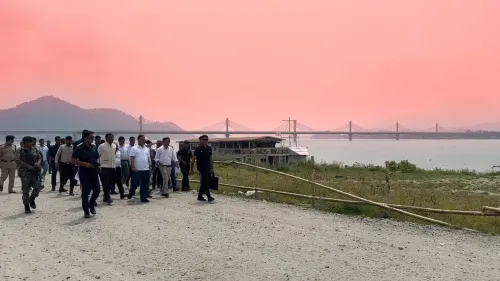
The vision centres on the Brahmaputra , designated National Waterway-2 , as the backbone of an economic corridor.
Assam borders Bhutan , Bangladesh , and Myanmar , giving it strategic multi-directional connectivity.
The push aligns with India's Act East Policy and the PM Gati Shakti infrastructure framework.
As NEDA convenor, Sarma can coordinate trade and logistics policy across all eight northeastern states .
Multimodal logistics parks at Jogighopa and Guwahati are key projects to watch for on-ground progress.
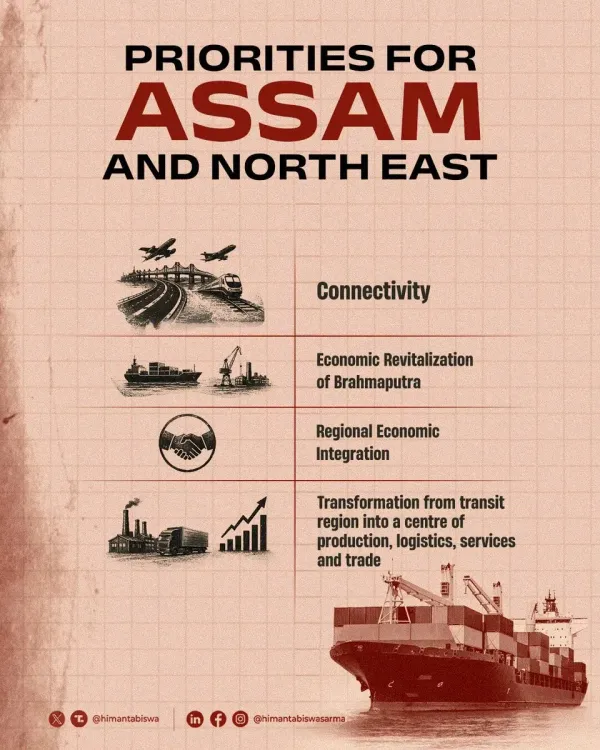
Assam Chief Minister Himanta Biswa Sarma on Saturday, 13 June 2026 laid out an economic vision for the state and the broader Northeast, declaring his government's intent to harness the region's geographic position, deepen regional integration, and unlock the economic potential of the Brahmaputra river.
Context
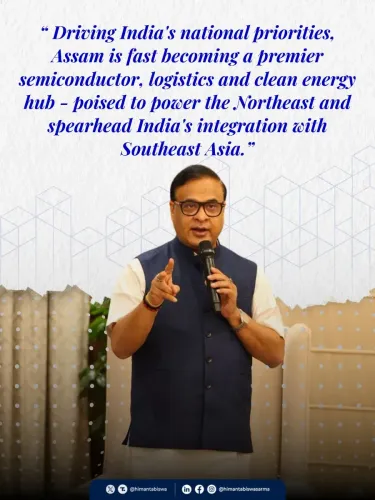
In the post, Sarma stated: 'Our priorities for Assam and the North East are clear. We are determined to leverage our strategic location, strengthen regional integration and unlock the immense economic potential of the Brahmaputra. The goal is to make Assam a major hub of trade, logistics and enterprise.' The statement signals a deliberate framing of Assam not merely as an administrative territory but as a commercial pivot for South and Southeast Asia.
Assam shares borders with Bhutan, Bangladesh, Myanmar and is proximate to China, giving it a rare multi-directional connectivity advantage among Indian states. That geography has historically been underutilised, a legacy of the region's economic isolation following Partition in 1947.
Policy Backdrop
The vision articulated by Sarma sits squarely within India's Act East Policy, the 2014 upgrade of the original Look East Policy launched in 1991, which prioritises physical connectivity and trade linkages with ASEAN nations through the northeastern corridor. Under this framework, the Brahmaputra — designated National Waterway-2 as far back as 1988 — has received renewed central funding for multimodal terminals and inland shipping infrastructure.
The 2016 India-Myanmar-Thailand Trilateral Highway agreement and commitments made at the 2019 BIMSTEC summit had already identified Assam as a key logistics node on India's eastern trade arc. More recently, the PM Gati Shakti national master plan framework has accelerated investment in roads, rail, and waterway connectivity across the region, providing an institutional backbone for the kind of enterprise hub Sarma envisions.
As convenor of the North-East Democratic Alliance (NEDA) — the political platform uniting ruling parties across all eight northeastern states — Sarma is positioned to coordinate policy across state lines, a structural advantage that distinguishes this push from earlier, state-siloed efforts.
Stakeholders and Impact
The primary beneficiaries of a successful logistics and trade hub strategy would be northeastern traders, logistics firms operating cross-border routes, and small and medium enterprises currently hampered by high freight costs and poor last-mile connectivity. Assam's agricultural and petroleum sectors also stand to gain from improved waterway and road infrastructure that reduces the cost of moving goods to domestic and export markets.
Proposed multimodal logistics parks at Jogighopa and Guwahati are among the projects being watched as concrete expressions of this broader ambition. Successful execution would also benefit neighbouring states such as Meghalaya, Nagaland, and Manipur, which depend on Assam as a transit corridor.
What's Next
The immediate question is whether Sarma's statement will be followed by specific policy announcements — new investment targets, bilateral trade agreements with Bangladesh or Myanmar, or accelerated timelines for waterway terminals on the Brahmaputra. Any NEDA-coordinated regional trade framework would be a significant step, given that it would bring multiple state governments into a unified economic architecture for the first time.
With India's eastern neighbourhood in flux and Act East entering its second decade, Assam's ability to transition from a strategic aspiration to an operational trade corridor will depend on the pace of infrastructure delivery and the depth of diplomatic engagement with neighbouring countries.
Point of View
Designed to signal to investors, central ministries, and neighbouring governments that Assam is positioning itself as the operational centre of India's Act East agenda. By invoking the Brahmaputra alongside 'regional integration,' he is simultaneously addressing a domestic development audience and an external diplomatic one. His dual role as Assam CM and NEDA convenor gives this framing unusual institutional weight — he can, in principle, align eight state governments behind a single logistics corridor. The test will be whether infrastructure timelines and bilateral trade diplomacy with Bangladesh and Myanmar accelerate in the months ahead.
NationPress
19 Sept 2026
Frequently Asked Questions
What is Himanta Biswa Sarma's plan for Assam's economy?
Chief Minister Himanta Biswa Sarma has stated his goal is to make Assam a major hub of trade, logistics and enterprise by leveraging its strategic border location and the economic potential of the Brahmaputra river.
What is the Brahmaputra's role in Assam's development?
The Brahmaputra is designated National Waterway-2 and is central to plans for inland shipping, multimodal terminals and economic corridors connecting Assam to South and Southeast Asia.
What is the Act East Policy and how does it relate to Assam?
India's Act East Policy, launched in 2014 as an upgrade of the 1991 Look East Policy, prioritises connectivity and trade with ASEAN nations through the Northeast, making Assam a key corridor state.
What is NEDA and why does it matter for Northeast development?
The North-East Democratic Alliance (NEDA), convened by Sarma, unites ruling parties across all eight northeastern states, enabling coordinated regional policy on trade and infrastructure.
Which logistics projects in Assam are being watched closely?
Proposed multimodal logistics parks at Jogighopa and Guwahati are among the key projects expected to give concrete shape to Assam's ambitions as a trade and logistics hub.