CM Himanta marks 12 years of Northeast India's rise
Synopsis
Assam Chief Minister Himanta Biswa Sarma marked twelve years of Northeast India's development shift, crediting peace and central investment for moving the region from insurgency to infrastructure — with Assam as the primary beneficiary.
Key Takeaways
Assam CM Himanta Biswa Sarma posted on 20 June 2026 marking #12YearsOfRisingNorthEast , citing a shift from insurgency to infrastructure.
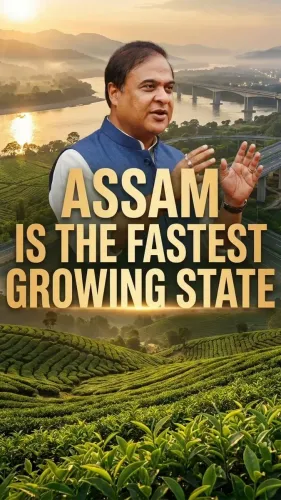
Assam is identified as the 'biggest beneficiary' of the peaceful atmosphere that has prevailed across the Northeast.
The Act East Policy , launched in 2014 , replaced the Look East Policy and made physical connectivity the centrepiece of Northeast development.
The North-East Democratic Alliance (NEDA) , convened by Sarma, was formed in 2016 to coordinate development across non-Congress Northeast governments.
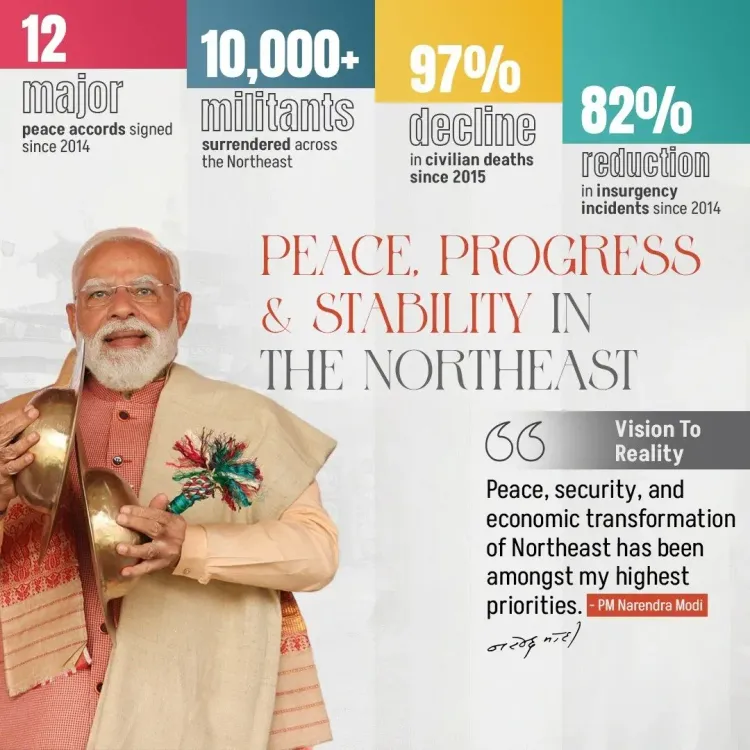
Insurgency-related incidents declined sharply from the mid-2010s, enabling private investment and tourism to grow across the region.
The next phase of PM Gati Shakti projects and upcoming state assembly elections will test whether the development momentum is sustained.
Assam Chief Minister Himanta Biswa Sarma on Saturday, 20 June 2026 reflected on a decade-plus transformation in the Northeast, asserting that the region's development story has moved decisively from insurgency and instability to infrastructure, connectivity and economic growth, with Assam emerging as the largest beneficiary of the resulting peaceful environment.
Context
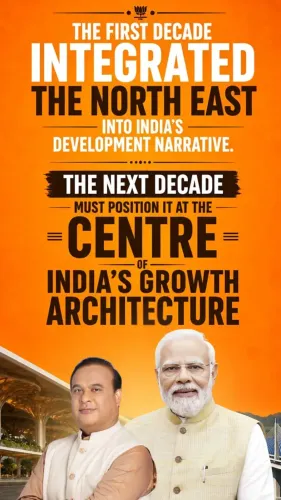
Sarma's post, tagged #12YearsOfRisingNorthEast, marks twelve years since the Bharatiya Janata Party came to power at the centre in 2014, a period the ruling party credits with a strategic reset in how the region is governed and funded. The hashtag frames the anniversary not as a political milestone alone but as a civilisational shift — from a conflict economy to a growth economy.
The Chief Minister wrote that 'the Northeast's development narrative has shifted steadily from insurgency and instability towards infrastructure, connectivity and economic growth,' adding that Assam has been 'the biggest beneficiary of the prevailing peaceful atmosphere.' The framing places peace as the precondition for prosperity, a consistent theme in the BJP's Northeast outreach.
Policy Backdrop
The twelve-year arc Sarma invokes begins with the launch of the Act East Policy in 2014, which replaced the earlier Look East Policy and placed physical connectivity — roads, rail, digital networks — at the heart of Northeast engagement. The policy opened corridors not just within India but towards Southeast Asia, positioning the region as a gateway rather than a periphery.
Parallel to infrastructure investment, the central government pursued peace negotiations with multiple insurgent groups operating across Assam, Nagaland, Manipur and Mizoram. Insurgency-related incidents declined sharply across most states through the latter half of the 2010s, creating conditions that made private investment and tourism viable at scale. Assam, by virtue of its size, river-port access and road network, absorbed the largest share of central highway and airport funding.
The North-East Democratic Alliance (NEDA), which Sarma convenes, was formed in 2016 to consolidate non-Congress governments across the region and coordinate development priorities. The platform has been credited with reducing political fragmentation that historically slowed project execution.
Stakeholders and Impact
For ordinary residents of Assam and the broader Northeast, the shift from conflict to connectivity has had tangible consequences: faster travel times on upgraded national highways, new airport terminals in smaller cities, and an uptick in domestic tourism. Industrial corridors and logistics parks have begun attracting manufacturing investment that was previously deterred by poor road access and security concerns.
Investors tracking the region note that the PM Gati Shakti framework has brought multimodal planning discipline to projects that earlier suffered from inter-ministry delays. For Northeast states, which depend heavily on central transfers, coordinated infrastructure spending under a single framework has accelerated disbursement and reduced duplication.
What's Next
Assembly elections are scheduled in several Northeast states in the coming cycle, making the development narrative politically consequential beyond Assam's borders. NEDA's cohesion — and the BJP's ability to point to completed projects rather than announced ones — will be tested on the campaign trail.
The next phase of centrally sponsored infrastructure projects under PM Gati Shakti will be a key indicator of whether the momentum Sarma describes translates into sustained economic growth or plateaus once the low-hanging connectivity gains are exhausted. How Assam leverages its improved infrastructure to attract private capital will define the next chapter of the Northeast's transformation story.
Point of View
Framing peace as a policy achievement rather than an organic development. By positioning Assam as the 'biggest beneficiary,' he reinforces his own state's centrality within the Northeast bloc ahead of assembly election cycles across the region. The invocation of #12YearsOfRisingNorthEast signals a coordinated BJP messaging campaign designed to convert infrastructure deliverables into electoral capital. The broader arc — from Look East to Act East to Gati Shakti — represents a genuine policy evolution, but the degree to which credit belongs to central policy versus state execution remains a live political debate.
NationPress
19 Sept 2026
Frequently Asked Questions
What is the #12YearsOfRisingNorthEast hashtag about?
The hashtag marks twelve years since 2014, when the BJP came to power at the centre and launched the Act East Policy, which the party credits with transforming the Northeast through peace negotiations and infrastructure investment.
Why does Himanta Biswa Sarma say Assam is the biggest beneficiary?
Assam, as the largest state in the Northeast with the most extensive road and river network, has received the largest share of central funding for highways, airports and industrial corridors over the past twelve years.
What is the Act East Policy and how does it affect Northeast India?
The Act East Policy, launched in 2014, replaced the Look East Policy and prioritised physical connectivity — roads, rail and digital infrastructure — to integrate the Northeast with Southeast Asia and attract investment.
What is NEDA and what role does Himanta Biswa Sarma play in it?
The North-East Democratic Alliance (NEDA) is a political platform of regional parties formed in 2016 to support stable, development-focused governments across the Northeast. Himanta Biswa Sarma serves as its convenor.
Has insurgency actually declined in Northeast India?
Yes, insurgency-related incidents declined sharply across most Northeast states from the mid-2010s onward, following peace negotiations with multiple armed groups, which created conditions for increased private investment and tourism.