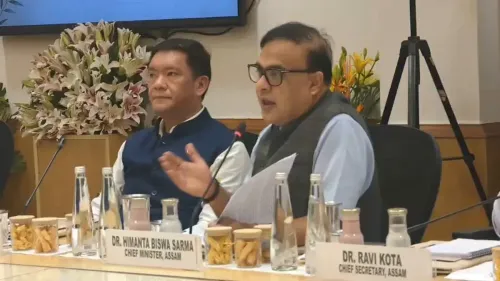
CM Himanta Says North East Now in National Development Mainstream
Synopsis
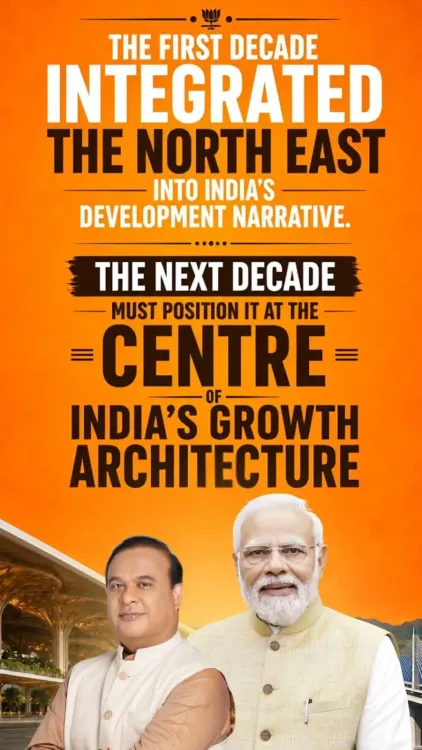
Assam Chief Minister Himanta Biswa Sarma declared on 17 June 2026 that the North East has shifted from India's periphery to the mainstream of national development, reaffirming his government's commitment to making Assam a major contributor to the country's growth priorities.
Key Takeaways
Himanta Biswa Sarma , Chief Minister of Assam since May 2021 , declared the North East is now in the mainstream of India's national developmental trajectory.
Sarma committed to building Assam into a 'major contributor to national developmental priorities.' The statement aligns with the Act East Policy launched in 2014 , which reframed the North East as a strategic gateway to Southeast Asia .
The PM-DevINE scheme, announced in 2022 , provides dedicated infrastructure and social development financing for the North East's eight states .
Sarma also convenes the North-East Democratic Alliance (NEDA) , coordinating BJP-aligned governance across the region.
Upcoming union and state budget allocations and North Eastern Council meetings will be watched for concrete follow-through on the commitment.
Assam Chief Minister Himanta Biswa Sarma on Wednesday, 17 June 2026, reaffirmed his government's commitment to positioning Assam as a major contributor to India's national developmental priorities, stating that the North East region has moved from the fringes to the mainstream of the country's growth trajectory.
Context
In his post on X, Sarma wrote: 'The North East region, which was once in the fringes, is today in the mainstream of national developmental trajectory. We are committed to build an Assam which is a major contributor to national developmental priorities.' The statement reflects a broader political and administrative narrative that has gained traction since 2014, when the central government began scaling up investment and policy attention toward the eight states of the North East.
The assertion carries particular weight coming from Sarma, who has served as Chief Minister of Assam since May 2021 and also convenes the North-East Democratic Alliance (NEDA), a platform that coordinates BJP-aligned governance across the region's state governments.
Policy Backdrop
The shift Sarma describes has its formal policy roots in the Act East Policy, unveiled in 2014, which was designed to improve physical and digital connectivity between the North Eastern states and Southeast Asia, reframing the region as a strategic gateway rather than a remote periphery.
That framework was supplemented in 2022 by the Prime Minister's Development Initiative for North East Region (PM-DevINE), a dedicated financing mechanism for infrastructure and social development projects across the eight states. Successive union budgets have increased outlays for the North East, funding road, rail, and waterway corridors that proponents argue are integrating the region into national supply chains for the first time at scale.
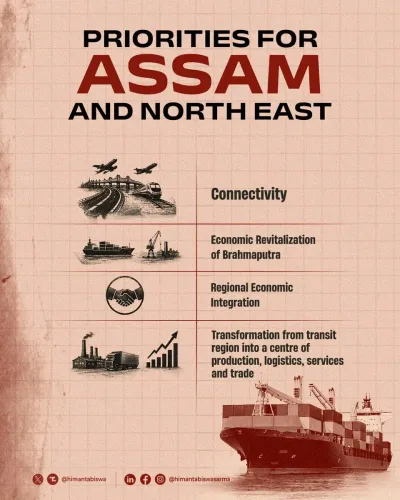
Assam, as the region's largest economy and its administrative and transport hub, has been positioned centrally within this policy architecture. State-level initiatives under Sarma's government have emphasised infrastructure buildout, investment attraction, and connectivity improvements aligned with central schemes.
Stakeholders and Impact
The primary beneficiaries of the mainstreaming narrative are the people of Assam and the broader North East, where improved connectivity and central investment have the potential to accelerate economic activity, reduce migration pressures, and expand access to markets. The region's eight states collectively represent a significant frontier for manufacturing, agriculture, and tourism.
For the BJP and its regional allies under the NEDA umbrella, the developmental framing also serves a political function: demonstrating governance dividends to electorates in states where the alliance has expanded its footprint since 2016. Critics of the government have in the past argued that headline infrastructure investments must be matched by improvements in employment, education, and health outcomes on the ground.
What's Next
Observers will watch upcoming union and state budget allocations for Assam infrastructure corridors, as well as any fresh announcements at the next North Eastern Council or NEDA meetings, for concrete measures that translate Sarma's stated commitment into project-level action. The degree to which Assam can attract private investment alongside public expenditure will be a key indicator of whether the state achieves the 'major contributor' status the Chief Minister has articulated as his benchmark.
Point of View
He is simultaneously speaking to state electorates and to New Delhi, signalling that the North East's alignment with the BJP-led centre has delivered tangible returns. The framing of Assam as a 'major contributor' rather than merely a beneficiary marks a subtle but significant rhetorical shift: it repositions the state from recipient of largesse to active engine of national growth. Whether that claim is borne out will depend on investment and employment data that will be closely scrutinised ahead of future state elections across the region.
NationPress
18 Sept 2026
Frequently Asked Questions
What did Assam CM Himanta Biswa Sarma say about North East development?
CM Himanta Biswa Sarma stated on 17 June 2026 that the North East region, once considered peripheral, is now in the mainstream of India's national developmental trajectory, and committed to making Assam a major contributor to national priorities.
What is the Act East Policy and how does it affect North East India?
The Act East Policy, launched in 2014, aims to improve physical and digital connectivity between India's North Eastern states and Southeast Asia, repositioning the region as a strategic economic gateway rather than a remote periphery.
What is PM-DevINE and which states benefit from it?
PM-DevINE, the Prime Minister's Development Initiative for North East Region, was announced in 2022 to finance infrastructure and social development projects across the eight states of North East India, including Assam.
What is NEDA and what role does Himanta Biswa Sarma play in it?
The North-East Democratic Alliance (NEDA) is a political platform of state-level parties in the North East that coordinates with the BJP-led central government. Himanta Biswa Sarma serves as its convenor.
How has central government spending on North East India changed since 2014?
Since 2014, successive union budgets have increased outlays for the North East, funding road, rail, and waterway corridors and dedicated schemes such as PM-DevINE to integrate the region into national supply chains and policy priorities.