CM Himanta flags North East as hub of opportunity, eyes Viksit future
Synopsis
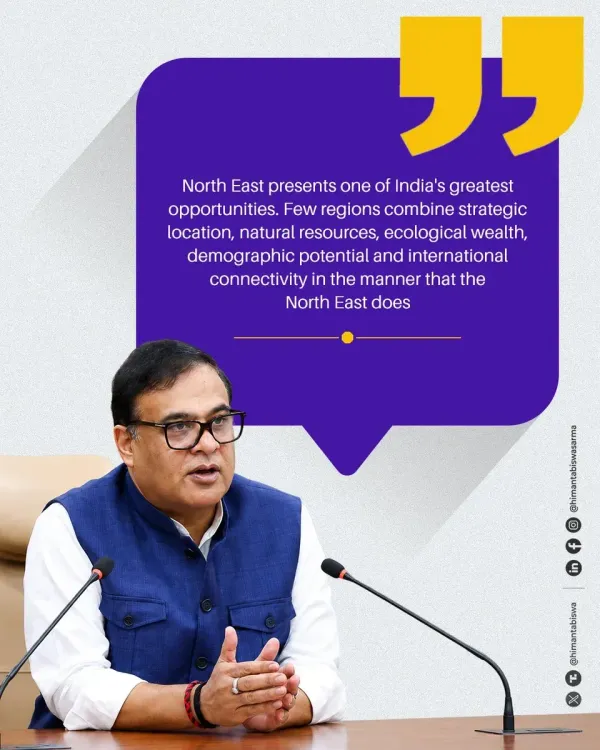
Assam CM Himanta Biswa Sarma declared on June 14, 2026, that the North East is 'brimming with diverse opportunities' and is progressing toward a Viksit North East, crediting coordinated efforts of the Union government and proactive state governments aligned under the Viksit Bharat national vision.
Key Takeaways
Himanta Biswa Sarma , Assam Chief Minister and NEDA convenor, described the North East as 'brimming with diverse opportunities' on June 14, 2026 .
He credited both Union government support and the 'proactiveness' of state governments for the region's development direction.
The 'Viksit North East' framing aligns with the national Viksit Bharat vision targeting a developed India by 2047 .
The Ministry of DoNER , established in 2001 , and the Act East Policy of 2014 form the institutional backbone of North East development.
NEDA , which Sarma convenes, has unified regional state governments behind the Union government's development framework.
Upcoming Union Budget allocations for DoNER and the next NEC plenary will be key indicators of how this vision is resourced.
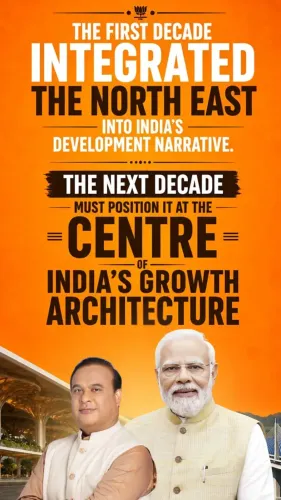
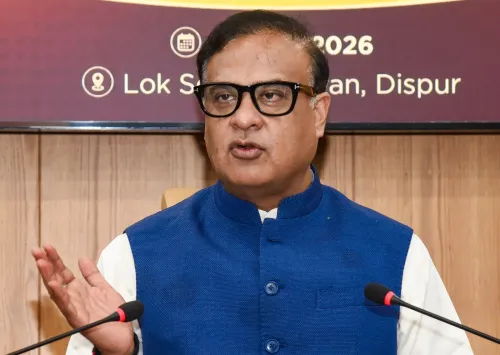
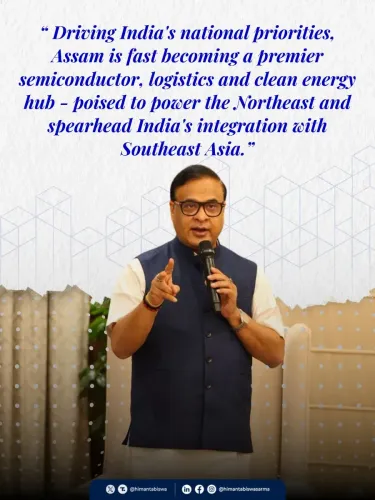
Assam Chief Minister and North-East Democratic Alliance convenor Himanta Biswa Sarma on Sunday, June 14, 2026, declared that the North East is 'brimming with diverse opportunities' and said the region is moving toward a 'Viksit North East' through coordinated efforts of the Union government and proactive state governments.
Context
In his post, Sarma framed the development of the North Eastern Region (NER) as a joint enterprise — crediting both the Union government's support and the 'proactiveness' of individual state governments. The statement comes as the region's eight states continue to attract policy attention and infrastructure investment under the broader national development agenda.
The phrase 'Viksit North East' mirrors the language of the Union government's Viksit Bharat vision, which targets India becoming a fully developed nation by 2047. By invoking this framework, Sarma positioned the North East not as a lagging periphery but as an active participant in that national goal.
Policy Backdrop
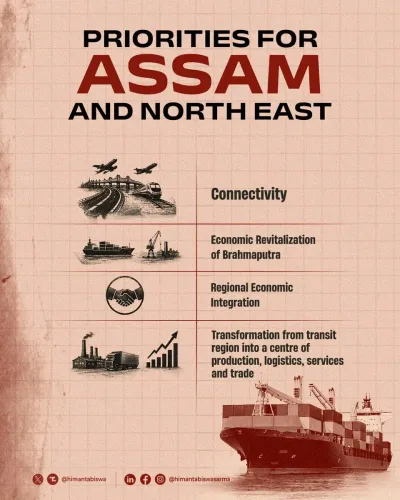
The Ministry of Development of North Eastern Region (DoNER), established in 2001, has long been the primary institutional vehicle for channelling central funds and planning development programmes across the eight North Eastern states. Its schemes, including the North East Special Infrastructure Development Scheme (NESIDS), fund critical gaps in connectivity, power, and social infrastructure.
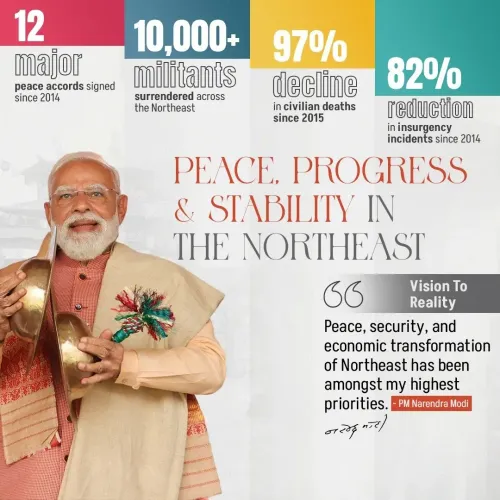
The Union government's Act East Policy, launched in 2014, added a strategic economic dimension by positioning the North East as a gateway to Southeast Asia. Since then, the region has seen a deliberate shift from a security-centric policy lens to one centred on economic integration, physical connectivity, and trade corridor development.
The North-East Democratic Alliance (NEDA), which Sarma convenes, has been instrumental in aligning state governments — many from regional parties — with this Union government-led development framework, creating a unified political and administrative push across the region.
Stakeholders and Impact
The primary beneficiaries of this development trajectory are the residents of the eight North Eastern states — Assam, Arunachal Pradesh, Manipur, Meghalaya, Mizoram, Nagaland, Sikkim, and Tripura — who stand to gain from improved infrastructure, economic opportunities, and greater integration with national and regional markets.
State governments across the NER are key stakeholders, as the realisation of a 'Viksit North East' depends heavily on their administrative capacity and willingness to implement centrally sponsored schemes efficiently. Sarma's emphasis on 'proactiveness' signals an expectation of active ownership at the state level, not passive receipt of central funds.
What's Next
Observers will watch the next North Eastern Council (NEC) plenary session and the forthcoming Union Budget allocations for DoNER and associated schemes for concrete indicators of how the 'Viksit North East' direction will be resourced and operationalised. The alignment between state-level political will, as articulated by Sarma, and central fiscal commitments will be the defining test of the vision's momentum.
As the 2047 Viksit Bharat deadline draws the national conversation, the North East's ability to translate political rhetoric into measurable development outcomes — in connectivity, trade, and livelihoods — will determine whether the region's moment of opportunity becomes a durable economic transformation.
Point of View
And it signals to regional electorates that BJP-led governance is delivering opportunity rather than neglect. As NEDA convenor, Sarma has a structural interest in projecting inter-state cohesion, making statements like this part of a broader political management strategy. The shift in language — from security and insurgency to opportunity and development — reflects a decade-long rebranding of the region that the BJP has invested in heavily. Whether the rhetoric translates into verifiable development metrics will be the question that defines the North East's political economy heading into the next electoral cycle.
NationPress
13 Sept 2026
Frequently Asked Questions
What is Viksit North East?
'Viksit North East' is a development vision articulated by leaders like Assam CM Himanta Biswa Sarma that mirrors the Union government's Viksit Bharat framework, aiming to make the North Eastern Region a fully developed and economically integrated part of India by 2047.
What is NEDA and who leads it?
The North-East Democratic Alliance (NEDA) is a political alliance of BJP and regional parties across North Eastern states, formed to coordinate governance and development. Assam Chief Minister Himanta Biswa Sarma serves as its convenor.
What does the Ministry of DoNER do?
The Ministry of Development of North Eastern Region (DoNER), established in 2001, plans and implements development programmes exclusively for the eight North Eastern states, funding infrastructure, connectivity, and social development through schemes like NESIDS.
What is the Act East Policy and how does it affect the North East?
The Act East Policy, launched in 2014, positions the North East as India's gateway to Southeast Asia, boosting physical and economic connectivity between the region and neighbouring countries to integrate it into broader trade and investment networks.
Which states make up India's North Eastern Region?
India's North Eastern Region comprises eight states: Assam, Arunachal Pradesh, Manipur, Meghalaya, Mizoram, Nagaland, Sikkim, and Tripura.