Rijiju: India-UK FTA to Boost Leather & Footwear Exports
Synopsis
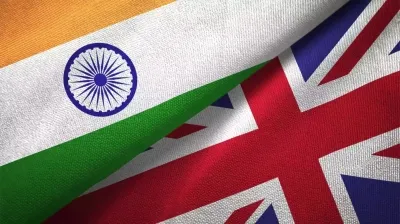
Union Parliamentary Affairs Minister Kiren Rijiju has backed the India-UK Free Trade Agreement, saying it will lower tariffs and sharply boost exports and employment in India's leather and footwear sector, advancing the country's broader post-Brexit bilateral trade strategy.
Key Takeaways
Kiren Rijiju on 15 July 2026 publicly endorsed the India-UK FTA , highlighting gains for the leather and footwear sector.
The deal is expected to deliver lower tariffs, greater competitiveness, and expanded export opportunities for Indian manufacturers.
India-UK FTA negotiations were formally launched in January 2022 , following the UK's exit from the European Union.
India has previously concluded FTAs with the UAE (February 2022) and Australia (December 2022) covering labour-intensive sectors.
The leather and footwear industry — concentrated in states like Tamil Nadu , Uttar Pradesh , and West Bengal — is dominated by MSMEs sensitive to tariff changes.
Parliamentary ratification in both countries and the phasing of tariff schedules remain the key steps ahead.
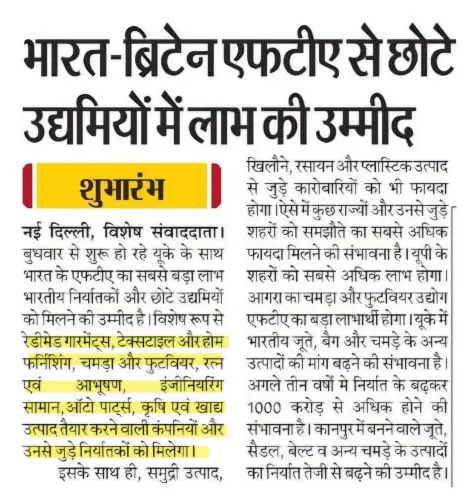
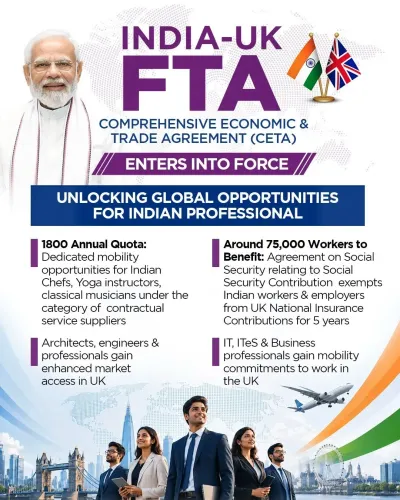
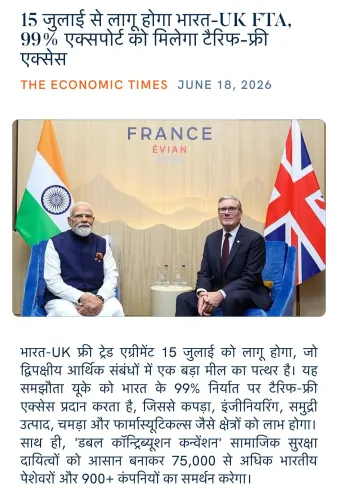
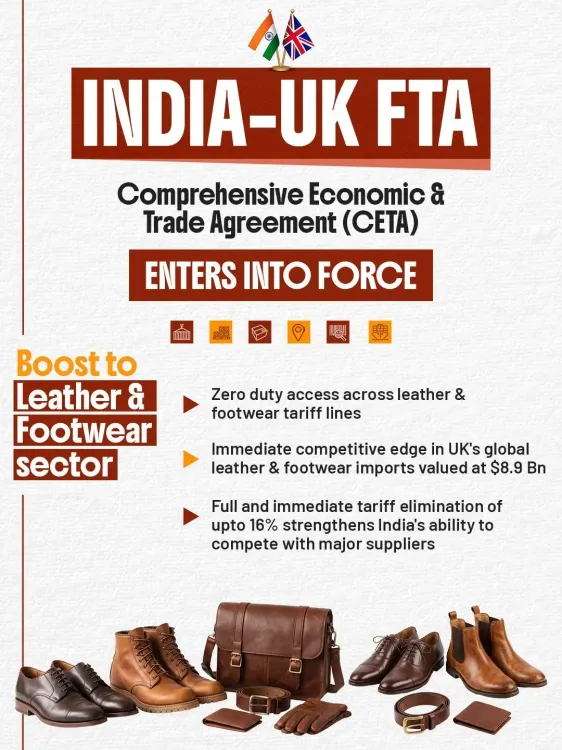
Union Parliamentary Affairs Minister Kiren Rijiju on Wednesday, 15 July 2026, welcomed the India-UK Free Trade Agreement, saying it will open new doors for Indian enterprise — with particular gains for the country's leather and footwear sector through lower tariffs, greater competitiveness, and expanded global market access.
Context
Posting on X under the hashtag #IndiaUKFTA, Rijiju said the deal would give 'a major boost to India's leather and footwear industry, strengthening manufacturing, increasing exports and creating more employment across the value chain.' The statement reflects the government's framing of the agreement as a jobs-and-growth instrument, not merely a diplomatic milestone.
The India-UK FTA has been in negotiation since January 2022, when both sides formally launched talks in the aftermath of Brexit, which prompted the United Kingdom to pursue independent bilateral trade arrangements. India has used the intervening years to conclude similar pacts — with the UAE in February 2022 and with Australia in December 2022 — covering labour-intensive manufacturing sectors.
Policy Backdrop
India's leather and footwear industry is one of the country's largest employment generators, concentrated in states such as Tamil Nadu, Uttar Pradesh, West Bengal, and Punjab. The sector is dominated by micro, small and medium enterprises (MSMEs) that are acutely sensitive to tariff differentials in export markets.
A central objective of India's post-2022 FTA strategy has been to secure preferential tariff access for finished manufactured goods, enabling Indian exporters to compete with rivals from countries that already hold trade agreements with target markets. The UK, which currently levies duties on Indian leather and footwear imports, represents a significant untapped opportunity under such a framework.
The broader push forms part of India's ambition to deepen integration into global value chains — a strategic pivot accelerated by post-COVID supply-chain realignments and the structural shift in UK trade policy following its departure from the European Union.
Stakeholders and Impact
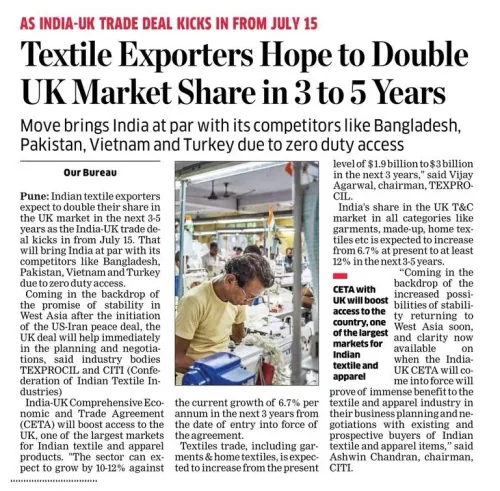
Leather exporters and footwear manufacturers stand to be the most immediate beneficiaries if tariff reductions on finished goods are phased in as anticipated. Lower duties in the UK market would directly improve the price competitiveness of Indian products against rivals from Vietnam, Bangladesh, and China, all of which have varying degrees of preferential access to European and British markets.
Employment creation 'across the value chain' — as Rijiju specifically noted — points to downstream benefits for raw-hide processors, component suppliers, logistics providers, and retail exporters, many of whom operate as part of MSME clusters. The deal's impact on these clusters will depend heavily on the pace and depth of tariff phase-downs agreed in the final schedule.
What's Next
The agreement will need to clear parliamentary ratification processes in both India and the United Kingdom before its provisions take legal effect. The phasing of tariff reductions on leather and footwear lines — among the more politically sensitive schedules in any such negotiation — will be closely watched by industry bodies and trade analysts on both sides.
As India moves to formalise and implement the India-UK FTA, the government's ability to translate ministerial optimism into measurable export growth will be the true test of the agreement's ambition for labour-intensive sectors.
Point of View
Using each deal to build a template for the next. The real test will come in the ratification and implementation phase, where the granular tariff schedules will determine whether the headline optimism translates into measurable export growth.
NationPress
15 Jul 2026
Frequently Asked Questions
What is the India-UK FTA and how does it affect India?
The India-UK Free Trade Agreement is a bilateral trade pact between India and the United Kingdom aimed at reducing tariffs and expanding market access. For India, it is expected to benefit labour-intensive sectors like leather, footwear, textiles, and gems by making Indian exports more price-competitive in the UK market.
What did Kiren Rijiju say about the India-UK FTA?
Union Parliamentary Affairs Minister Kiren Rijiju said the India-UK FTA is 'opening new doors for Indian enterprise' and will give a 'major boost' to India's leather and footwear industry by lowering tariffs, increasing exports, and creating more employment across the value chain.
How will the India-UK FTA benefit India's leather and footwear industry?
Lower UK tariffs on Indian leather and footwear products are expected to improve price competitiveness against rivals from Vietnam, Bangladesh, and China. This would help MSME-dominated clusters in states like Tamil Nadu, Uttar Pradesh, and West Bengal increase exports and generate more jobs.
When did India-UK FTA negotiations begin?
Negotiations for the India-UK Free Trade Agreement were formally launched in January 2022, following the United Kingdom's departure from the European Union, which prompted the UK to pursue new independent bilateral trade arrangements.
What happens next after the India-UK FTA announcement?
The agreement must go through parliamentary ratification in both India and the United Kingdom. The phasing and depth of tariff reductions — particularly on leather and footwear lines — will be closely scrutinised before the deal's provisions take legal effect.