CM Conrad Sangma hails 5,000 daily riders on Shillong city bus
Synopsis
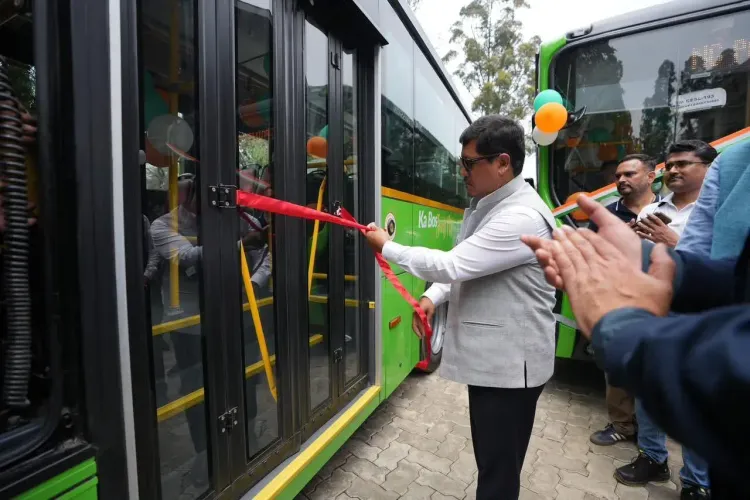
Meghalaya Chief Minister Conrad Sangma on 16 July 2026 announced that Shillong's Ka Bos Jong Ngi city bus service has crossed 5,000 daily passengers, hailing it as a proud milestone and promising fleet expansion to improve urban mobility in the hilly state capital.
Key Takeaways
Ka Bos Jong Ngi , Shillong's city bus service, has reached 5,000 daily passengers according to CM Conrad Sangma's announcement on 16 July 2026 .
The service offers affordable public mobility in Shillong , a hill capital with chronic traffic congestion and limited road capacity.
CM Sangma pledged to add more buses and improve service frequency in the days ahead.
The initiative is part of the NPP -led Meghalaya government's urban infrastructure push since 2018 .
The milestone positions Shillong as a potential model for sustainable public transport in northeastern hill cities.
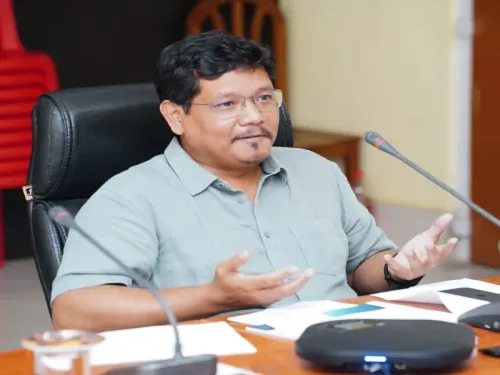
Meghalaya Chief Minister Conrad Sangma on Thursday, 16 July 2026, announced that the Ka Bos Jong Ngi city bus service in Shillong has reached a milestone of 5,000 daily passengers, calling it a proud moment for the state capital and pledging further expansion of the fleet.
Context
Shillong, the hilly capital of Meghalaya, has long struggled with chronic traffic congestion owing to its steep terrain and limited road capacity. The Ka Bos Jong Ngi — a name drawn from the Khasi language — was launched as the state government's answer to the city's urban mobility crisis, offering residents an affordable, organised alternative to private vehicles and informal transport.
Sharing the milestone on X, CM Sangma wrote: 'We touched 5,000 daily passengers on the Ka Bos Jong Ngi. I am happy that we are able to provide quality mobility at an affordable price. My heartfelt thanks to the people of Shillong for their trust. This is just the beginning.'
Policy Backdrop
Since 2018, the National People's Party (NPP)-led government in Meghalaya has pursued a series of urban infrastructure upgrades, with modernising public transport in Shillong identified as a priority. The Ka Bos Jong Ngi service is part of that broader push to augment city bus fleets and reduce dependence on private vehicles in a terrain where road widening is structurally constrained.
Across India's northeastern states, state governments have increasingly invested in city bus operations to close urban mobility gaps, lower congestion, and support sustainable transport. Integration with central e-bus schemes has been a parallel track that several hill-state capitals have explored in recent years.
Stakeholders and Impact
The primary beneficiaries of the Ka Bos Jong Ngi service are daily commuters and urban residents of Shillong — students, office-goers, and low-income households for whom affordable public transport is a significant economic relief. A ridership figure of 5,000 passengers per day signals that the service has achieved meaningful adoption in a city where public bus culture had previously been thin.
For the NPP government, the milestone also carries political weight: it demonstrates a tangible, visible urban dividend ahead of future electoral cycles in a state where CM Sangma has staked his governance record on infrastructure delivery.
What's Next
CM Sangma indicated that the government remains 'committed to improving the service and adding more buses in the days ahead,' signalling imminent fleet expansion. Observers will watch for announcements on new routes, increased service frequency, and possible integration with central government e-bus funding programmes.
If ridership momentum holds, Shillong could emerge as a model for other congested hill capitals in the northeast seeking to build viable public transport ecosystems on challenging terrain.
Point of View
000-daily-passenger mark on the Ka Bos Jong Ngi is a meaningful early signal that Shillong's commuters are willing to adopt organised public transport when it is priced accessibly and run reliably — a behavioural shift that has eluded hill cities for decades. For CM Sangma, the announcement is as much a governance statement as a transit update, reinforcing the NPP's pitch that it can deliver tangible urban infrastructure in a state not historically associated with such services. The pledge to add more buses raises the stakes: execution on fleet expansion will determine whether this is a durable mobility shift or a headline milestone. Broader integration with central e-bus funding could accelerate the programme's scale and financial sustainability.
NationPress
15 Oct 2026
Frequently Asked Questions
What is Ka Bos Jong Ngi in Shillong?
Ka Bos Jong Ngi is Shillong's city bus service launched by the Meghalaya state government to provide affordable public transport in the hilly capital. The name comes from the Khasi language and the service is designed to ease chronic traffic congestion in Shillong.
How many passengers does Ka Bos Jong Ngi carry daily?
According to CM Conrad Sangma's announcement on 16 July 2026, the Ka Bos Jong Ngi service has reached 5,000 daily passengers, which the Chief Minister described as a proud milestone for Shillong.
Who launched the Ka Bos Jong Ngi bus service?
The Ka Bos Jong Ngi city bus service was introduced under the NPP-led Meghalaya government headed by Chief Minister Conrad Sangma as part of the state's urban mobility and infrastructure improvement efforts since 2018.
Will more buses be added to the Shillong city bus service?
Yes. CM Conrad Sangma stated on 16 July 2026 that the government remains committed to improving the Ka Bos Jong Ngi service and adding more buses in the days ahead, indicating planned fleet expansion.
Why does Shillong need a public bus service?
Shillong faces severe traffic congestion due to its hilly terrain and limited road capacity, making private vehicle use unsustainable. The Ka Bos Jong Ngi service aims to provide an affordable, organised alternative that reduces congestion and supports sustainable urban mobility.