CM Himanta Leads Assam Toward Energy Self-Reliance
Synopsis
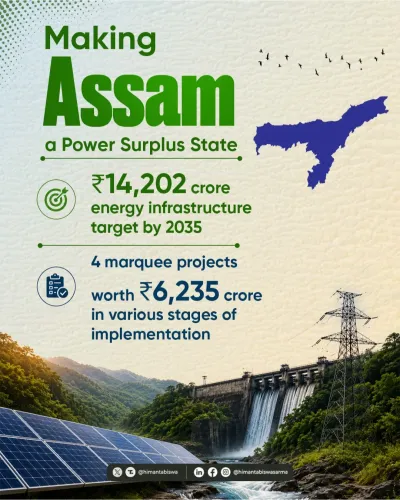
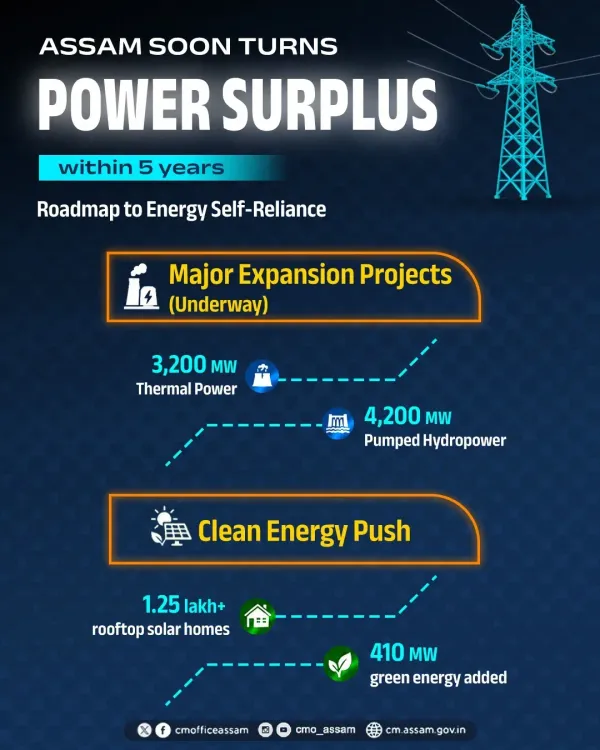
The Chief Minister's Office of Assam on 29 May 2026 announced the state's drive toward energy Atmanirbharta under CM Himanta Biswa Sarma, citing clean energy expansion, major power projects, and a vision for a power-surplus Assam that benefits every household.
Key Takeaways
The CMO Assam posted on 29 May 2026 highlighting the state's push toward energy self-sufficiency.
Himanta Biswa Sarma is credited with leading Assam toward a power-surplus future.
The state's strategy includes clean energy expansion and major power infrastructure projects.
Assam's energy agenda draws on the Brahmaputra basin's hydroelectric potential alongside solar power.
The push aligns with Atmanirbhar Bharat and India's net-zero commitment by 2070 .
Direct beneficiaries include Assam's households and industries , with potential for surplus power export.
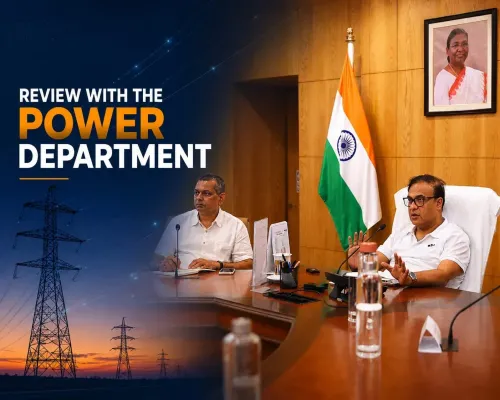
The Chief Minister's Office of Assam on Friday, 29 May 2026, highlighted the state's ongoing push toward energy self-sufficiency, crediting Chief Minister Dr. Himanta Biswa Sarma with steering Assam toward a power-surplus future through clean energy expansion and major infrastructure investments.
Context
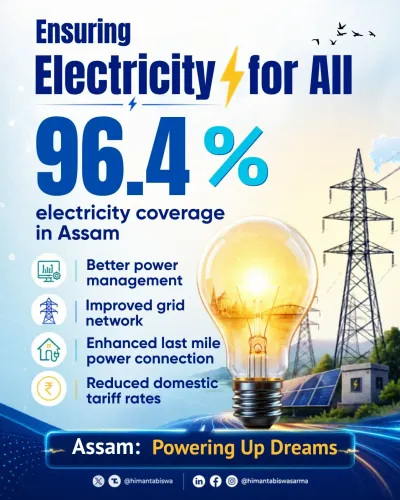
The post from the official CMO Assam account declared that Assam is 'not just generating power, it is building a brighter future for every family.' The statement frames the state's energy agenda as a social mission, not merely a technical or economic one. The reference to energy Atmanirbharta (energy self-reliance) ties the state's programme directly to the broader national self-sufficiency framework.
Under Dr. Himanta Biswa Sarma, who has served as Chief Minister since May 2021, Assam has publicly committed to expanding its clean energy base while reducing dependence on power imports from other states or the central grid.
Policy Backdrop
Assam sits within India's resource-rich Northeast, a region with significant hydroelectric potential drawn from rivers of the Brahmaputra basin. Alongside hydropower, solar energy expansion has become a parallel priority as the state works to diversify its generation mix.
The state's direction aligns with India's national renewable energy ambitions and the country's commitment to net-zero emissions by 2070. Central government emphasis on infrastructure development in the Northeast since 2014 has provided additional policy and financial tailwinds for states like Assam to accelerate such projects.
The Atmanirbhar Bharat programme, launched in 2020, explicitly encouraged states to pursue energy security as a component of broader economic self-reliance, and Assam's framing of its power agenda echoes that vocabulary.
Stakeholders and Impact
The most direct beneficiaries of an energy-surplus Assam would be the state's households, which have historically faced power shortages, particularly in rural and semi-urban areas. Reliable electricity supply is closely linked to quality-of-life indicators including healthcare access, education, and small-business viability.
State industries stand to gain from a more stable and affordable power supply, potentially lowering production costs and improving Assam's attractiveness as an investment destination in the Northeast. Surplus generation, if achieved, could also allow the state to export power to neighbouring states, creating a new revenue stream.
What's Next
The CMO's communication signals that energy policy will remain a flagship narrative for the Himanta Biswa Sarma administration in the months ahead. Concrete progress indicators — including capacity additions from hydro and solar projects and milestones in reducing power deficits — will be closely watched by both policymakers and the public.
Upcoming assembly sessions in Assam are expected to provide a formal platform for the government to table updates on its power sector roadmap, including any new state energy policy frameworks or project commissioning timelines.
Point of View
The state administration positions itself as a local executor of a nationally resonant idea, reinforcing alignment with the central government's development narrative. The Northeast's energy deficit has long been a political liability, and a credible surplus story could significantly strengthen the ruling dispensation's standing. Whether the rhetoric translates into verifiable capacity milestones will determine how durable this political asset proves to be.
NationPress
13 Oct 2026
Frequently Asked Questions
What is Assam's energy self-reliance plan?
Assam is pursuing energy self-reliance through a combination of hydroelectric projects drawing on the Brahmaputra basin, solar power expansion, and major state-led power infrastructure investments under Chief Minister Dr. Himanta Biswa Sarma.
What is energy Atmanirbharta for Assam?
Energy Atmanirbharta refers to Assam's goal of becoming self-sufficient in power generation, reducing dependence on external power sources by expanding clean and renewable energy capacity within the state, in line with the national Atmanirbhar Bharat framework.
How does Assam plan to become a power-surplus state?
Assam aims to achieve power surplus status by scaling up hydroelectric and solar generation, commissioning major power projects, and aligning state policy with India's broader renewable energy targets and net-zero 2070 commitment.
Who is leading Assam's power sector development?
Chief Minister Dr. Himanta Biswa Sarma, who has led Assam since May 2021, is credited by the state government with driving the energy self-reliance agenda and overseeing major power infrastructure initiatives.
How will Assam's energy push benefit ordinary families?
A power-surplus Assam would mean more reliable and affordable electricity for households, particularly in rural areas, while also supporting local industries, improving living standards, and potentially generating state revenue through surplus power exports.