CM Himanta: Assam hits 96.4% electrification
Synopsis
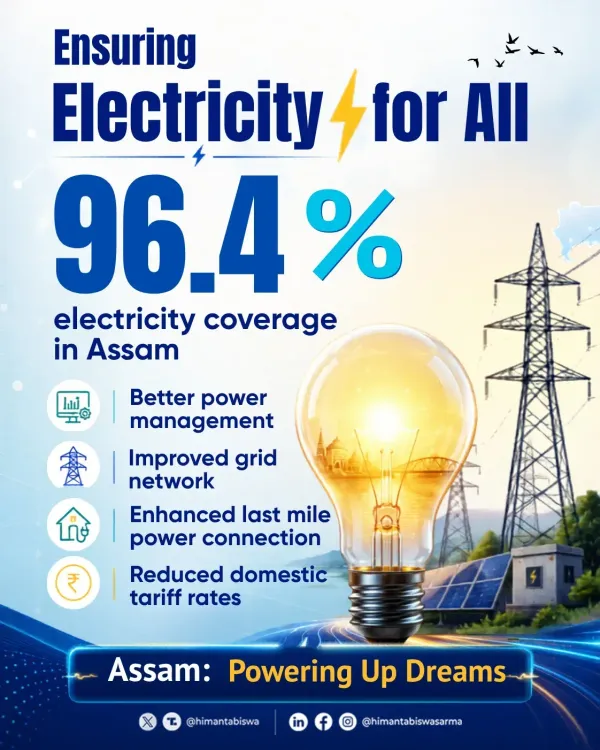
Assam Chief Minister Himanta Biswa Sarma announced on 31 May 2026 that the state has reached 96.4% electrification, marking a sharp turnaround from a decade ago when reliable power was a challenge even in urban areas, crediting sustained state and central policy efforts.
Key Takeaways
Assam has achieved 96.4% electrification , according to Chief Minister Himanta Biswa Sarma as of 31 May 2026 .
The CM described the achievement as a near-saturation of electrification levels, contrasting it with unreliable urban power supply a decade ago.
Central schemes including Saubhagya (2017) and DDUGJY (2014) provided the policy and funding backbone for last-mile electrification in Assam .
State-level distribution company restructuring, accelerated after 2016 , complemented central programmes.
The remaining gap to full coverage is concentrated in remote areas, where last-mile grid access remains a logistical challenge.
Future focus is expected to shift to supply quality, reliability of hours, and reduction of technical and commercial losses.
Assam Chief Minister Himanta Biswa Sarma on Sunday, 31 May 2026, announced that the state has achieved 96.4% electrification, citing consistent efforts to strengthen, streamline, and modernise the power sector. He noted that reliable electricity was a challenge even in urban areas a decade ago, and the state has now reached near-saturated electrification levels.
Context
Assam has historically struggled with acute power shortages, with unreliable supply affecting both rural and urban consumers well into the mid-2010s. The Chief Minister's post directly contrasts the current 96.4% electrification figure against conditions a decade earlier, framing the progress as a result of sustained state-level policy intervention.
Sarma, who assumed office in May 2021, has positioned infrastructure modernisation — including power sector reform — as a cornerstone of his administration's governance agenda.
Policy Backdrop
The gains in electrification draw on a layered policy architecture built over the past decade. The central government's Pradhan Mantri Sahaj Bijli Har Ghar Yojana (Saubhagya), launched in September 2017, aimed at providing last-mile electricity connections to unelectrified households across India, with the Northeast receiving dedicated attention under the scheme.
Before Saubhagya, the Deen Dayal Upadhyaya Gram Jyoti Yojana (DDUGJY), initiated in 2014, worked to separate agricultural and rural feeders and strengthen rural distribution infrastructure. Assam's power sector reform programme and restructuring of state distribution companies accelerated after 2016, laying the groundwork for the coverage gains the Chief Minister now cites.
As convenor of the North-East Democratic Alliance (NEDA), Sarma has also coordinated with neighbouring states on shared infrastructure priorities, with electrification forming a recurring theme in the region's development narrative.
Stakeholders and Impact
The most direct beneficiaries of expanded electrification are rural households in Assam that previously lacked reliable connections, alongside urban consumers who faced frequent supply disruptions. Improved electrification has downstream effects on agriculture, small enterprises, healthcare facilities, and schools in underserved areas.
State distribution companies (discoms) remain central to translating connection targets into sustained, quality supply. Analysts and consumer groups have long noted that the number of electrified connections does not automatically equal reliable hours of supply or reduced aggregate technical and commercial losses — metrics that will determine the long-term value of the gains cited.
What's Next
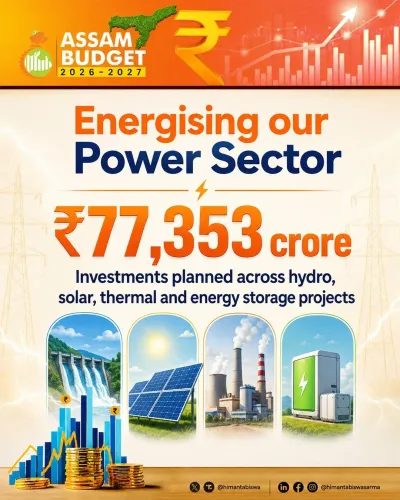
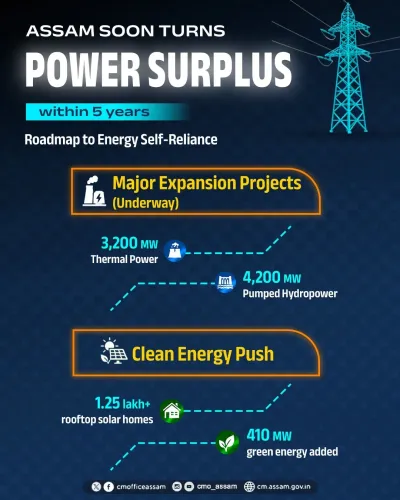
With electrification coverage approaching saturation at 96.4%, the policy focus in Assam is expected to shift toward the quality and reliability of supply — measured by average hours of power per day — and toward reducing transmission and distribution losses. Integration of renewable energy sources and new power purchase agreements are areas to watch as the state looks to secure adequate generation capacity to meet rising demand.
The remaining unelectrified households, likely concentrated in remote and difficult terrain, will test the administration's capacity to deliver last-mile connectivity beyond the reach of conventional grid infrastructure.
Point of View
Especially ahead of electoral cycles. The 96.4% figure, if sustained by supply-quality data, would represent a genuine structural shift for a state long synonymous with power deficits in the Northeast. However, the gap between connection coverage and reliable hours of supply has historically been the weak link in India's electrification story, and Assam's discoms have yet to demonstrate consistent performance on that front. The announcement also reinforces Sarma's positioning as a development-oriented administrator within the BJP's Northeast strategy, where infrastructure delivery is a key political differentiator.
NationPress
15 Oct 2026
Frequently Asked Questions
What is Assam's current electrification percentage?
According to Chief Minister Himanta Biswa Sarma's statement on 31 May 2026, Assam has achieved 96.4% electrification across the state.
What central schemes helped electrify Assam?
The Pradhan Mantri Sahaj Bijli Har Ghar Yojana (Saubhagya), launched in 2017, and the Deen Dayal Upadhyaya Gram Jyoti Yojana (DDUGJY), initiated in 2014, were the primary central government schemes that supported household electrification in Assam.
Was Assam always electrified?
No. Assam historically faced acute power shortages, and as recently as a decade ago, reliable electricity supply was a challenge even in urban areas of the state.
Who is Himanta Biswa Sarma?
Himanta Biswa Sarma is the Chief Minister of Assam since May 2021 and a senior BJP leader. He also serves as the convenor of the North-East Democratic Alliance (NEDA).
What comes after electrification for Assam's power sector?
With coverage nearing saturation, the next priorities for Assam's power sector are improving the quality and reliability of supply, reducing aggregate technical and commercial losses, and integrating renewable energy sources.