Puri Rath Yatra 2025: Pahandi Bije ritual begins ahead of schedule
Synopsis
The Puri Rath Yatra — one of the world's oldest and largest chariot festivals — began ahead of schedule on 16 July, with the Pahandi Bije procession escorting Lord Jagannath, Lord Balabhadra, and Devi Subhadra from the 12th-century Shree Jagannath Temple to their chariots. Over 13,000 security personnel are deployed as lakhs of devotees pull the iconic chariots toward the Gundicha Temple.
Key Takeaways
The Puri Rath Yatra 2025 commenced on 16 July with the Pahandi Bije ritual beginning ahead of its scheduled time.
Lord Jagannath , Lord Balabhadra , and Devi Subhadra are being taken to the Gundicha Temple , approximately 3 km from the Shree Jagannath Temple , on a nine-day sojourn.
Puri King Gajapati Maharaja Dibya Singha Deb performed the ceremonial golden-broom sweeping of the chariots as the first servitor of Lord Jagannath.
More than 13,000 police personnel and CAPF forces are deployed, supervised by 19 senior IPS officers .
The Indian Coast Guard and Indian Navy are on coastal alert during the festival.
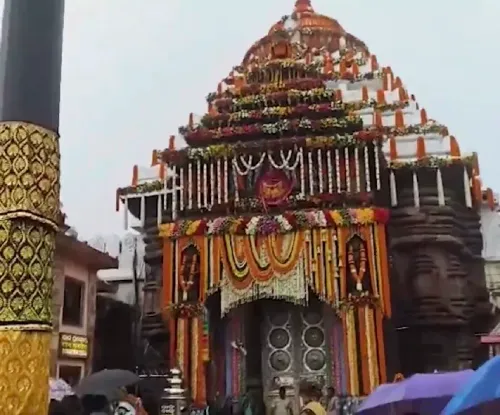
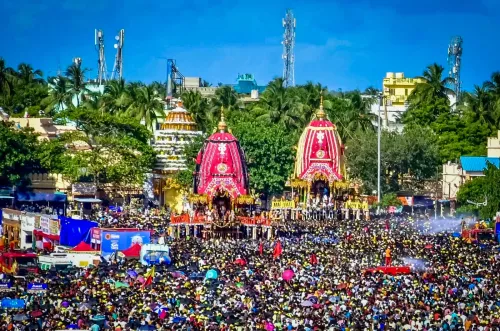
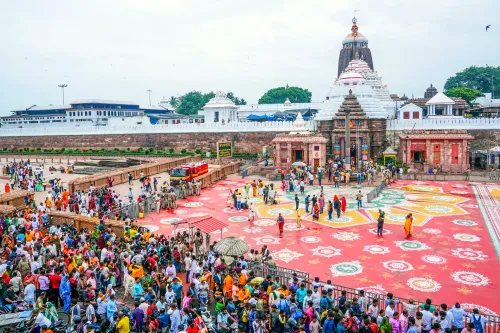
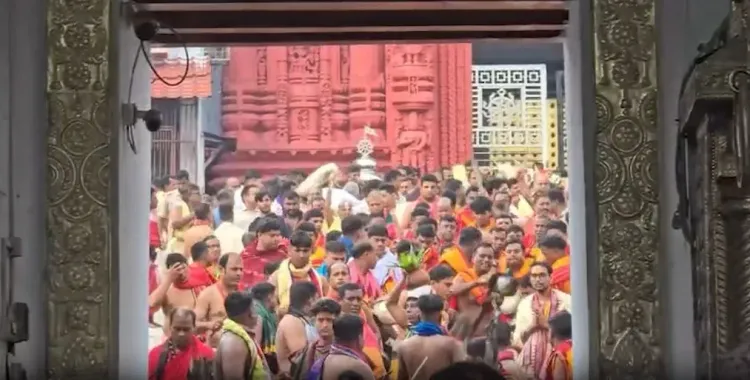
The world-renowned Puri Rath Yatra got underway in the sacred coastal city of Puri, Odisha, on Thursday, 16 July, with the Pahandi Bije ceremonial procession commencing ahead of its scheduled time. Lord Jagannath, his elder brother Lord Balabhadra, and sister Devi Subhadra were escorted from the 12th-century Shree Jagannath Temple to their elaborately decorated chariots amid resounding traditional music and sacred Vedic chanting.
The Pahandi Bije Procession
The Pahandi Bije ritual follows a precise ceremonial order rooted in centuries of tradition. Chakraraj Sudarshan — the celestial weapon of Lord Krishna — is first placed on the chariot of Goddess Subhadra, after which Lord Balabhadra, Devi Subhadra, and finally Lord Jagannath are brought out in the Dhadi Pahandi formation, where the deities move simultaneously in close succession, one behind the other.
The air in Puri reverberated with the sounds of ghanta (gong), kahali (trumpet), and telingi baja, as priests chanted Vedic hymns and traditional Odissi dancers performed to welcome the deities at the start of their nine-day sojourn to the Gundicha Temple, revered as the birthplace of Lord Jagannath.
Key Rituals and Royal Participation
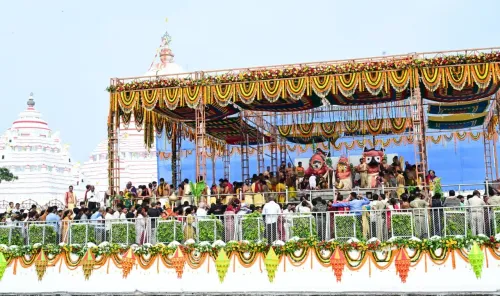
Following the Pahandi ritual, Puri Shankaracharya Swami Nischalananda Saraswati and his disciples offered puja to the holy siblings on their chariots. Subsequently, Puri King Gajapati Maharaja Dibya Singha Deb, traditionally regarded as the first servitor of Lord Jagannath, offered prayers and performed the ceremonial sweeping of the chariots using a golden broom — a ritual known as Chhera Panhara.
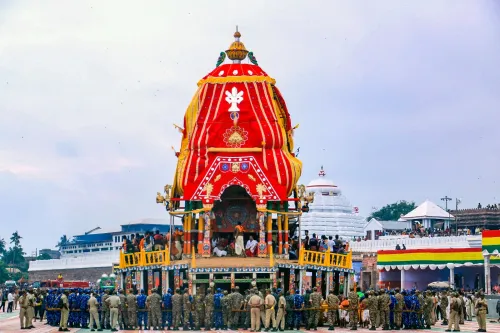
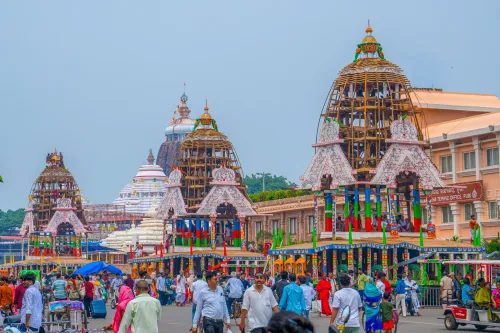
After the royal service, lakhs of devotees began pulling the three chariots — Nandighosha (Lord Jagannath's), Taladhwaja (Lord Balabhadra's), and Darpadalana (Devi Subhadra's) — toward the Gundicha Temple, approximately 3 km from the main shrine, with chants of 'Jai Jagannath' and 'Hari Bol' filling the streets.
Significance of the Festival
The Rath Yatra is observed on Dwitiya Tithi — the second day of the bright fortnight (Shukla Paksha) of the Ashadha month in the Hindu calendar — a period considered spiritually auspicious due to the waxing moon. The festival draws millions of pilgrims annually, making it one of the largest religious gatherings in the world. This is among the oldest continuously observed chariot festivals on the subcontinent, with records of its celebration dating back over a millennium.
Security and Administrative Arrangements
The district administration deployed more than 13,000 police personnel, supplemented by Central Armed Police Forces (CAPF), to ensure orderly conduct of the festival. 19 senior IPS officers have been assigned supervisory roles across the security grid. The Indian Coast Guard and the Indian Navy are on alert to monitor the coastal route for any unlawful activity. Authorities described the arrangements as among the most extensive in recent years, reflecting the scale of the gathering and the logistical demands of managing lakhs of pilgrims in a compact coastal town.
Point of View
000-plus personnel alongside naval and coast guard assets signals that authorities are treating this not merely as a religious event but as a critical public-safety mission. What the coverage rarely examines is the infrastructure strain on Puri's narrow streets and whether the town's civic systems — drainage, water, medical — scale proportionately with the security apparatus. The festival's global footprint also raises a broader question: as Puri's spiritual tourism grows, is the heritage town's urban planning keeping pace with its pilgrimage ambitions?
NationPress
16 Jul 2026
Frequently Asked Questions
What is the Pahandi Bije ritual at Puri Rath Yatra?
The Pahandi Bije is the ceremonial procession in which Lord Jagannath, Lord Balabhadra, and Devi Subhadra are escorted from the Shree Jagannath Temple to their decorated chariots at the start of the Rath Yatra. The deities move in the Dhadi Pahandi formation — simultaneously in close succession — accompanied by traditional music, Vedic chanting, and Odissi dance performances.
When did Puri Rath Yatra 2025 begin?
The Puri Rath Yatra 2025 began on Thursday, 16 July, with the Pahandi Bije ritual commencing ahead of its scheduled time. The festival is observed on Dwitiya Tithi of the Shukla Paksha of the Ashadha month in the Hindu calendar.
What are the three chariots used in Puri Rath Yatra?
The three chariots are Nandighosha (for Lord Jagannath), Taladhwaja (for Lord Balabhadra), and Darpadalana (for Devi Subhadra). Devotees pull these chariots approximately 3 km from the Shree Jagannath Temple to the Gundicha Temple.
What is the role of the Puri King in the Rath Yatra?
Puri King Gajapati Maharaja Dibya Singha Deb is traditionally regarded as the first servitor of Lord Jagannath. During the Rath Yatra, he offers prayers to the deities on their chariots and performs the ceremonial sweeping of the chariots with a golden broom, a ritual central to the festival's tradition.
What security arrangements are in place for Puri Rath Yatra 2025?
More than 13,000 police personnel have been deployed alongside Central Armed Police Forces (CAPF), with 19 senior IPS officers overseeing security. The Indian Coast Guard and Indian Navy are also on alert to monitor the coastal route for any unlawful activity during the festival.