CM Yogi extends greetings on Rath Yatra 2026
Synopsis
Uttar Pradesh Chief Minister Yogi Adityanath greeted devotees on the commencement of Rath Yatra on 16 July 2026, invoking Lord Jagannath, Balabhadra, and Mata Subhadra and praying for peace and prosperity for all.
Key Takeaways
Uttar Pradesh Chief Minister Yogi Adityanath posted Rath Yatra greetings on 16 July 2026 , marking the festival's commencement.
He described the Rath Yatra as a symbol of Sanatan culture , social harmony, and public welfare.
The CM prayed for the grace of Lord Jagannath, Balabhadra, and Mata Subhadra upon all living beings.
The Rath Yatra originates in Puri, Odisha and is one of India's largest religious processions, drawing millions of pilgrims annually.
The greeting aligns with CM Yogi's consistent pattern of state-level engagement with major Hindu religious festivals since 2017.
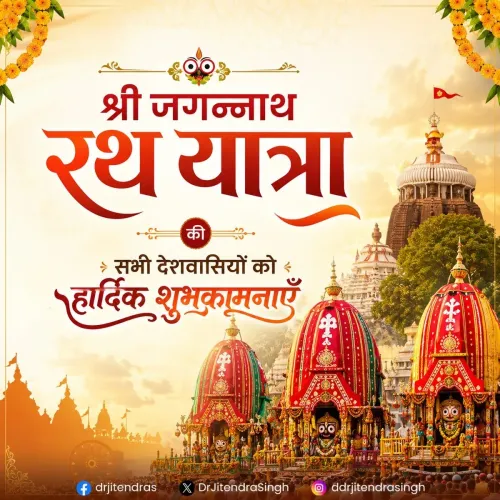
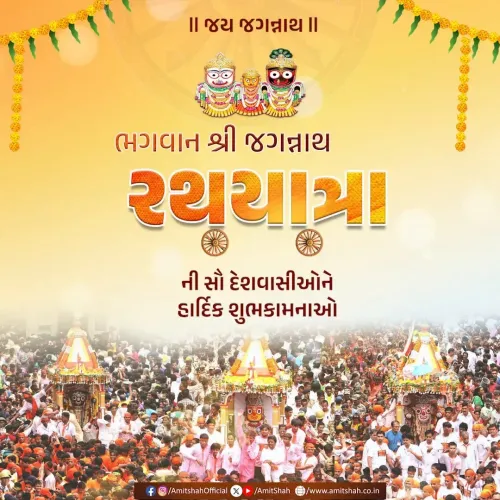
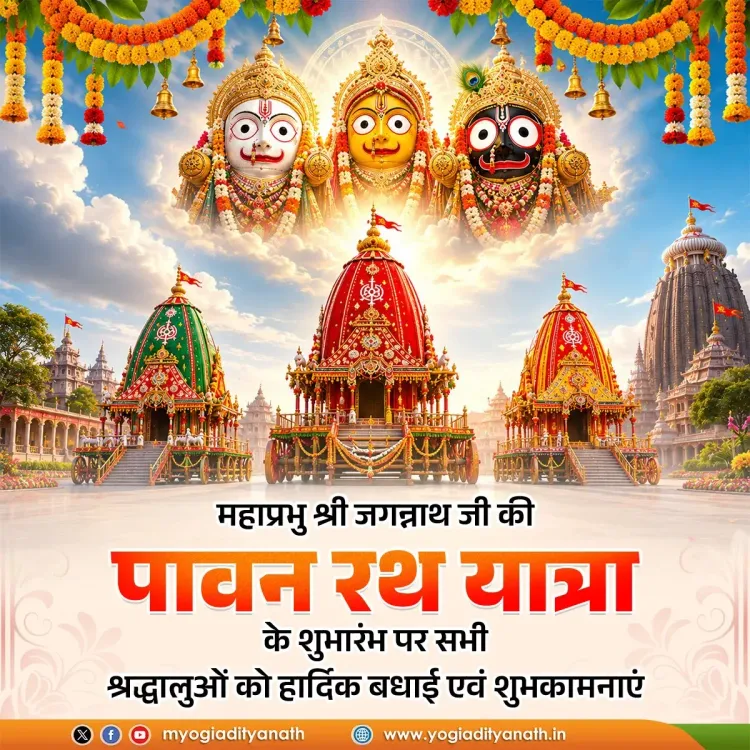
Uttar Pradesh Chief Minister Yogi Adityanath on Thursday, 16 July 2026, extended heartfelt greetings to devotees across the country on the occasion of the Rath Yatra of Mahaprabhu Shri Jagannath Ji, describing the festival as a sacred symbol of Sanatan culture, social harmony, and public welfare.
In his post, the Chief Minister wrote: 'सनातन संस्कृति की अगाध आस्था, सामाजिक समरसता व लोकमंगल की पावन प्रतीक' — 'a sacred symbol of the deep faith of Sanatan culture, social harmony, and public welfare' — before offering blessings for the commencement of the chariot procession. He concluded with the traditional invocation 'जय जगन्नाथ' ('Hail Jagannath').
Context
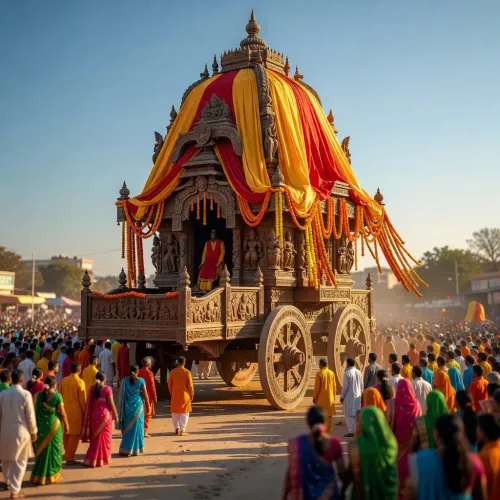
The Rath Yatra, one of the oldest and largest religious processions in India, marks the annual journey of Lord Jagannath, his brother Shri Balabhadra, and sister Mata Subhadra from the Jagannath Temple in Puri, Odisha to the Gundicha Temple, roughly 3 kilometres away. The festival typically falls in the Hindu month of Ashadha and draws millions of pilgrims from across India and the world. It is a pan-India celebration, with significant processions also held in cities such as Ahmedabad, Kolkata, and Vrindavan.
CM Adityanath prayed that the grace of Mahaprabhu Shri Jagannath Ji, Shri Balabhadra Ji, and Mata Subhadra Ji remain upon all living beings, and that happiness, peace, prosperity, and good health prevail in everyone's life.
Policy Backdrop
Yogi Adityanath, as the head of the Gorakhnath Math — one of the most prominent Hindu monastic institutions in northern India — has consistently engaged with major Hindu religious observances through public messaging and state-level participation. Under his tenure as Chief Minister since 2017, Uttar Pradesh has seen heightened state involvement in festivals including Kumbh Mela, Diwali at Ayodhya, and Janmashtami at Mathura-Vrindavan.
The Rath Yatra greeting fits within a broader pattern of the BJP-led state government publicly affirming Sanatan Hindu traditions as part of its cultural and governance identity. The Chief Minister's reference to 'सामाजिक समरसता' ('social harmony') echoes a recurring theme in his public communications, emphasising unity across communities through shared religious heritage.
Stakeholders and Impact
The Rath Yatra is observed by tens of millions of Hindus across India, making it one of the most widely followed festivals on the Hindu calendar. Devotees in Uttar Pradesh — which has a significant Vaishnava tradition — participate in local processions in cities including Mathura, Vrindavan, and Varanasi. A greeting from the Chief Minister carries both religious resonance and political weight, signalling the state government's alignment with the devout electorate.
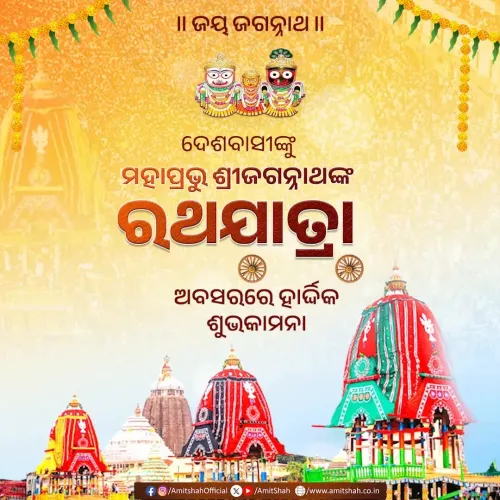
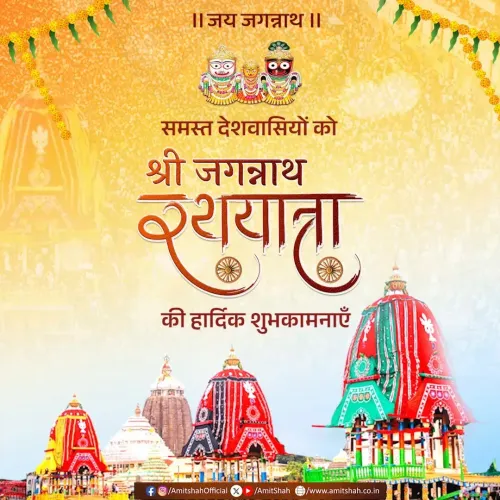
The post, accompanied by an image, was published in the early morning hours, in keeping with the tradition of offering prayers at the auspicious start of the festival day.
What's Next
The Rath Yatra procession spans several days, culminating in the return journey known as Bahuda Yatra. State governments in Odisha and other states typically deploy large security and administrative arrangements to manage the massive crowds. In Uttar Pradesh, local administrations in temple towns are expected to facilitate community celebrations. CM Adityanath's public engagement with the festival is likely to continue through the duration of the yatra period, reinforcing the state's active participation in the national religious calendar.
Point of View
He frames a majoritarian festival in an inclusive register — a consistent rhetorical strategy for a leader who governs India's most populous state. The message also reflects the BJP's broader project of embedding state identity with Hindu cultural milestones, a pattern that has deepened since 2017. As Uttar Pradesh heads toward its next assembly cycle, such high-visibility religious engagements serve both as genuine expressions of faith and as signals to a devout voter base.
NationPress
14 Oct 2026
Frequently Asked Questions
What is Rath Yatra and when does it take place?
Rath Yatra is an annual Hindu chariot festival celebrating Lord Jagannath's journey from the Jagannath Temple in Puri, Odisha to the Gundicha Temple. It falls in the Hindu month of Ashadha, typically in June or July, and in 2026 began on 16 July.
Why did CM Yogi Adityanath post about Rath Yatra?
As Uttar Pradesh Chief Minister and head of the Gorakhnath Math, Yogi Adityanath regularly acknowledges major Hindu festivals. His post extended greetings to devotees and prayed for the well-being of all on the occasion of the festival's commencement.
What did Yogi Adityanath say about Rath Yatra 2026?
He described the Rath Yatra as a sacred symbol of the deep faith of Sanatan culture, social harmony, and public welfare, and prayed that Lord Jagannath, Balabhadra, and Mata Subhadra bestow happiness, peace, prosperity, and good health on all.
Where is Rath Yatra celebrated in Uttar Pradesh?
Rath Yatra is celebrated across Uttar Pradesh, with notable processions in Mathura, Vrindavan, and Varanasi, all of which have strong Vaishnava traditions.
What is the significance of 'Jai Jagannath'?
'Jai Jagannath' — meaning 'Hail Jagannath' or 'Victory to Jagannath' — is the traditional devotional invocation associated with Lord Jagannath and is commonly used by devotees and public figures during the Rath Yatra festival.