Rajnath Singh hails BRO for Atal, Sela tunnels and Umling La road
Synopsis
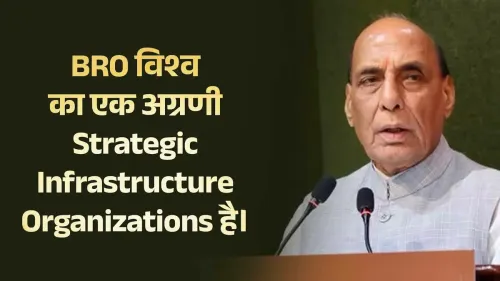
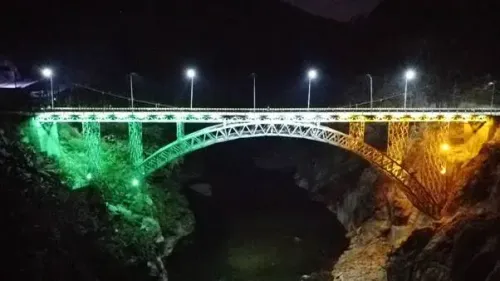
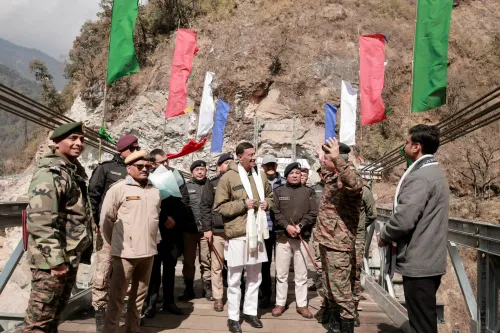
Union Defence Minister Rajnath Singh on 16 July 2026 praised BRO, calling the Atal Tunnel, Sela Tunnel and Umling La road symbols of the organisation's skill and technological adaptation, reaffirming India's strategic border infrastructure push along the LAC.
Key Takeaways
Rajnath Singh on 16 July 2026 publicly praised BRO for three landmark projects: Atal Tunnel , Sela Tunnel , and the Umling La road.
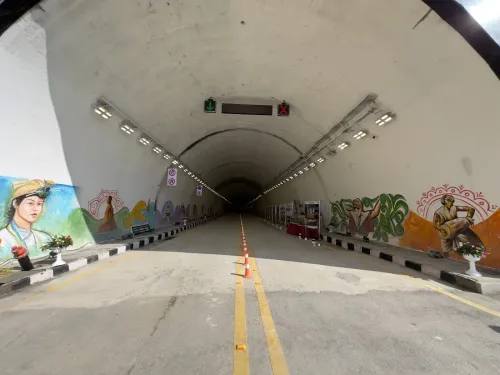
The Atal Tunnel is 9.02 km long and provides all-weather connectivity to Lahaul-Spiti in Himachal Pradesh, inaugurated in October 2020 .
The Umling La road in Ladakh , opened in 2021 , is the world's highest motorable pass at 5,883 metres .
The Sela Tunnel in Arunachal Pradesh is designed to ensure year-round access to the strategically critical Tawang sector near the China border.
BRO was placed under the Ministry of Defence in 2015 ; the 2020 India-China standoff accelerated funding for its border projects.
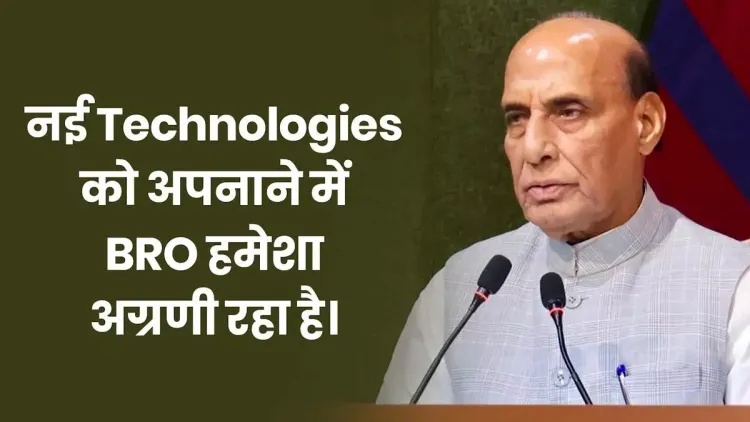
Singh described BRO's ability to adopt new technologies and build world-class infrastructure in extreme terrain as making it a 'frontline organisation.'
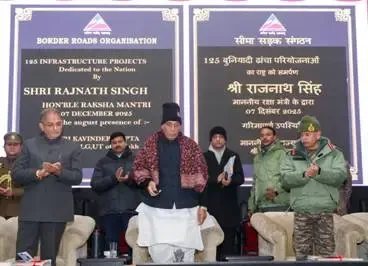
Union Defence Minister Rajnath Singh on Thursday, 16 July 2026, praised the Border Roads Organisation (BRO) for landmark infrastructure achievements, calling the Atal Tunnel, Sela Tunnel, and the Umling La road more than mere engineering feats — describing them as symbols of BRO's skill, dedication, and continuous adaptation of technology.
What the Minister Said
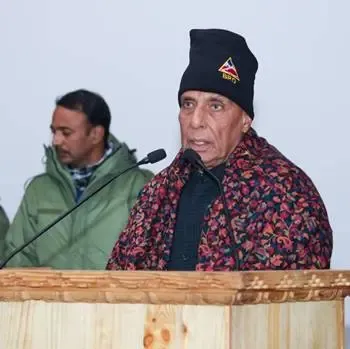
Posting in Hindi, Singh wrote that constructions such as Atal Tunnel, Sela Tunnel aur Umling La ['Atal Tunnel, Sela Tunnel and Umling La'] are 'not just engineering achievements, but symbols of BRO's skill, dedication and continuous adaptation of technology.' He further stated that BRO's ability to adopt new technologies, build world-class infrastructure in the most difficult terrain, and turn every challenge into an opportunity makes it a 'frontline organisation.'
The post was accompanied by a video, underscoring the visual scale of these high-altitude projects.
Context
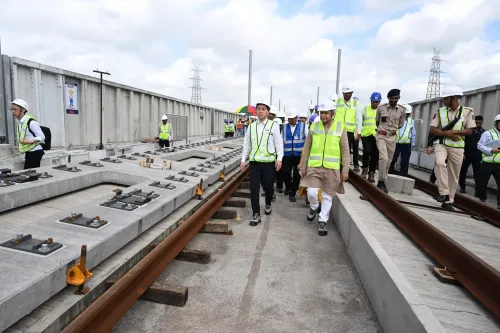
The three projects cited by the Minister represent BRO's most celebrated recent milestones. The Atal Tunnel, at 9.02 km, runs beneath the Rohtang Pass in Himachal Pradesh and was inaugurated in October 2020, providing all-weather road connectivity to the Lahaul-Spiti valley for the first time.
The Sela Tunnel in Arunachal Pradesh is designed to give the Indian Army year-round access to the strategically sensitive Tawang sector near the China border. The Umling La road in Ladakh, constructed by BRO and opened in 2021, reaches an altitude of 5,883 metres, making it the highest motorable pass in the world.
Policy Backdrop
India's push for dual-use border infrastructure gained significant momentum after the 2020 India-China standoff along the Line of Actual Control (LAC), which accelerated approvals and funding for BRO projects across Ladakh and Arunachal Pradesh. The strategic logic is straightforward: faster roads and all-weather tunnels reduce troop and supply deployment times to forward positions.
BRO, established in 1960, was brought under the Ministry of Defence in 2015 to better align its operations with military requirements. Since then, the organisation has increasingly adopted advanced engineering methods — including the New Austrian Tunnelling Method and cold-weather construction technology — to tackle permafrost and high-altitude conditions that few organisations in the world attempt.
Stakeholders and Impact
The beneficiaries of BRO's work span military and civilian domains. Indian Army formations deployed along the LAC gain faster and more reliable logistics corridors, directly enhancing operational readiness. At the same time, border communities in Lahaul-Spiti, Tawang, and Ladakh — historically cut off for months during winter — gain economic connectivity, access to healthcare, and integration with national supply chains.
BRO personnel, who operate in some of the world's most inhospitable conditions, are the direct subject of the Minister's praise — a recognition that also serves to highlight the human cost and commitment behind infrastructure that is often discussed in purely strategic terms.
What's Next
Further tunnel inaugurations in Arunachal Pradesh and Ladakh are expected in coming fiscal years as BRO advances its project pipeline. Parliamentary discussions on defence capital outlay for border roads are also anticipated during the ongoing monsoon session. Singh's public affirmation of BRO's capabilities signals continued political and budgetary backing for the organisation as India sustains its forward infrastructure posture along contested Himalayan frontiers.
Point of View
Timed to reinforce the government's strategic messaging on LAC preparedness. By naming three of BRO's most visible achievements in a single breath, he frames border roads not as administrative outputs but as expressions of national resolve — a framing that serves both domestic political audiences and an external audience watching India's posture vis-à-vis China. The emphasis on 'continuous adaptation of technology' also subtly counters any perception that India's high-altitude infrastructure push has plateaued. Sustained ministerial visibility on BRO projects suggests the government intends to keep border connectivity central to its defence and development pitch ahead of the budget cycle.
NationPress
16 Jul 2026
Frequently Asked Questions
What is the Atal Tunnel and why is it significant?
The Atal Tunnel is a 9.02 km road tunnel beneath the Rohtang Pass in Himachal Pradesh , inaugurated in October 2020 . It provides all-weather connectivity to the Lahaul-Spiti valley, which was previously cut off for months during winter, and also serves as a strategic military corridor.
What is the Umling La pass and who built the road there?
Umling La in Ladakh is the world's highest motorable pass at 5,883 metres . The road was constructed by the Border Roads Organisation (BRO) and opened in 2021 , significantly improving connectivity in a strategically sensitive region.
What is the Sela Tunnel and where is it located?
The Sela Tunnel is a strategic tunnel project in Arunachal Pradesh , designed to provide year-round road access to the Tawang sector near the China border, which is critical for Indian Army logistics and troop movement.
Why did Rajnath Singh praise BRO in July 2026?
Union Defence Minister Rajnath Singh praised BRO on 16 July 2026 , calling its projects symbols of skill, dedication and continuous technological adaptation, reaffirming government support for India's border infrastructure push along the Line of Actual Control .
When was BRO placed under the Ministry of Defence?
The Border Roads Organisation (BRO) was placed under the Ministry of Defence in 2015 to better align its work with military operational requirements along India's borders.