Sela Tunnel brings year-round access to Tawang, says Arunachal Dy CM Chowna Mein
Synopsis
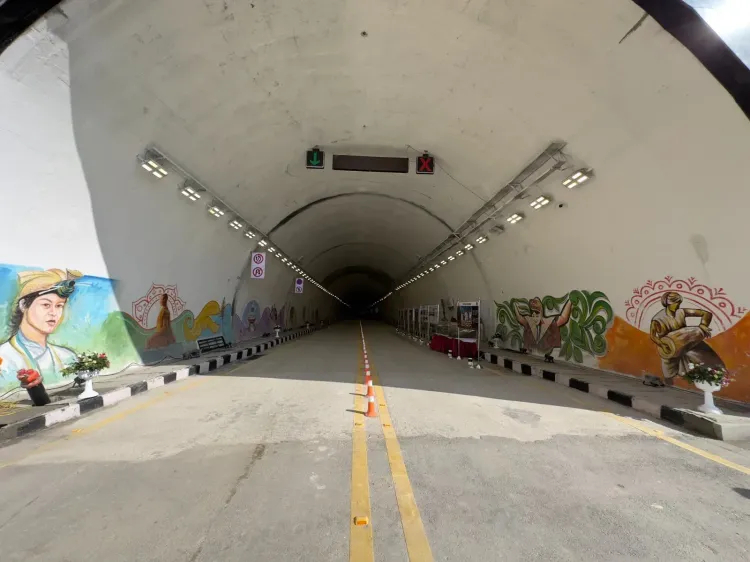
The Sela Tunnel — the world's longest bi-lane tunnel at 13,000 feet — has ended Tawang's seasonal isolation, according to Arunachal Pradesh Deputy CM Chowna Mein. With ₹95,000 crore invested in Northeast railways since 2014 and 60 stations being modernised, this is less a single project and more a structural shift in how India connects its most strategically sensitive frontier.
Key Takeaways
The Sela Tunnel , inaugurated by PM Narendra Modi on 9 March 2024 , is the world's longest bi-lane tunnel at 13,000 feet .
It provides all-weather road access to Tawang , near the tri-junction of India , China (Tibet) , and Bhutan .
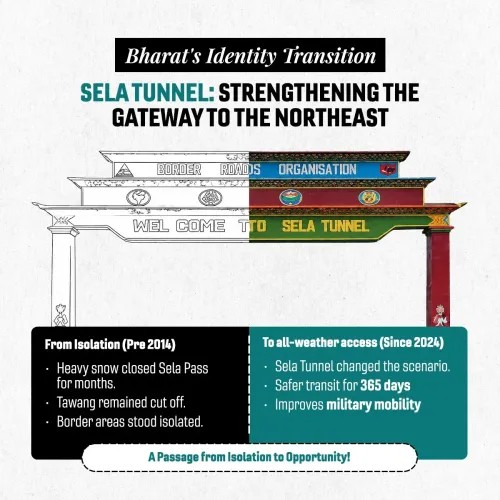
The tunnel was built by the Border Roads Organisation (BRO) and improves both civilian and military mobility.
More than 1,500 km of railway tracks have been laid in the Northeast since 2014 , with investments exceeding ₹95,000 crore .
Over 60 railway stations are being modernised under the Amrit Bharat Station Scheme ; 8 new Greenfield airports have been added.
Arunachal Pradesh , Meghalaya , Nagaland , Tripura , and Mizoram have achieved 100% rail electrification.
The Sela Tunnel in Arunachal Pradesh has fundamentally transformed connectivity to Tawang, delivering all-weather road access, bolstering strategic military mobility, and opening new economic corridors in one of India's most geographically challenging frontiers, Deputy Chief Minister Chowna Mein said on Saturday, 20 June. Mein made the remarks in a series of posts on social media platform X, underscoring the tunnel's role as a centrepiece of the Northeast's infrastructure overhaul.
What the Sela Tunnel delivers
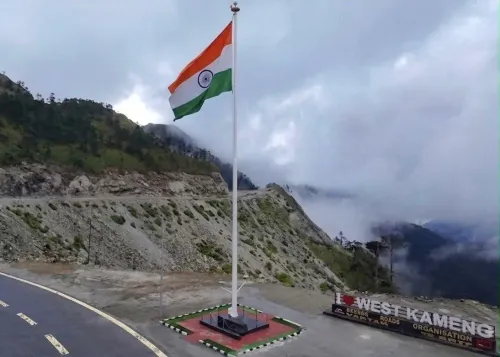
Inaugurated by Prime Minister Narendra Modi on 9 March 2024, the Sela Tunnel holds the distinction of being the world's longest bi-lane tunnel at an altitude of 13,000 feet. The structure comprises two tunnels and a link road, collectively ensuring uninterrupted connectivity to the Tawang region in northwestern Arunachal Pradesh — a strategically sensitive zone situated near the tri-junction of India, China (Tibet), and Bhutan.
Executed by the Border Roads Organisation (BRO), the project addresses a long-standing vulnerability: a route that heavy snowfall would render impassable for months each year. 'A route once disrupted by heavy snowfall is now accessible throughout the year,' Mein said.
Strategic and economic significance
Beyond civilian mobility, the tunnel significantly improves the armed forces' ability to move troops and supplies to the Tawang sector year-round — a capability of considerable strategic weight given the region's proximity to the Line of Actual Control (LAC). Analysts have long identified the Tawang corridor as one of the most operationally critical in India's northeastern defence posture.
On the economic front, Mein said improved accessibility is 'fostering economic opportunities, boosting tourism, and accelerating development across the region.' The tunnel is part of a broader infrastructure push that includes expanded railway networks, upgraded airports, and modernised road corridors.
Northeast's infrastructure transformation: Key numbers
Mein cited a sweeping set of metrics to illustrate the scale of change across the Northeast over the past decade. According to the Deputy Chief Minister, more than 1,500 km of railway tracks have been laid in the region since 2014, backed by investments exceeding ₹95,000 crore in the railway sector. Over 96% railway electrification has been achieved across the region, and states including Arunachal Pradesh, Meghalaya, Nagaland, Tripura, and Mizoram have attained 100% rail electrification.
Eight new Greenfield airports have been added, and over 60 railway stations across the Northeast are being modernised under the Amrit Bharat Station Scheme. Vande Bharat trains are now operational in Assam, while 100% household electrification has been recorded across the region.
Mein's broader assessment
'Over the past 12 years, the region has undergone a historic transformation, laying the foundation for a more connected, prosperous, and vibrant Northeast,' Mein said. He described the Northeast as having 'redefined development over the past decade' — transitioning from a region once defined by remoteness and infrastructural deficits to one emerging as 'a key pillar of India's development story.'
Mein, who also holds the Finance, Planning and Investment, Power, and Non-Conventional Energy Resources portfolios, framed the transformation as one driven by 'trust, participation, and prosperity' rather than infrastructure alone. 'Today, the Northeast stands as a symbol of confidence, cultural pride, and economic dynamism,' he added.
What comes next
With the foundational connectivity layer now largely in place, the focus is expected to shift to leveraging these assets for trade, tourism, and cross-border economic integration with Southeast Asia under India's Act East Policy. The Sela Tunnel's operational record over the coming winters will be a key test of whether the all-weather promise holds under extreme Himalayan conditions.
Point of View
Or whether the region remains dependent on Central outlays for its growth momentum. The strategic dimension — year-round military access to a LAC-adjacent sector — is arguably the more consequential story, and one that official statements tend to understate.
NationPress
19 Sept 2026
Frequently Asked Questions
What is the Sela Tunnel and where is it located?
The Sela Tunnel is the world's longest bi-lane tunnel at an altitude of 13,000 feet, located in Arunachal Pradesh. It comprises two tunnels and a link road, providing all-weather connectivity to the Tawang region near the tri-junction of India, China (Tibet), and Bhutan.
When was the Sela Tunnel inaugurated and who built it?
The Sela Tunnel was inaugurated by Prime Minister Narendra Modi on 9 March 2024. It was constructed by the Border Roads Organisation (BRO) as part of a broader strategic infrastructure push in the Northeast.
Why is the Sela Tunnel strategically important?
The tunnel ensures year-round road access to Tawang, a sector of high strategic sensitivity given its proximity to the Line of Actual Control (LAC) with China. Previously, heavy snowfall would cut off the route for extended periods, limiting both civilian movement and military logistics.
How much has the Centre invested in Northeast railway infrastructure?
According to Deputy CM Chowna Mein, investments in the Northeast railway sector have exceeded ₹95,000 crore since 2014, during which more than 1,500 km of new tracks have been laid. Over 60 stations are being modernised under the Amrit Bharat Station Scheme.
Which Northeastern states have achieved 100% rail electrification?
Arunachal Pradesh, Meghalaya, Nagaland, Tripura, and Mizoram have achieved 100% rail electrification, according to Mein. The broader Northeast region has crossed 96% railway electrification overall.