CM Pema Khandu Meets BRO Labourers Union in Tawang
Synopsis
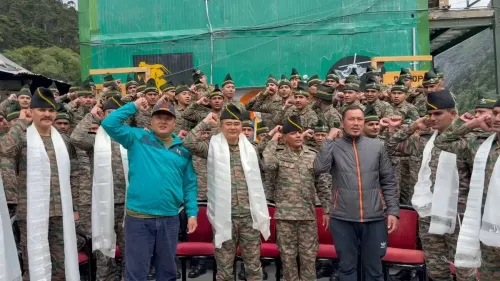
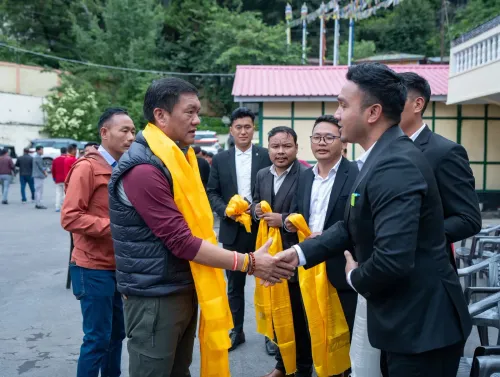
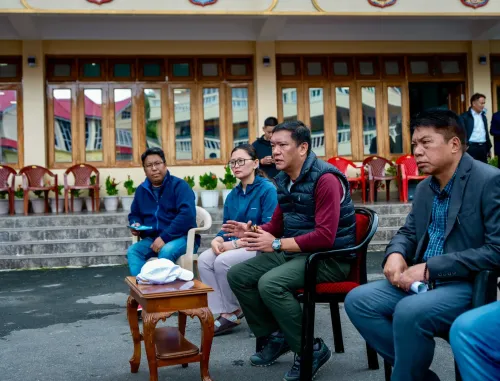
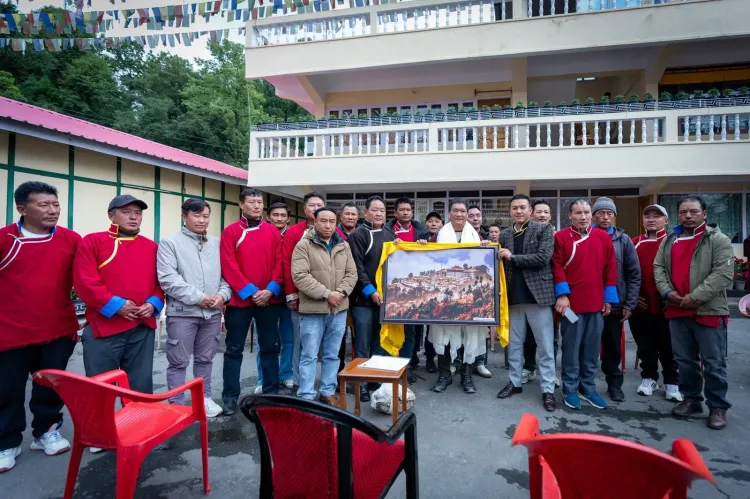
Arunachal Pradesh Chief Minister Pema Khandu met the BRO Labourers Union in Tawang on 23 June 2026, acknowledging the courage and patriotism of workers building strategic roads along the Line of Actual Control with China.
Key Takeaways
Chief Minister Pema Khandu met the BRO Labourers Union, Tawang District , on 23 June 2026 .
He heard the workers' concerns and suggestions firsthand, calling their service a 'testament to courage, commitment, and patriotism.' The Border Roads Organisation was established in 1960 and operates under the Ministry of Defence to build strategic roads in border areas.
In 2017 , India approved accelerated construction of 73 strategic roads along the Line of Actual Control , several in Arunachal Pradesh .
Tawang District is one of India's most strategically sensitive zones, sharing a boundary with China .
BRO labourers work in extreme high-altitude and harsh terrain conditions, making their welfare critical to the pace of border infrastructure projects.
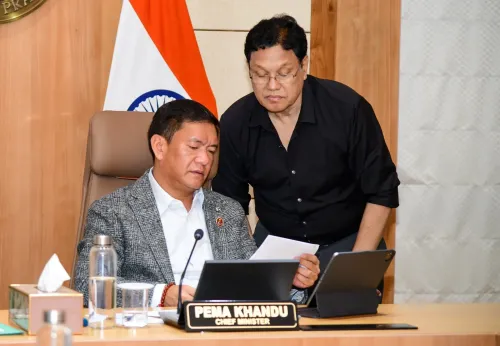
Arunachal Pradesh Chief Minister Pema Khandu on Tuesday, 23 June 2026, met members of the BRO Labourers Union, Tawang District, listening to their concerns and suggestions in a direct engagement with the workforce that builds and maintains India's strategic border roads.
Context
Posting on X, CM Khandu said: 'Behind every strategic road in our border areas stands the unwavering dedication of BRO labourers. Their service in some of the harshest terrains is a testament to courage, commitment, and patriotism.' The meeting underlines the Chief Minister's focus on the welfare of ground-level workers who operate in extreme high-altitude conditions along the Line of Actual Control (LAC).
Tawang District shares a sensitive boundary with China and is among the most strategically significant zones in the country. Roads built and maintained here by the Border Roads Organisation (BRO) are critical to both military mobility and civilian access in the region.
Policy Backdrop
The Border Roads Organisation was established in 1960, in the aftermath of the 1962 Sino-Indian conflict, with the mandate to construct and maintain strategic road infrastructure in India's border regions. It operates under the Ministry of Defence.
In 2017, the Government of India approved accelerated construction of 73 strategic roads along the Line of Actual Control, several of which are located in Arunachal Pradesh. These projects are part of a broader national effort to match infrastructure developments on the Chinese side of the border and ensure that remote frontier areas remain accessible year-round.
India has steadily expanded road and bridge projects across the Northeast through coordinated efforts between state governments and the Ministry of Defence. Meetings with labour unions form part of routine engagement to sustain workforce morale and address grievances in high-altitude, difficult terrain.
Stakeholders and Impact
BRO labourers are among the most exposed sections of India's infrastructure workforce, often working at altitudes exceeding 14,000 feet in sub-zero temperatures, landslide-prone zones, and areas with limited connectivity. Their welfare directly affects the pace and quality of strategic construction projects.
Border communities in Tawang and surrounding areas also benefit from improved road access, which reduces their dependence on seasonal supply chains and opens economic opportunities. For the state government, sustaining the morale and welfare of BRO workers is intertwined with the broader goal of faster border infrastructure development.
What's Next
The Ministry of Defence periodically reviews ongoing BRO projects across the Northeast, and parliamentary questions on worker welfare schemes for border road construction personnel are expected to remain a point of legislative scrutiny. CM Khandu's direct engagement with the union signals that state-level advocacy for BRO workers' concerns could feed into those policy conversations.
As India continues to prioritise border infrastructure as a strategic imperative, the welfare and working conditions of the labour force executing these projects will remain central to sustaining the momentum of construction in Arunachal Pradesh's frontier districts.
Point of View
The human capital sustaining that effort has rarely received equivalent political attention. Khandu's engagement positions Arunachal Pradesh as an active stakeholder in the welfare dimension of national security infrastructure, not merely a passive beneficiary. It also signals that labour concerns in BRO projects may gain greater visibility in future Ministry of Defence policy reviews.
NationPress
21 Sept 2026
Frequently Asked Questions
Who are BRO labourers and what do they do?
BRO labourers are workers employed by or associated with the Border Roads Organisation, a Ministry of Defence body, to construct and maintain strategic roads, bridges, and tunnels in India's remote border regions, including high-altitude areas in Arunachal Pradesh.
Why did CM Pema Khandu meet the BRO Labourers Union in Tawang?
CM Pema Khandu met the BRO Labourers Union in Tawang on 23 June 2026 to hear their concerns and suggestions firsthand, acknowledging the difficult conditions in which they work along the Line of Actual Control.
What is the significance of Tawang for India's border infrastructure?
Tawang District in Arunachal Pradesh borders China and is one of India's most strategically sensitive zones. Roads built there by the BRO are critical for military mobility and civilian access along the Line of Actual Control.
When was the Border Roads Organisation established and why?
The Border Roads Organisation was established in 1960, following the 1962 Sino-Indian conflict, to build and maintain strategic road infrastructure in India's border and remote regions under the Ministry of Defence.
What is India's policy on strategic roads along the LAC in Arunachal Pradesh?
In 2017, the Government of India approved accelerated construction of 73 strategic roads along the Line of Actual Control, several located in Arunachal Pradesh, as part of a broader effort to improve military mobility and match infrastructure developments on the Chinese side.