CM Khandu Launches CM PRAGATI to Fast-Track Arunachal Projects
Synopsis
Arunachal Pradesh Chief Minister Pema Khandu launched CM PRAGATI, a revamped project-monitoring platform, on May 26, 2026. The inaugural review covered major infrastructure, strategic, and border projects with BRO, NHIDCL, PSUs, and Deputy Commissioners joining live from across the state.
Key Takeaways
CM PRAGATI is a rebranded version of the state's earlier e-Pragati project-monitoring platform, launched by Chief Minister Pema Khandu on May 26, 2026 .
The first meeting included senior officers from BRO , NHIDCL , power, telecom, and oil-sector agencies, with Deputy Commissioners joining live from all districts.
The review focused on major infrastructure and strategic projects, identifying delays and fixing coordination gaps between central and state agencies.
The platform mirrors the central PRAGATI model launched in March 2015 , adapted for state-level governance in Arunachal Pradesh .
PM DevINE and border infrastructure projects are among the key schemes expected to be tracked under the new mechanism.
Arunachal Pradesh shares borders with China, Myanmar, and Bhutan , making timely execution of strategic infrastructure a national security priority.
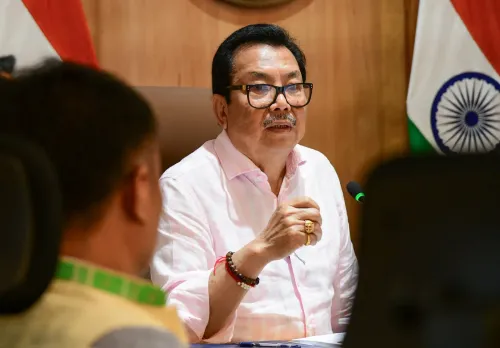
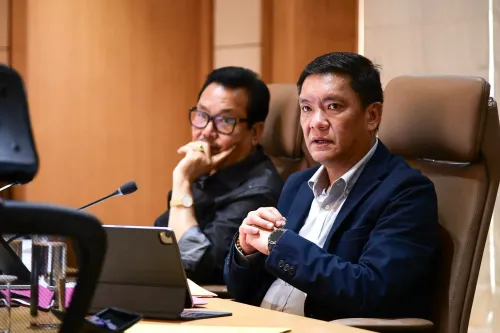
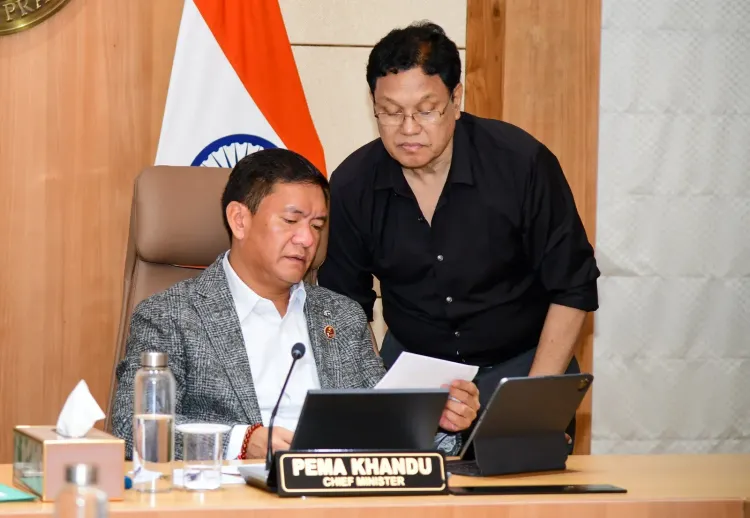
Arunachal Pradesh Chief Minister Pema Khandu chaired the inaugural CM PRAGATI meeting on Tuesday, May 26, 2026, rebranding the state's project-monitoring platform from its earlier avatar as e-Pragati and convening senior officers from key departments, public sector units, and central agencies in a live, state-wide review session.
Context
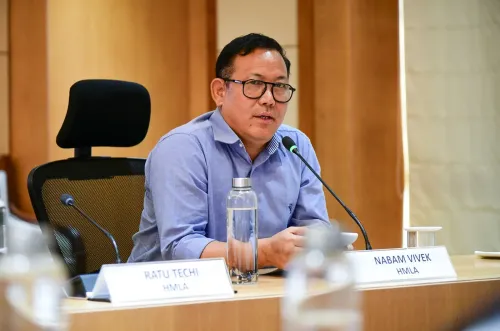
The meeting brought together senior officials from BRO (Border Roads Organisation), NHIDCL (National Highways and Infrastructure Development Corporation Ltd), power, telecom, and oil-sector agencies, with Deputy Commissioners joining live from districts across the state. CM Khandu described the session as 'a productive review' focused on major infrastructure and strategic projects, delays, and coordination bottlenecks.
In his post, the Chief Minister stated that the platform 'is about accountability, speed, and getting projects delivered on time for the people' — signalling an intent to institutionalise regular, high-level project oversight at the state level.
Policy Backdrop
The PRAGATI (Pro-Active Governance and Timely Implementation) platform was originally launched by the Government of India in March 2015 as a monthly review mechanism through which the Prime Minister and senior officials track central and state projects. CM PRAGATI mirrors that model at the state level, adapting the accountability framework to Arunachal Pradesh's unique governance challenges — difficult terrain, multi-agency execution, and a dense pipeline of centrally funded schemes.
The state has seen a significant uptick in infrastructure investment under the PM DevINE (Prime Minister's Development Initiative for North East Region) scheme, which channels funding into roads, power, and connectivity projects across the North East. Coordinating these parallel funding streams across BRO, NHIDCL, state PSUs, and district administrations has historically been a source of delays.
Stakeholders and Impact
BRO is the primary agency responsible for strategic roads in border areas of Arunachal Pradesh, which shares sensitive frontiers with China, Myanmar, and Bhutan. NHIDCL handles national highway development across the North East and border states. Both agencies operating under central ministries while executing projects in the state makes coordination with district administrations a persistent challenge.
By mandating live participation from Deputy Commissioners across all districts, the CM PRAGATI format attempts to close the information gap between field-level ground reality and secretariat-level decision-making. Telecom and power sector agencies — critical for both civilian connectivity and strategic requirements — were also included in the first review.
What's Next
The inaugural meeting sets the template for what is expected to be a recurring review cycle. Follow-up sessions will be the real test of whether the platform translates into measurable acceleration on specific highway, power, and telecom projects currently facing delays. The inclusion of the #PMDevINE and #BorderInfrastructure hashtags in the Chief Minister's post signals that centrally funded and strategically sensitive projects are squarely within the platform's ambit. Sustained cadence of CM PRAGATI meetings and publicly reported project milestones will determine whether the rebranded mechanism delivers on its stated goals of accountability and speed.
Point of View
The platform acknowledges that the biggest bottlenecks in border-state infrastructure are inter-agency, not purely administrative. The live participation of Deputy Commissioners is a meaningful design choice: it compresses the feedback loop between field reality and policy response. Whether CM PRAGATI sustains its cadence beyond the inaugural session will be the metric that separates intent from impact.
NationPress
9 Oct 2026
Frequently Asked Questions
What is CM PRAGATI in Arunachal Pradesh?
CM PRAGATI is a state-level project monitoring and review platform launched by Chief Minister Pema Khandu in May 2026, rebranded from the earlier e-Pragati system, designed to track infrastructure and strategic projects and fix coordination delays across departments and agencies.
What is the difference between CM PRAGATI and e-Pragati?
CM PRAGATI is the renamed and relaunched version of the state's earlier e-Pragati platform. The rebranding signals a renewed focus on accountability and faster project execution, with the first meeting held on May 26, 2026.
Which agencies were part of the first CM PRAGATI meeting?
The first CM PRAGATI meeting included senior officers from BRO, NHIDCL, state PSUs, power, telecom, and oil-sector agencies, along with Deputy Commissioners joining live from districts across Arunachal Pradesh.
What is PM DevINE and how is it related to Arunachal Pradesh?
PM DevINE, or the Prime Minister's Development Initiative for North East Region, is a central scheme that funds infrastructure and social projects across the North East. Arunachal Pradesh is a key beneficiary, and projects under this scheme are expected to be monitored through CM PRAGATI.
Why is infrastructure development important in Arunachal Pradesh?
Arunachal Pradesh shares strategic borders with China, Myanmar, and Bhutan, making roads, power, and telecom connectivity critical for both civilian development and national security. Agencies like BRO and NHIDCL lead much of this work in challenging terrain.