CM Khandu Holds Open-Table Dialogue for Arunachal Pradesh

Synopsis
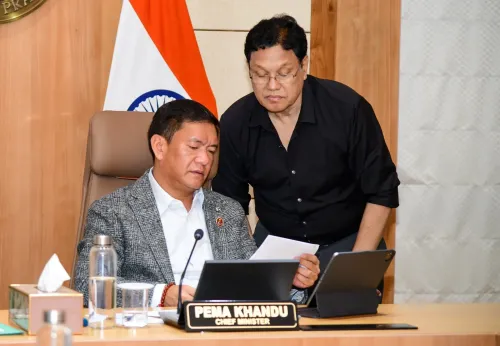
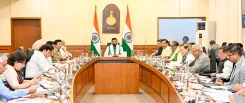
Chief Minister Pema Khandu of Arunachal Pradesh held an unscripted, open-table dialogue session on 29 May 2026, with the stated aim of hearing every citizen's voice and driving stronger governance in the state.
Key Takeaways
The Chief Minister's Office of Arunachal Pradesh announced an open, unscripted dialogue session held by CM Pema Khandu on 29 May 2026 .
The session was framed around a single goal: 'a stronger Arunachal Pradesh,' with no prepared scripts or filters.
Arunachal Pradesh is home to over 26 major tribal communities , making inclusive dialogue a governance priority.
The state has been a key focus of India's Act East Policy , with investment in roads, hydropower, and border connectivity.
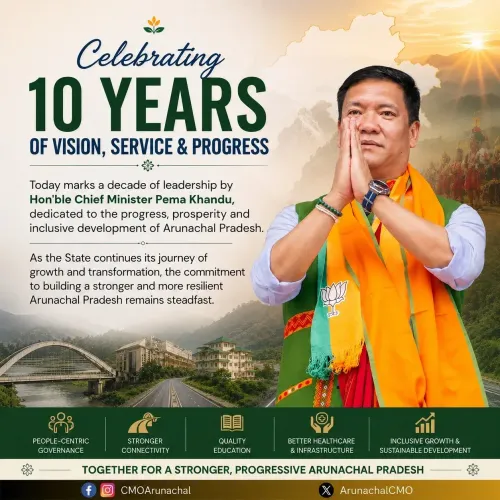
CM Pema Khandu has led the state since 2016 , with participatory governance as a consistent theme of his administration.
Outcomes of such consultations are expected to feed into upcoming annual plans and flagship infrastructure projects.
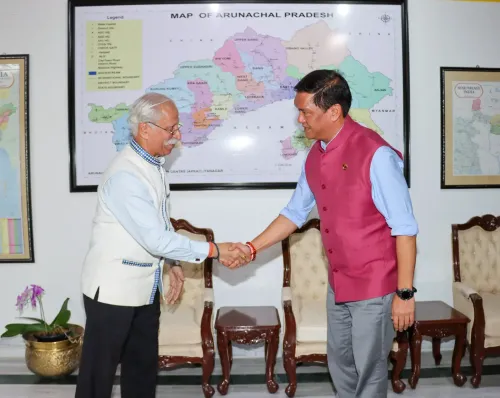
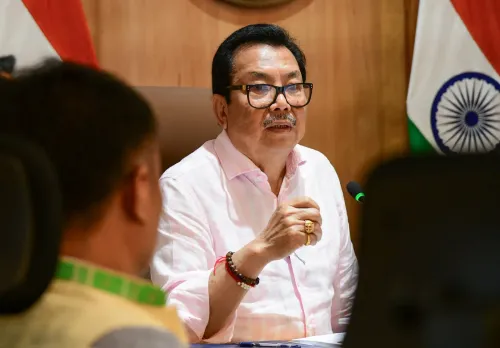
The Chief Minister's Office of Arunachal Pradesh shared on Thursday, 29 May 2026 that Chief Minister Pema Khandu held an unscripted, open-table conversation aimed at strengthening governance and development in the state, with the stated goal of ensuring every citizen's voice is heard.
The post, shared on the official CMO account, captured the spirit of the session in plain terms: 'No filters. No scripts. One table, one conversation, one goal: a stronger Arunachal Pradesh. Because real progress begins when every voice matters.'
Context
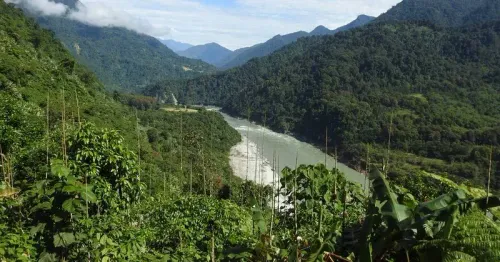
Arunachal Pradesh, India's largest northeastern state by area, borders China, Bhutan, and Myanmar and is home to over 26 major tribal communities. Governance in the state has historically required balancing the interests of diverse ethnic groups, local councils, and central government priorities. Open-format dialogues of this kind are seen as a direct attempt to bridge the gap between the administration and communities that may otherwise feel distant from formal policy processes.
Policy Backdrop
Chief Minister Pema Khandu, who has led the state since 2016, has consistently positioned his administration around participatory governance and infrastructure-led development. The state has been a focal point under the Act East Policy, attracting investment in roads, hydropower, and border-area connectivity. Consultative formats — whether with tribal councils, local representatives, or civil society — have been a recurring feature of how successive Arunachal Pradesh governments have shaped their annual development priorities.
The broader pattern in the state reflects a recognition that top-down planning alone is insufficient in a region with complex social structures and difficult terrain. Dialogue formats that bring stakeholders to a single table are increasingly used to surface local needs before they are absorbed into state or centrally sponsored scheme frameworks.
Stakeholders and Impact
The primary beneficiaries of such engagement formats are local communities and tribal councils whose development concerns — from road connectivity to livelihood schemes — often require direct administrative attention. For the state government, these sessions serve as a real-time feedback mechanism that can inform planning decisions before budgets and project timelines are locked in.
The emphasis on 'no filters, no scripts' signals an intent to move beyond ceremonial consultations toward substantive exchange. If translated into actionable policy follow-ups, such sessions can have a measurable impact on how central and state funds are directed toward underserved areas.
What's Next
Observers will watch whether the outcomes of this open-table format feed into upcoming state-level consultations on annual plans or flagship infrastructure projects. Arunachal Pradesh's development trajectory — particularly in border districts and hydropower corridors — depends significantly on how effectively ground-level inputs are integrated into formal planning. If the administration formalises this dialogue model, it could set a template for participatory governance in other complex, multi-tribal northeastern states.
Point of View
Ground-level consultation. In a state as ethnically and geographically complex as Arunachal Pradesh, the optics of accessibility matter as much as the substance. The emphasis on 'no filters, no scripts' is a deliberate counter-narrative to the perception that development decisions are made in distant corridors. Whether this translates into structural change will depend on how consistently such inputs are tracked and acted upon in the state's planning cycle.
NationPress
10 Oct 2026
Frequently Asked Questions
What is the open-table dialogue held by CM Pema Khandu about?
CM Pema Khandu held an unscripted, open-format conversation aimed at strengthening governance in Arunachal Pradesh by ensuring every citizen's voice is heard in development planning.
Why is participatory governance important in Arunachal Pradesh?
Arunachal Pradesh has over 26 major tribal communities and complex terrain, making inclusive consultation essential for effective governance and equitable distribution of development resources.
What is the Act East Policy and how does it relate to Arunachal Pradesh?
India's Act East Policy prioritises connectivity and economic integration with Southeast Asia, with Arunachal Pradesh serving as a key corridor for roads, hydropower, and border-area development under this framework.
What outcomes are expected from CM Khandu's open-table dialogue?
The session is expected to feed into state-level consultations on annual plans and flagship projects, potentially shaping how central and state funds are directed toward local and tribal communities.