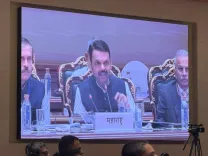
CM Pema Khandu Launches 3-Phase District Review in Arunachal

Synopsis
Chief Minister Pema Khandu has announced a three-phase district-wise review exercise covering all districts of Arunachal Pradesh to assess infrastructure, manpower, governance challenges and development priorities, signalling a systematic push to address delivery gaps in the frontier state.
Key Takeaways
Chief Minister Pema Khandu announced a three-phase district-wise review covering all districts of Arunachal Pradesh on 25 May 2026 .
The review will assess four areas: infrastructure , manpower deployment , governance challenges and development priorities .
The exercise builds on periodic district-level reviews the state government has conducted since 2017 .
Arunachal Pradesh borders China , Myanmar and Bhutan , giving the review strategic as well as developmental significance.
Outcomes from the review are expected to inform state budget priorities and central scheme allocations for the state.
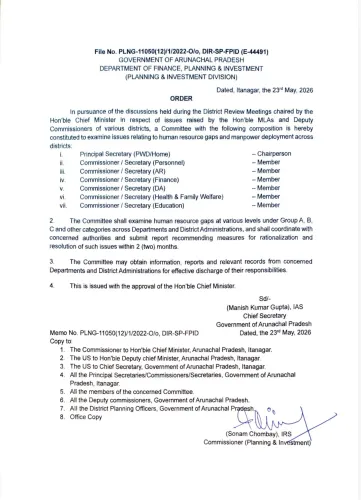
Arunachal Pradesh Chief Minister Pema Khandu on Monday, 25 May 2026, announced a structured three-phase district-wise review exercise covering all districts of the state to assess infrastructure, manpower deployment, governance challenges and development priorities.
Context
The press brief shared by CM Khandu outlines a comprehensive state-wide exercise designed to take stock of ground realities across every district of Arunachal Pradesh. The review spans four broad pillars: infrastructure status, manpower deployment, governance challenges and development priorities — signalling a systematic, data-driven approach to administration in one of India's most terrain-challenged states.
The announcement comes as the BJP-led state government continues to push for accelerated delivery of welfare and infrastructure programmes, particularly in remote and border-adjacent areas where implementation gaps have historically been wide.
Policy Backdrop
Arunachal Pradesh borders China, Myanmar and Bhutan, making it a state of significant strategic importance. Its rugged terrain, dispersed population and limited road connectivity have long complicated the delivery of central and state government schemes.
The state government has conducted periodic district-level reviews since 2017 to monitor implementation of central schemes and track state priorities. The current three-phase structure suggests a more granular and phased approach compared to earlier exercises, though specific timelines and the sequencing of districts remain to be detailed in follow-up communications.
Across India's Northeast, state governments regularly undertake district-wise assessments to address terrain, connectivity and manpower gaps in frontier regions. These exercises align with the central government's emphasis on saturation of welfare and infrastructure programmes in border states.
Stakeholders and Impact
District administrations across all districts of Arunachal Pradesh are the primary participants in this exercise, with local communities standing to benefit most directly from any corrective actions that follow. Identifying manpower gaps and governance bottlenecks at the district level is expected to feed into more targeted resource allocation.
For border communities in particular, improved infrastructure and governance responsiveness carry both developmental and strategic significance. The review's findings could influence state budget priorities and inform the state's demands in central scheme negotiations.
What's Next
Attention will now turn to the outcomes and recommendations emerging from each phase of the review. Follow-up announcements detailing which districts fall under each phase, the review timelines and the actionable recommendations are expected from the state government in the coming weeks.
Observers will watch whether the review's findings are reflected in the next state budget or in revised central scheme allocations for Arunachal Pradesh. A structured review of this scale, if followed through with accountability mechanisms, could set a governance template for other frontier states in the Northeast.
Point of View
Repeatable governance audit — a notable shift for a state where terrain and capacity constraints have long frustrated programme delivery. By publicly announcing the exercise via a press brief, the government is also creating visible accountability markers that will be hard to quietly shelve. The move fits a broader BJP pattern in Northeast states of using administrative reviews as both a governance tool and a political signal of proactive leadership ahead of potential budget and scheme cycles. Whether the review translates into measurable outcomes will depend on the follow-through mechanisms and whether recommendations are formally linked to budget or scheme revisions.
NationPress
9 Oct 2026
Frequently Asked Questions
What is the three-phase district review announced by Pema Khandu?
It is a state-wide exercise ordered by Arunachal Pradesh Chief Minister Pema Khandu to assess infrastructure, manpower deployment, governance challenges and development priorities across all districts of the state in three phases.
Why is a district-level review important for Arunachal Pradesh?
Arunachal Pradesh's difficult terrain, border location and dispersed population make it hard to deliver central and state schemes effectively; district reviews help identify specific gaps so resources can be better targeted.
How often does Arunachal Pradesh conduct district-level governance reviews?
The state government has conducted periodic district-level reviews since 2017 to monitor scheme implementation and track development priorities, though the current three-phase structure appears more systematic.
What will happen after the review is completed?
Follow-up announcements on the recommendations are expected, with observers watching whether findings feed into the next state budget or revised central scheme allocations for Arunachal Pradesh.
Which districts are covered in the Arunachal Pradesh review?
The review covers all districts of Arunachal Pradesh; the specific sequencing of districts across the three phases is expected to be detailed in subsequent government communications.