CM Pema Khandu Completes District-Wide Review Across Arunachal
Synopsis
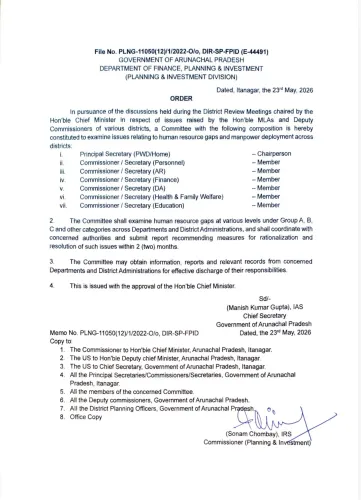
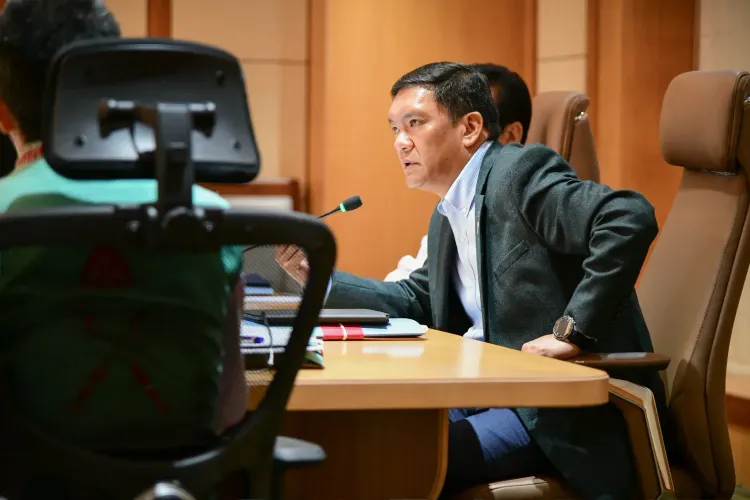
Arunachal Pradesh Chief Minister Pema Khandu concluded a landmark three-phase district-wise governance review on 23 May 2026, covering all 26 districts of the state. The final session included ten border and frontier districts. Khandu called it a 'massive governance exercise, the first of its kind at this scale,' involving MLAs, Deputy Commissioners, and district officers throughout.
Key Takeaways
Chief Minister Pema Khandu announced the completion of a three-phase district-wise review covering all 26 districts of Arunachal Pradesh on 23 May 2026 .
The final phase covered ten districts: Tirap, Changlang, East Kameng, Namsai, Lohit, Lower Dibang Valley, Dibang Valley, Anjaw, Tawang and West Kameng .
CM Khandu described the exercise as 'the first of its kind at this scale' in the state's governance history.
Participants included all MLAs , Deputy Commissioners , and district-level officers across all three phases.
The review is expected to feed into follow-up administrative orders and budgetary decisions at the next state assembly session or annual plan exercise.
Border districts in the review carry strategic significance under the Centre's Act East Policy and related connectivity schemes.
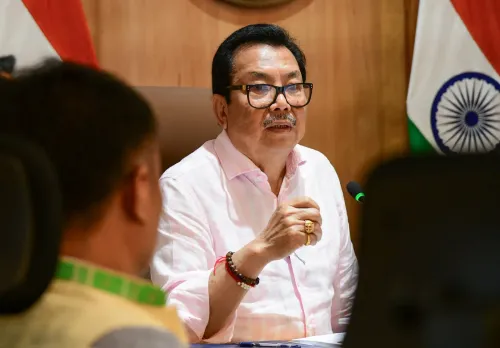
Arunachal Pradesh Chief Minister Pema Khandu on Saturday, 23 May 2026, announced the successful conclusion of a three-phase, district-wise governance review exercise covering all 26 districts of the state — describing it as a 'massive governance exercise, the first of its kind at this scale.'
Context
The final phase of the review, conducted as a 'full-day session,' covered ten districts: Tirap, Changlang, East Kameng, Namsai, Lohit, Lower Dibang Valley, Dibang Valley, Anjaw, Tawang and West Kameng. With this session, the exercise spanning three phases reached completion, bringing every district of Arunachal Pradesh under the review umbrella.
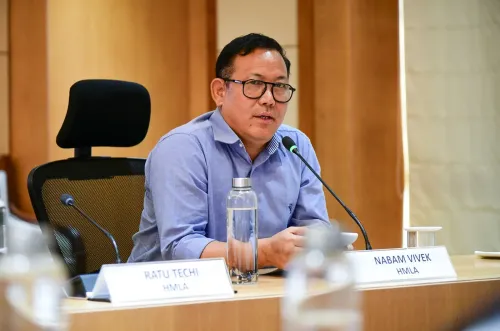
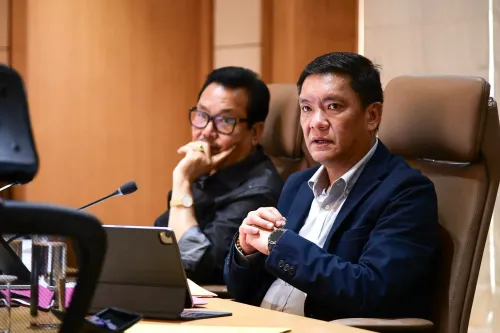
CM Khandu extended his thanks to all legislators, Deputy Commissioners, and administrative officers for their 'active participation, valuable inputs and commitment throughout all three phases.' The review meetings brought together elected representatives and district-level bureaucrats in a structured accountability exercise.
Policy Backdrop
Arunachal Pradesh, India's northeastern frontier state bordering China, has 26 districts — several of which were carved out between 2015 and 2018 to decentralise administration and improve governance reach in remote and border areas. The state's geography, with large tracts of difficult terrain, has historically made uniform administrative oversight a challenge.
State governments across India's Northeast have periodically used district-level review mechanisms to identify implementation gaps in infrastructure, welfare delivery, and security-related programmes. For Arunachal Pradesh, border districts such as Tawang, Anjaw and Tirap carry additional strategic significance, given ongoing central connectivity and development schemes under the Act East Policy framework.
The Bharatiya Janata Party, which has governed Arunachal Pradesh since 2016 under CM Khandu, has consistently positioned 'good governance' and alignment with national development priorities as central planks of its state administration.
Stakeholders and Impact
The primary stakeholders in this exercise are the state's MLAs, district administrations headed by Deputy Commissioners, and ultimately the residents of all 26 districts — particularly those in remote and border regions who depend on efficient scheme delivery. District-wise reviews of this nature serve as a direct channel for legislators to flag on-ground implementation concerns to the administration.
For border districts such as Lohit, Dibang Valley and Lower Dibang Valley, which receive targeted central funding for connectivity and infrastructure, the review provides an opportunity to assess progress and surface bottlenecks before the next annual plan cycle.
What's Next
The completion of all three phases sets the stage for follow-up action — potentially in the form of administrative directives, revised targets, or budgetary allocations to be taken up at the next state assembly session or annual plan exercise. Whether the review outcomes translate into concrete policy orders will be the measure of the exercise's impact.
The scale of the undertaking — covering every district in a single structured exercise — positions it as a potential template for future governance audits in Arunachal Pradesh and, if replicated, across other northeastern states.
Point of View
The exercise also serves a political function: reinforcing the ruling party's 'good governance' narrative ahead of future electoral cycles. The emphasis on border districts aligns with the Centre's broader push to accelerate development in strategically sensitive areas under the Act East framework. Whether the review produces measurable outcomes — in the form of scheme acceleration or administrative reforms — will determine if it becomes a durable governance tool or a one-time optics exercise.
NationPress
9 Oct 2026
Frequently Asked Questions
What is the Arunachal Pradesh district-wise review meeting?
It is a structured governance exercise conducted by Chief Minister Pema Khandu in which all MLAs, Deputy Commissioners, and district officers review the implementation of schemes and development programmes across each of the state's 26 districts.
How many phases did the Arunachal Pradesh district review have?
The review was conducted in three phases, with the final phase completed on 23 May 2026, covering ten districts including Tirap, Changlang, Tawang, and Anjaw.
Which districts were covered in the last phase of Pema Khandu's review?
The final phase covered Tirap, Changlang, East Kameng, Namsai, Lohit, Lower Dibang Valley, Dibang Valley, Anjaw, Tawang, and West Kameng.
Why are Arunachal Pradesh's border districts important for governance reviews?
Border districts like Tawang, Anjaw, and Lohit are strategically significant due to their proximity to China and receive targeted central funding under the Act East Policy for connectivity and infrastructure development.
What happens after the district review meetings in Arunachal Pradesh?
The review outcomes are expected to inform follow-up administrative directives, revised scheme targets, and budgetary allocations to be taken up at the next state assembly session or annual plan exercise.