CM Pema Khandu Flags District Reviews as Key Governance Tool

Synopsis
Arunachal Pradesh Chief Minister Pema Khandu has called district-wise review meetings — involving MLAs, Deputy Commissioners, and senior officers — one of his administration's most critical governance tools, pledging equal attention to all constituencies regardless of party affiliation.
Key Takeaways
CM Pema Khandu on 23 May 2026 described district-wise review meetings as among the most important governance initiatives his administration is undertaking.
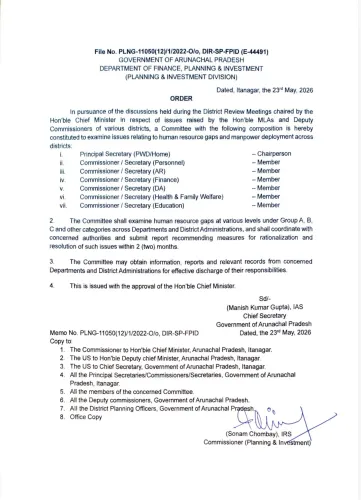
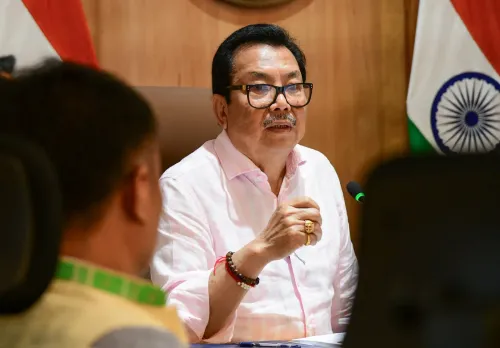
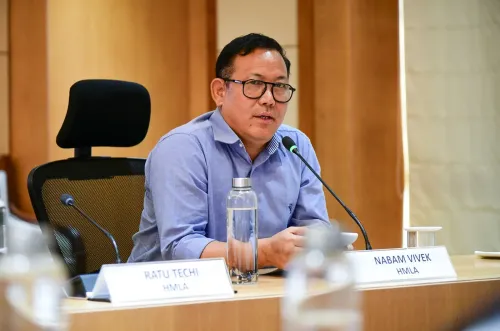
The meetings bring together MLAs, Deputy Commissioners, and senior officers from every district to assess ground-level conditions directly.
Reviews cover infrastructure gaps, manpower shortages, public services, and administrative performance across all districts.
The Chief Minister explicitly stated that constituencies represented by opposition parties receive equal attention, not just ruling-party seats.
The exercise aligns with national frameworks such as NITI Aayog's Aspirational Districts Programme and the PRAGATI monitoring platform.
Follow-up funding and staffing decisions are expected to surface in upcoming state assembly budget debates .
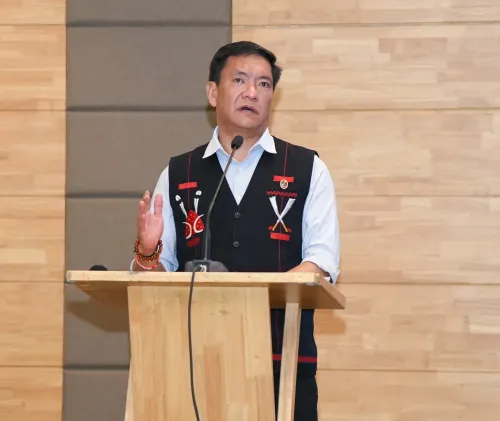
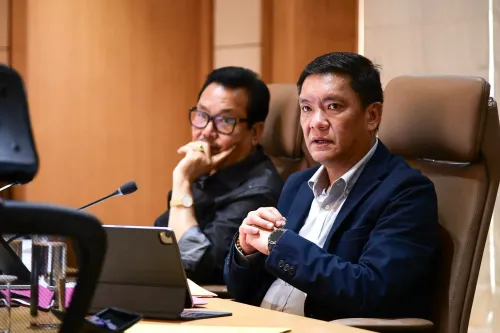
Arunachal Pradesh Chief Minister Pema Khandu on Saturday, 23 May 2026, described the state government's district-wise review meetings as among the most important governance initiatives his administration is undertaking, emphasising that every district and constituency receives attention regardless of which party represents it.
Context
In his post on X, CM Khandu said the meetings bring together Members of the Legislative Assembly, Deputy Commissioners, and senior officers from every district to discuss ground-level realities directly. 'We review infrastructure gaps, manpower shortages, public services, administrative performance. Nothing is ignored,' he wrote, adding that 'whether represented by the ruling party or otherwise, every voice is heard.'
The exercise is framed as a structured, multi-stakeholder forum rather than a routine administrative check-in. The Chief Minister's explicit mention of opposition-held constituencies signals an intent to insulate the review process from partisan considerations — a notable statement in a state where coalition dynamics have historically shaped resource allocation.
Policy Backdrop
Arunachal Pradesh, India's northeasternmost state bordering China, Myanmar, and Bhutan, has conducted periodic district-level coordination meetings since at least 2017 to track centrally sponsored schemes and state flagship programmes. The format mirrors broader national frameworks: NITI Aayog's Aspirational Districts Programme, launched in January 2018, introduced regular third-party reviews of district indicators across health, education, and infrastructure.
At the central level, the PRAGATI platform — a real-time monitoring system used by the Prime Minister's Office — has set the template for direct, data-driven review of project delivery. State governments across the Northeast have adapted similar mechanisms to address the region's challenges of difficult terrain, sparse connectivity, and dispersed populations. Arunachal Pradesh's approach integrates elected representatives alongside bureaucrats, making it a hybrid political-administrative accountability exercise.
Deputy Commissioners in India serve as the principal district-level authority responsible for implementing central and state schemes, revenue administration, and law-and-order coordination. Their presence alongside MLAs at a single review table compresses the feedback loop between field implementation and legislative oversight.
Stakeholders and Impact
The primary beneficiaries of such reviews are rural and semi-urban communities in Arunachal Pradesh's 25 districts, many of which face chronic shortfalls in road connectivity, healthcare infrastructure, and trained government personnel. By bringing MLAs — who carry direct constituency mandates — into the same room as district administrators, the state government creates a forum where political priorities and administrative capacity can be reconciled in real time.
For opposition MLAs, the Chief Minister's stated commitment to hearing 'every voice' is a significant public assurance. It implies that development funding and administrative attention will not be withheld from constituencies that did not vote for the ruling BJP. Civil society groups and local bodies in remote areas stand to gain if the review outcomes translate into faster resolution of manpower shortages and infrastructure gaps flagged during sessions.
What's Next
The immediate follow-through will be visible in the state's budget allocations and assembly debates in the coming legislative session, where questions on district-specific expenditure and staffing decisions are likely to reflect — or contest — the outcomes of these review exercises. CM Khandu's framing of the meetings as an ongoing, institutionalised initiative rather than a one-off event suggests they are intended to become a regular feature of the administration's governance calendar.
If the district-wise review mechanism produces measurable improvements in scheme delivery and infrastructure timelines, it could serve as a replicable model for other Northeast states grappling with similar last-mile governance challenges. The broader test will be whether the stated inclusivity of the process — across party lines and geographic divides — is borne out in verifiable outcomes on the ground.
Point of View
Khandu is also pre-empting a common line of attack in state assembly debates. The format — combining elected representatives with district bureaucrats — reflects a broader Northeast Indian trend of compressing the political-administrative feedback loop to improve last-mile delivery. Whether the initiative produces verifiable outcomes will determine whether it becomes a durable governance model or remains a communication exercise.
NationPress
23 Oct 2026
Frequently Asked Questions
What are Arunachal Pradesh's district-wise review meetings?
They are structured meetings convened by the state government in which MLAs, Deputy Commissioners, and senior officers from each district discuss ground-level issues including infrastructure gaps, manpower shortages, and public service delivery, with the Chief Minister overseeing the review.
Why did CM Pema Khandu call these reviews one of the most important governance initiatives?
CM Khandu described them as critically important because they create a direct channel between elected representatives, district administrators, and senior officers, allowing the government to identify and address gaps in scheme delivery and infrastructure across all constituencies.
Are opposition constituencies included in Arunachal Pradesh's district reviews?
Yes. CM Khandu explicitly stated that every district and constituency receives attention 'whether represented by the ruling party or otherwise,' signalling that the reviews are intended to be non-partisan.
How do these reviews relate to national governance frameworks like PRAGATI or Aspirational Districts?
Arunachal Pradesh's district review mechanism mirrors the real-time, data-driven monitoring approach of the central government's PRAGATI platform and NITI Aayog's Aspirational Districts Programme, which was launched in January 2018 to track district-level indicators in health, education, and infrastructure.
What happens after the district-wise review meetings in Arunachal Pradesh?
Outcomes are expected to feed into state budget allocations and assembly debates, where decisions on district-specific funding and staffing are likely to reflect the gaps identified during the review sessions.