CM Pema Khandu Reviews FY 2026-27 Budget With Deputy CM
Synopsis
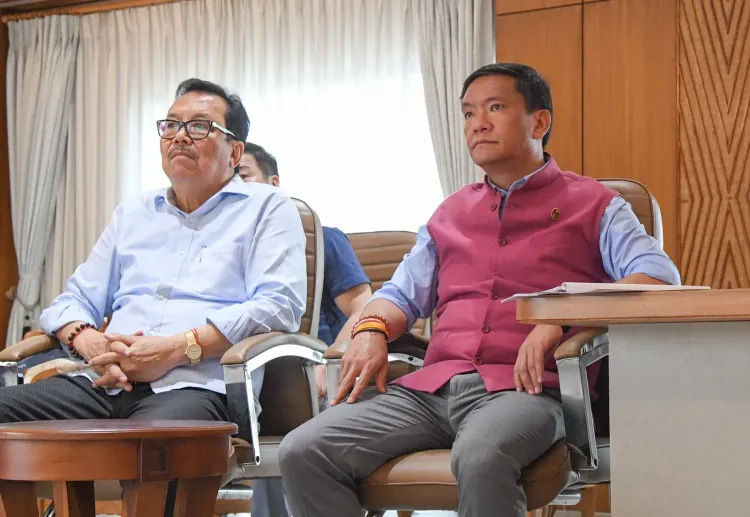
Arunachal Pradesh Chief Minister Pema Khandu chaired a budget and fund-position review for FY 2026-27 with Deputy CM Chowna Mein and senior officials on 7 July 2026, stressing that every rupee must create value and every project must deliver on time.
Key Takeaways
CM Pema Khandu reviewed the FY 2026–27 budget and fund position on 7 July 2026 .
The review was conducted jointly with Deputy Chief Minister Chowna Mein and senior state officials.
Khandu's stated principle: 'Every rupee must create value.
Every project must deliver on time.' Arunachal Pradesh receives significant central grants for border infrastructure and faces recurring project-delay challenges due to terrain and logistics.
The exercise aligns with the national push for outcome-based monitoring of public funds under the FRBM Act framework.
Quarterly expenditure reports and the formal budget presentation will be the next key accountability milestones.
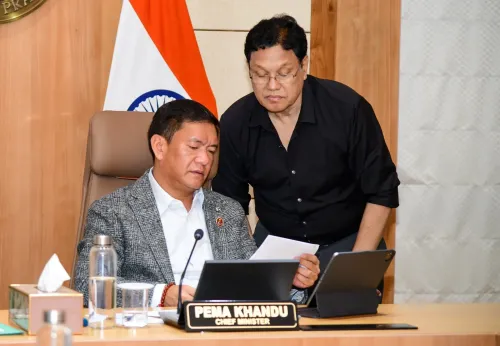
Arunachal Pradesh Chief Minister Pema Khandu on Tuesday, 7 July 2026, chaired a high-level review of the state's budget and fund position for FY 2026–27, alongside Deputy Chief Minister Chowna Mein and senior government officials. The review signals a firm push by the state leadership to ensure fiscal discipline and timely execution of public projects.
Context
Posting on X, CM Khandu laid out a clear governing principle: 'Every rupee must create value. Every project must deliver on time.' The statement framed the budget review not merely as a routine administrative exercise but as an accountability exercise tied to outcome-based governance. The meeting brought together the Deputy Chief Minister and senior officials to assess where the state's finances stand at the start of the new fiscal year.
Chowna Mein, who holds the Finance portfolio as Deputy Chief Minister, was a central figure in the review. His presence alongside CM Khandu underscores that the state's top two elected leaders are jointly steering fiscal planning for the year ahead.
Policy Backdrop
Indian states are required to manage public finances within the framework of the Fiscal Responsibility and Budget Management (FRBM) Act, first enacted in 2003, which mandates fiscal transparency and deficit control. Periodic budget and fund-position reviews are a standard tool states use to track spending against allocations and course-correct early in the fiscal year.
Arunachal Pradesh, as a northeastern border state, receives substantial central grants and tied funds for infrastructure, connectivity, and border-area development. The state has historically faced project execution challenges rooted in difficult terrain, remote logistics, and contractor capacity — making the 'deliver on time' emphasis particularly pointed. The Khandu government's stress on value-for-money mirrors national-level directives on outcome-based monitoring of public expenditure.
Stakeholders and Impact
The most immediate stakeholders are state government departments responsible for spending the allocated funds — including Public Works, Education, Health, and Power — as well as the contractors and agencies executing on-ground projects. A tighter review mechanism at the top signals that departments may face closer scrutiny on utilisation certificates and milestone-based disbursements.
For citizens of Arunachal Pradesh, the practical implication is the potential for faster completion of roads, bridges, schools, and other public assets funded under both state and centrally sponsored schemes. Delays in such projects have long been a friction point in the state's development narrative, and a leadership-level push at the start of the fiscal year is designed to pre-empt slippage.
What's Next
The formal presentation and passage of the Arunachal Pradesh budget for FY 2026–27 in the state assembly, followed by quarterly expenditure reports, will be the key milestones to watch. How closely actual spending tracks the reviewed fund position — and whether project timelines tighten — will be the real test of the accountability framework signalled by CM Khandu at this review meeting.
If the state sustains this outcome-focused approach through the year, it could strengthen Arunachal Pradesh's case for enhanced central devolution and performance-linked grants, which the Union government has increasingly tied to demonstrable fiscal discipline among states.
Point of View
Suggesting Itanagar is aligning its fiscal rhetoric with New Delhi's expectations ahead of potential performance-linked grant cycles. For a state heavily dependent on central transfers, demonstrating fiscal discipline publicly also carries a political dividend. The real test, however, will be whether this top-down emphasis translates into measurable improvements in project completion rates across departments.
NationPress
6 Oct 2026
Frequently Asked Questions
Why did CM Pema Khandu review the Arunachal Pradesh budget for FY 2026-27?
CM Pema Khandu reviewed the FY 2026-27 budget and fund position to ensure fiscal discipline and timely project delivery, emphasising that every rupee of public money must create tangible value.
Who attended the Arunachal Pradesh budget review meeting on 7 July 2026?
The meeting was attended by Chief Minister Pema Khandu, Deputy Chief Minister Chowna Mein, and senior state government officials.
What is the role of Chowna Mein in Arunachal Pradesh's finances?
Chowna Mein is the Deputy Chief Minister of Arunachal Pradesh and holds the Finance portfolio, making him a central figure in the state's budget planning and review process.
What challenges does Arunachal Pradesh face in executing government projects?
Arunachal Pradesh faces recurring project delays due to difficult mountainous terrain, remote logistics, and contractor capacity constraints, which the state government is seeking to address through tighter fiscal oversight.
What is the FRBM Act and how does it apply to Arunachal Pradesh?
The Fiscal Responsibility and Budget Management Act, first enacted in 2003, requires Indian states to maintain fiscal transparency and deficit control. Arunachal Pradesh, like all states, conducts budget reviews within this framework to track spending and ensure accountability.