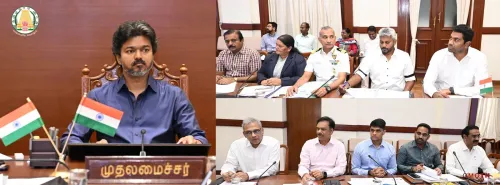
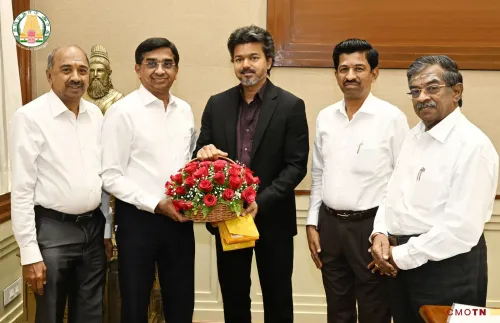
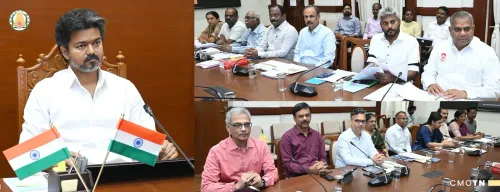
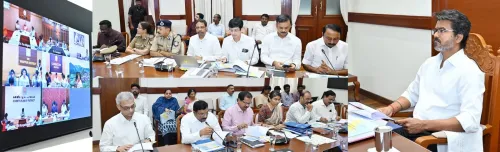
CM Joseph Vijay chairs second Tamil Nadu cabinet meeting
Synopsis
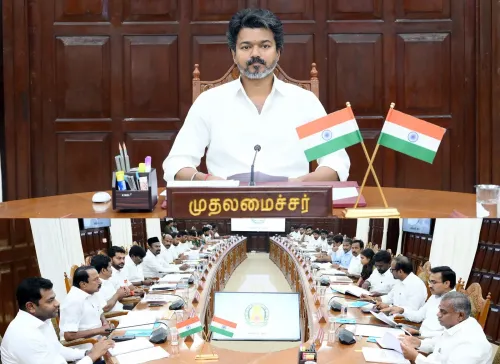
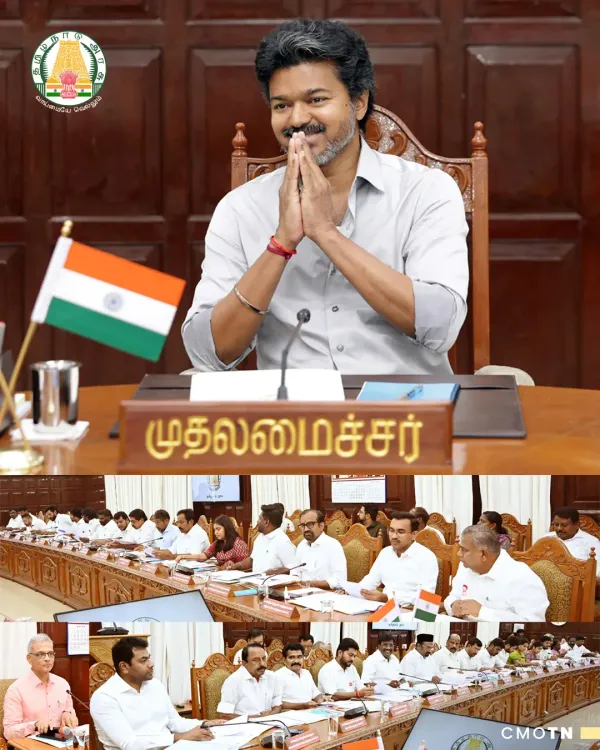
The Chief Minister's Office of Tamil Nadu announced that the second cabinet meeting under Chief Minister S. Joseph Vijay was held at the Tamil Nadu Secretariat in Chennai on 16 July 2026, marking continued administrative consolidation of the new government.
Key Takeaways
The second cabinet meeting of the Tamil Nadu government under CM S.
Joseph Vijay was held on 16 July 2026 .
The meeting took place at the Tamil Nadu Secretariat , the state's administrative headquarters in Chennai .
The announcement was made by the official Chief Minister's Office account on X in Tamil.
Joseph Vijay , popularly known as Thalapathy Vijay, is a Tamil film actor who entered electoral politics after announcing his party formation in 2024 .
Regular cabinet meetings signal active governance and are the formal mechanism for state-level policy decisions affecting Tamil Nadu's population.
The Chief Minister's Office of Tamil Nadu announced on Thursday, 16 July 2026, that the second cabinet meeting under the chairmanship of Chief Minister S. Joseph Vijay was held at the Tamil Nadu Secretariat in Chennai. The official CMO post, shared in Tamil, confirmed the meeting took place at the state's administrative headquarters.
Context
The Tamil post reads: 'மாண்புமிகு தமிழ்நாடு முதலமைச்சர் திரு.ச.ஜோசப் விஜய் அவர்கள் தலைமையில் இன்று (16.7.2026) தலைமைச் செயலகத்தில், இரண்டாவது அமைச்சரவைக் கூட்டம் நடைபெற்றது.' — translated: 'The second cabinet meeting was held today (16.7.2026) at the Secretariat under the chairmanship of the Honourable Chief Minister of Tamil Nadu, Mr S. Joseph Vijay.' The hashtag #CMJosephVijay accompanied the post, signalling the CMO's official branding of the new administration.
S. Joseph Vijay, widely known as Thalapathy Vijay, is a prominent Tamil film actor who publicly announced his political plans and party formation in 2024. His transition from cinema to executive office follows a pattern seen in Tamil Nadu's political history, where film personalities have moved into electoral and governing roles over several decades.
Policy Backdrop
Cabinet meetings at the Tamil Nadu Secretariat in Chennai are the formal mechanism through which the state government deliberates and approves policy decisions, ordinances, appointments, and budget proposals. The convening of a second cabinet meeting signals that the new administration is moving past its initial formation phase and into active governance. Early cabinet sittings typically set the tone for a government's legislative agenda and administrative priorities.
Tamil Nadu has a long institutional tradition of regular cabinet meetings as a tool of collective executive responsibility. The Secretariat, located in the heart of Chennai, serves as the nerve centre for all state-level administrative coordination between departments and ministers.
Stakeholders and Impact
State ministers, senior Indian Administrative Service officers, and departmental secretaries are the primary participants in cabinet proceedings. Decisions taken at these meetings directly affect the 80 million-plus residents of Tamil Nadu across sectors including agriculture, infrastructure, education, and public health. The early cadence of cabinet meetings is closely watched by civil society, industry bodies, and political observers as an indicator of governance momentum.
The broader public, particularly those who supported Vijay's political entry, will be attentive to the policy priorities that emerge from these initial sessions. Opposition parties and coalition partners will also scrutinise the decisions for signals about the new government's ideological and developmental direction.
What's Next
Subsequent cabinet meetings are expected to yield concrete policy announcements covering areas such as welfare schemes, infrastructure projects, and administrative reforms. Official minutes or post-meeting press briefings from the CMO will provide clarity on what was deliberated and approved during this second sitting. Political analysts will track the frequency and output of cabinet meetings as a barometer of the Vijay administration's early governance tempo.
Point of View
Maintaining institutional cadence matters as much as policy content, since it addresses scepticism about administrative readiness. The CMO's active use of social media to publicise even procedural milestones suggests a communications strategy aimed at projecting normalcy and momentum. How quickly substantive policy decisions emerge from these cabinet sessions will determine whether the administration consolidates its early political capital.
NationPress
16 Jul 2026
Frequently Asked Questions
What happened at Tamil Nadu's second cabinet meeting on 16 July 2026?
The Chief Minister's Office confirmed that the second cabinet meeting of the Tamil Nadu government, chaired by CM S. Joseph Vijay, was held at the Tamil Nadu Secretariat in Chennai on 16 July 2026. Specific decisions from the meeting have not yet been detailed in the official announcement.
Who is S. Joseph Vijay, the Chief Minister of Tamil Nadu?
S. Joseph Vijay, widely known as Thalapathy Vijay, is a prominent Tamil film actor who announced his entry into politics and formed a political party in 2024. He subsequently became Chief Minister of Tamil Nadu.
Where is the Tamil Nadu Secretariat located?
The Tamil Nadu Secretariat is located in Chennai and serves as the administrative headquarters of the state government, where cabinet meetings and key governance functions are conducted.
How often does the Tamil Nadu cabinet meet?
Tamil Nadu cabinet meetings are held as required by the government's legislative and administrative agenda. There is no fixed statutory frequency, but regular meetings are considered a sign of active governance.
What is the significance of the second cabinet meeting for the Vijay government?
The second cabinet meeting signals that the new administration is moving beyond its initial formation phase into active policymaking. Early cabinet sessions typically set priorities for welfare, infrastructure, and administrative reform.