Giriraj Singh highlights Erode weaver's rise under Workshed Scheme
Synopsis
Union Textiles Minister Giriraj Singh on 24 June 2026 spotlighted Erode weaver R. Gautami, saying the Workshed and Frame Loom Scheme gave her a better workplace, higher income, and new avenues for innovation — framing such artisans as the true face of India's textile heritage and self-reliance drive.
Key Takeaways
Union Textiles Minister Giriraj Singh highlighted the story of R.
Gautami , a handloom weaver from Erode, Tamil Nadu , on 24 June 2026 .
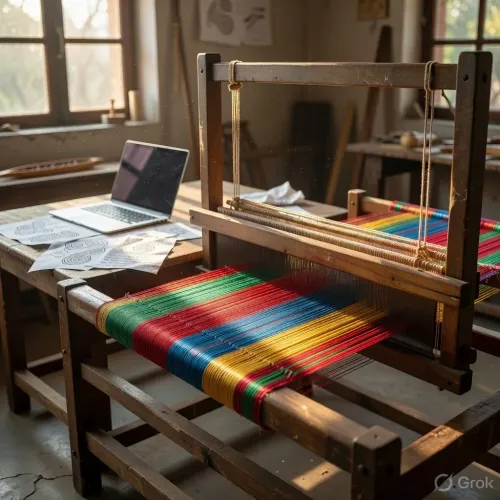
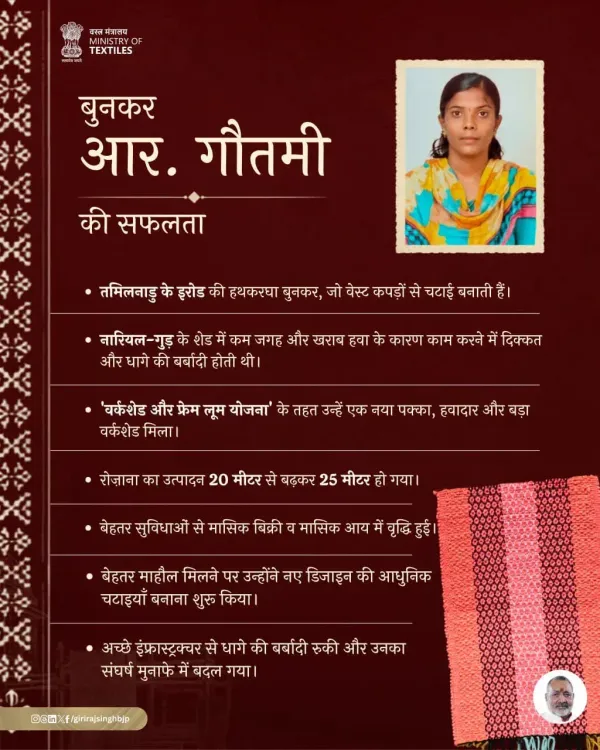
The Workshed and Frame Loom Scheme provided Gautami with an improved workspace, boosting her production, income, and scope for innovation.
Erode is a major silk and cotton weaving hub in Tamil Nadu and a key target district for central handloom welfare interventions.
The post aligns with the Vocal for Local campaign and Atmanirbhar Bharat messaging, positioning handloom as a symbol of cultural heritage and self-reliance.
India's handloom sector employs an estimated 35 lakh weavers, making infrastructure schemes like the workshed programme critical to livelihood security.
Fresh Union Budget allocations and expanded workshed coverage in upcoming textile cluster projects remain key developments to watch.
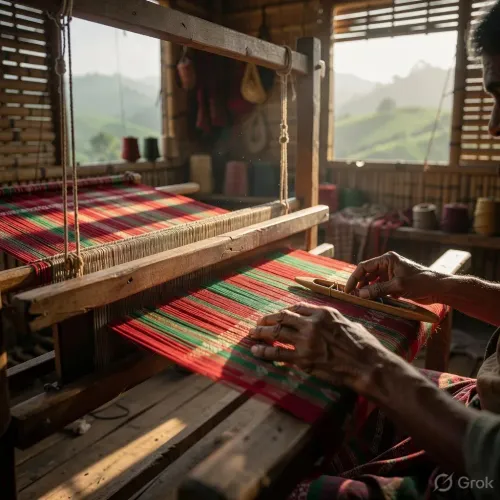
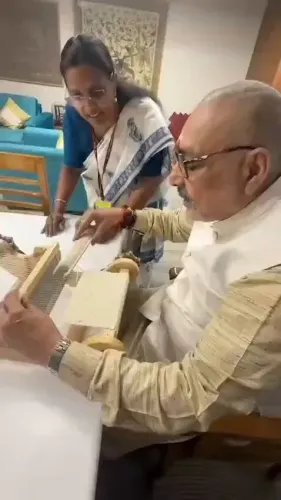
Union Textiles Minister Giriraj Singh on Wednesday, 24 June 2026 spotlighted the story of R. Gautami, a handloom weaver from Erode, Tamil Nadu, crediting the central government's Workshed and Frame Loom Scheme for transforming her livelihood and productivity.
Posting in Hindi on X, the Minister wrote: 'Erode ki bunkar R. Gautami ji ne apne parishram aur kaushal se yeh siddh kiya hai ki sahi avsar aur behtar suvidhaen milne par karigaron ki kshamata kai guna badh jaati hai' — ['Weaver R. Gautami of Erode has proved through her hard work and skill that when the right opportunities and better facilities are provided, the capacity of artisans multiplies manifold.'] He added that the scheme gave her not only a better workplace but also new avenues for production, income, and innovation, describing such weavers as 'the true identity of India's textile tradition and self-reliance.'
Context
Erode is one of Tamil Nadu's most significant textile and handloom hubs, known for its silk and cotton weaving clusters that sustain thousands of artisan families. The district has historically been a focal point for central government handloom welfare interventions given the density of its weaving population and the export potential of its products.
The Workshed and Frame Loom Scheme is a component under the broader umbrella of handloom welfare programmes that provides weavers with dedicated workspace and upgraded equipment, aiming to improve working conditions and raise output. The scheme has been extended to weaving clusters across Tamil Nadu, Uttar Pradesh, and the Northeast.
Policy Backdrop
The National Handloom Development Programme, launched in 2015, brought together infrastructure support, skill upgradation, and marketing linkages under one framework. Workshed-cum-housing components have been part of successive handloom welfare schemes since the 11th Plan period, reflecting a long-standing recognition that inadequate workspace is a primary constraint on weaver productivity.
Minister Singh's post aligns squarely with the Vocal for Local campaign — launched in 2020 — and the broader Atmanirbhar Bharat framework, both of which position handloom products as emblems of cultural heritage and economic self-sufficiency. The Ministry of Textiles has consistently used individual beneficiary narratives to communicate scheme impact at the grassroots level.
Stakeholders and Impact
India's handloom sector employs an estimated 35 lakh weavers and allied workers, making it the second-largest employment source in the textile value chain after agriculture. Weavers in clusters like Erode face structural challenges including fragmented production, limited access to credit, and inadequate infrastructure — precisely the gaps that workshed interventions target.
By highlighting R. Gautami's journey, the Minister signals that scheme benefits are reaching individual artisans in southern weaving clusters, a message aimed at both weavers yet to enrol and state governments that co-implement these programmes. The emphasis on 'innovation' alongside income suggests a push for product diversification beyond traditional designs.
What's Next
Attention will now turn to whether the upcoming Union Budget carries fresh allocations for handloom infrastructure modernisation and expanded workshed coverage across textile clusters. The Ministry is also expected to scale up beneficiary-identification drives under the National Handloom Development Programme to bring more weavers like Gautami into the formal support ecosystem.
For Erode's weaving community, the ministerial spotlight could accelerate state-level follow-through on pending workshed applications and frame loom upgrades — outcomes that will determine whether individual success stories translate into cluster-wide gains.
Point of View
Using a single beneficiary's story to put a human face on what is otherwise an administrative programme. This tactic — amplifying grassroots success narratives — has become a signature tool of the Ministry of Textiles under the current dispensation, serving dual purposes: validating expenditure and nudging unenrolled weavers toward formal welfare channels. The Erode focus is also geographically strategic, signalling central outreach into a southern textile cluster that sits outside the BJP's traditional political base. The broader arc points to an intensifying pre-Budget push to demonstrate handloom-sector impact ahead of fresh allocation negotiations.
NationPress
23 Sept 2026
Frequently Asked Questions
What is the Workshed and Frame Loom Scheme for weavers in India?
The Workshed and Frame Loom Scheme is a central government initiative that provides handloom weavers with dedicated, improved workspaces and upgraded frame looms, helping them raise productivity, income, and product quality. It operates under the broader National Handloom Development Programme.
Who is R. Gautami, the weaver mentioned by Giriraj Singh?
R. Gautami is a handloom weaver from Erode, Tamil Nadu, whom Union Textiles Minister Giriraj Singh cited on 24 June 2026 as a beneficiary of the Workshed and Frame Loom Scheme, crediting the programme for improving her workplace, production, and income.
What is Erode known for in India's textile sector?
Erode is one of Tamil Nadu's most important textile and handloom centres, renowned for its silk and cotton weaving clusters. It is a significant hub for both domestic supply and export of handloom products.
What is the Vocal for Local campaign and how does it relate to handloom?
Vocal for Local is a campaign launched in 2020 to promote indigenous Indian products and reduce import dependence. Handloom textiles are frequently highlighted under this campaign as examples of cultural heritage and economic self-reliance.
How many weavers does India's handloom sector employ?
India's handloom sector employs an estimated 35 lakh weavers and allied workers, making it the second-largest source of employment in the textile value chain after agriculture.