CM Vishnu Deo Sai Reviews Rural Scheme Progress at SIRD
Synopsis
Chhattisgarh CM Vishnu Deo Sai on 27 July 2026 chaired a state-wide review of district panchayat CEOs at SIRD Nava Raipur, directing officials to prioritise rural infrastructure, agriculture, water conservation, and time-bound delivery of government schemes to the last beneficiary.
Key Takeaways
CM Vishnu Deo Sai chaired a review meeting of all district panchayat Chief Executive Officers at SIRD, Nava Raipur on 27 July 2026 .
Deputy Chief Minister Vijay Sharma was present at the meeting alongside senior officials.
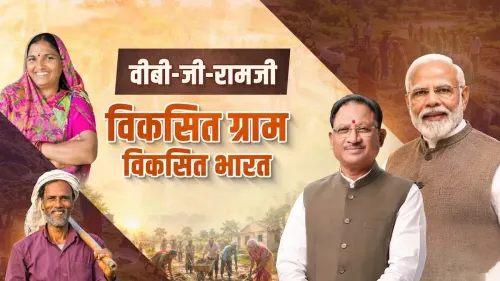
Officials were directed to prioritise the Viksit Bharat G-Ram G Yojana , rural infrastructure, agriculture, livelihood expansion, and water conservation.
The CM emphasised time-bound, effective delivery of every government scheme to the last beneficiary in each village.
The government's stated goal is building self-reliant, prosperous, and empowered villages as the foundation of a developed Chhattisgarh.
The review aligns with the national Viksit Bharat framework targeting a fully developed India by 2047 .
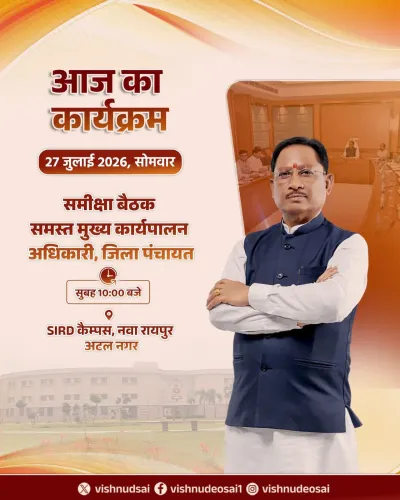
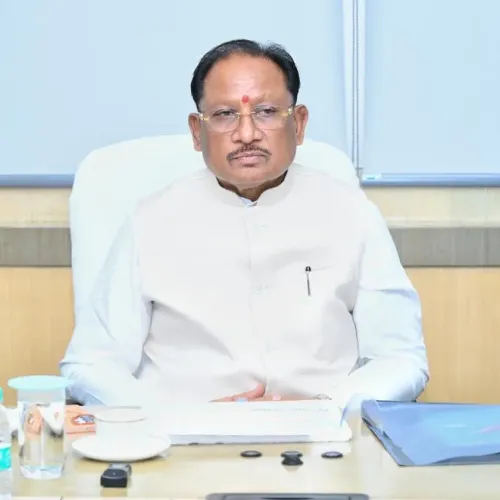
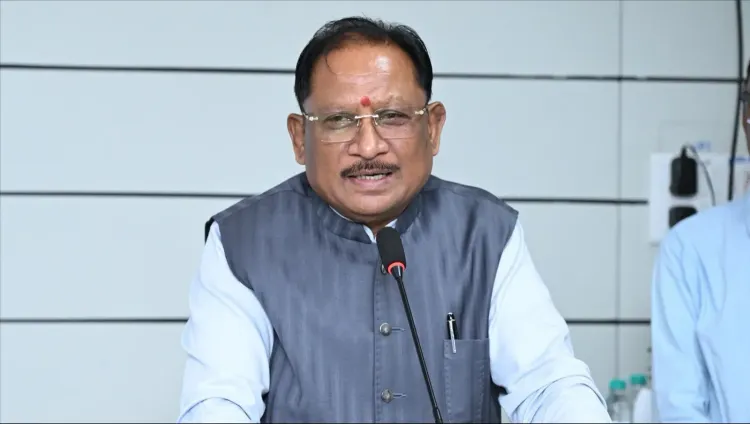
Chhattisgarh Chief Minister Vishnu Deo Sai on Monday, 27 July 2026, chaired a comprehensive review meeting of Chief Executive Officers of all district panchayats at the State Institute of Rural Development (SIRD) campus in Nava Raipur, directing officials to prioritise the effective implementation of rural development schemes and ensure last-mile delivery of government benefits.
Context
Posting on X, CM Sai stated — 'गांवों का समग्र विकास ही विकसित छत्तीसगढ़ की सबसे मजबूत नींव है' ('The holistic development of villages is the strongest foundation of a developed Chhattisgarh') — framing rural empowerment as the central pillar of the state's growth agenda. Deputy Chief Minister Vijay Sharma was also present at the meeting. The gathering brought together senior panchayat administration officials from across all districts of the state for a detailed progress review of ongoing rural development programmes.
Policy Backdrop
Officials were directed to treat the Viksit Bharat G-Ram G Yojana, rural infrastructure strengthening, agriculture and livelihood expansion, water conservation, and community-participation-based development as the highest priorities. CM Sai emphasised that every government scheme must reach the last person in a time-bound and effective manner. This review aligns with the broader national Viksit Bharat framework — the central government's initiative targeting a fully developed India by 2047 — which calls on states to achieve saturation of rural welfare schemes and strengthen gram panchayat institutions.
The BJP government in Chhattisgarh, which assumed office in December 2023 following state assembly elections, identified rural development and panchayat empowerment as core priorities from the outset. High-level reviews of centrally sponsored rural schemes are a standard governance mechanism to monitor fund utilisation, physical progress, and convergence of programmes such as MGNREGA, PMAY-G, and the Jal Jeevan Mission across Indian states.
Stakeholders and Impact
The primary beneficiaries of the directives issued at the meeting are rural households across Chhattisgarh's districts, who stand to gain from improved infrastructure, agricultural support, and livelihood opportunities. Panchayat functionaries and district-level officials are now accountable for translating the CM's directives into measurable on-ground outcomes. The SIRD campus in Nava Raipur — the planned capital region of Chhattisgarh housing key administrative institutions — served as the venue, underscoring the government's intent to use the institute's capacity-building role for sustained rural governance reform.
CM Sai articulated the government's goal as not merely village development, but the creation of 'आत्मनिर्भर, समृद्ध और सशक्त ग्राम' — 'self-reliant, prosperous, and empowered villages' — as the building blocks of a developed Chhattisgarh.
What's Next
Quarterly progress reports on rural infrastructure works will be a key indicator of whether the directives issued at the 27 July meeting translate into measurable outcomes. Any state-level modifications to central scheme guidelines may be tabled in the upcoming assembly session. The administration's stated benchmark — time-bound, effective delivery of every scheme to every beneficiary — sets a clear accountability standard against which district panchayat CEOs will be assessed in subsequent reviews.
Point of View
Using high-level reviews to pressure district-level machinery into measurable delivery. Convening all district panchayat CEOs simultaneously at SIRD — rather than in the Secretariat — is a deliberate signal that rural governance reform will be driven through the panchayati raj machinery, not just top-down bureaucratic channels. This fits a broader pattern visible across BJP-governed states of aligning state-level rural programmes with the central Viksit Bharat narrative ahead of the 2047 centenary goal. Whether the directives translate into on-ground outcomes will depend on fund flow, inter-departmental convergence, and the accountability mechanisms the government puts in place for subsequent reviews.
NationPress
26 Oct 2026
Frequently Asked Questions
What was the SIRD meeting called by CM Vishnu Deo Sai about?
The meeting at SIRD Nava Raipur on 27 July 2026 was a state-wide review of rural development scheme progress, attended by Chief Executive Officers of all district panchayats in Chhattisgarh. CM Sai directed officials to prioritise rural infrastructure, agriculture, water conservation, and last-mile delivery of government benefits.
What is the Viksit Bharat G-Ram G Yojana mentioned by CM Sai?
The Viksit Bharat G-Ram G Yojana is a rural development scheme whose effective implementation CM Sai listed as a top priority for district panchayat officials. It is linked to the broader national Viksit Bharat initiative, which aims for a fully developed India by 2047 with a focus on rural welfare and last-mile delivery.
Who is Vijay Sharma and why was he at the meeting?
Vijay Sharma is the Deputy Chief Minister of Chhattisgarh. He was present at the 27 July SIRD review meeting alongside CM Vishnu Deo Sai, reflecting the senior political importance the state government has attached to the rural development review.
What is SIRD and where is it located?
SIRD stands for State Institute of Rural Development. It is located in Nava Raipur, the planned capital region of Chhattisgarh, and focuses on training and capacity building for panchayat functionaries and rural administration officials.
What are Chhattisgarh CM Sai's priorities for rural development?
CM Vishnu Deo Sai has directed officials to focus on the Viksit Bharat G-Ram G Yojana, rural infrastructure strengthening, agriculture and livelihood expansion, water conservation, and community-participation-based development. His stated goal is building self-reliant, prosperous, and empowered villages as the foundation of a developed Chhattisgarh.