Mahua Moitra invokes Khudiram Bose in sharp rebuke of judiciary
Synopsis
TMC MP Mahua Moitra fires back at the judiciary on 26 October 2026, invoking 1908 revolutionaries Khudiram Bose and Prafulla Chaki — who targeted colonial magistrate Douglas Kingsford — to argue that Indian freedom has historically been reclaimed from courts, not just through them.
Key Takeaways
TMC MP Mahua Moitra posted a sharp rebuke of the judiciary on 26 October 2026 , addressing judges directly as 'MiLords.' She invoked Khudiram Bose and Prafulla Chaki , who in 1908 attempted to assassinate British Magistrate Douglas Kingsford in Muzaffarpur — Khudiram was hanged at age 18.
Moitra also referenced Mohammed Abdullah's attack on Chief Justice John Norman to argue courts were colonial instruments resisted by freedom fighters.
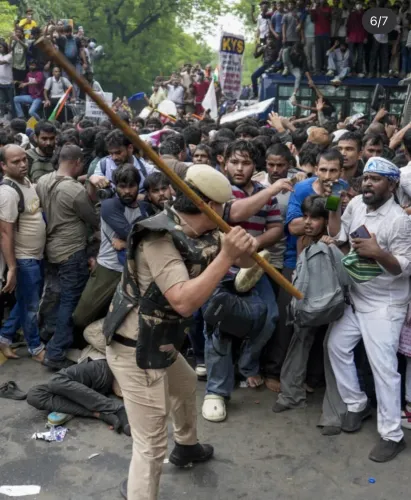
Her central claim: 'Freedom in India's history has often been reclaimed from the courts as well.' The post appears to respond to a judicial observation that citizens should 'become freedom fighters and face egg attacks,' though the specific proceedings remain unverified.
Ending with 'Jai Hind,' the post deploys nationalist register to frame institutional critique beyond partisan politics.
A court telling a politician to 'become a freedom fighter' may have seemed like a rhetorical flourish — but TMC MP Mahua Moitra on Monday, 26 October 2026 turned that phrase into a history lesson with a pointed edge, firing back at the judiciary by reminding it that Indian freedom was, on more than one occasion, reclaimed from the courts themselves.
The colonial courtroom echoes Moitra invokes
Addressing the judiciary directly as 'MiLords,' Moitra wrote that while courts advise citizens to 'become freedom fighters and face egg attacks,' the question deserves turning around: would the same courts have the courage to hear one of their own calling out a fellow judge? The rhetorical pivot is deliberate and sharp — it reframes judicial authority as something that must itself earn legitimacy, not merely assert it.
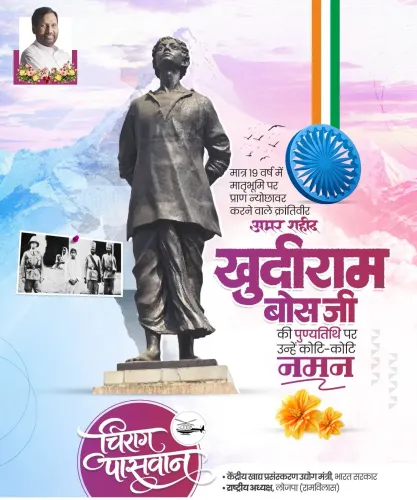
She anchors the argument in two of Indian revolutionary history's most visceral episodes. In 1908, Khudiram Bose and Prafulla Chaki threw a bomb at the carriage of British Magistrate Douglas Kingsford in Muzaffarpur — Kingsford, notorious for harsh sentences against Indian nationalists, survived, but two British women travelling in his carriage were killed. Khudiram Bose, barely eighteen years old, was hanged on 11 August 1908. Prafulla Chaki shot himself to avoid capture. Both became icons of anti-colonial defiance. Moitra also references a separate incident involving Mohammed Abdullah and Chief Justice John Norman — underscoring that the judiciary, in colonial India, was perceived by resistance figures as an instrument of oppression, not justice.
Why 'reclaimed from the courts' is the sharpest phrase in the post
The historical record Moitra cites is real. What makes the post combustible is the implication she draws: that the Indian independence movement did not merely work through courts or petition them — it sometimes treated the colonial bench as an adversary. Ending with 'Jai Hind,' a salute borrowed from the lexicon of Netaji Subhas Chandra Bose's Indian National Army, she wraps the argument in nationalist register rather than partisan language — a move that makes the critique harder to dismiss as mere political noise.
The post surfaces against a broader pattern in Indian political discourse where opposition figures and the bench have clashed over contempt proceedings, public order rulings, and the limits of protected speech. Moitra herself has a history of high-decibel confrontations with institutions — from Parliament to the courts. The timing suggests this post is a direct response to a specific judicial observation about protesters, though the precise proceedings it addresses remain unverified in public records.
What the judiciary and Parliament may now be watching
Invoking assassinations of colonial judges — even historically — in response to a court's remarks sits at the outer edge of political speech. The question legal observers will ask is whether this crosses into contempt territory, or whether the historical framing provides sufficient insulation. For now, the post has done what Moitra clearly intended: placed the judiciary's moral authority in the same dock it uses to summon others.
History has a long memory, and Moitra is counting on that — but so do courts.
Point of View
She shifts the burden of legitimacy from the protester to the institution. The invocation of Khudiram Bose — an undisputed national icon — makes the critique difficult to frame as anti-national without appearing to demean a revered revolutionary. The broader arc here is a long-running tension between the Opposition and the bench over the scope of judicial remarks on political behaviour, and Moitra's post escalates that tension to a point where the judiciary may feel compelled to respond — which is precisely the point.
NationPress
26 Oct 2026
Frequently Asked Questions
Why did Mahua Moitra mention Khudiram Bose in her post about courts?
Moitra invoked Khudiram Bose to argue that Indian freedom fighters historically resisted British colonial courts, framing her rebuke of the current judiciary within that anti-colonial tradition. Khudiram Bose and Prafulla Chaki attempted to assassinate Magistrate Douglas Kingsford in 1908.
Who was Douglas Kingsford and why was he targeted?
Douglas Kingsford was a British magistrate in colonial India known for imposing harsh sentences on Indian nationalists. In 1908, revolutionaries Khudiram Bose and Prafulla Chaki attempted to assassinate him in Muzaffarpur; he survived but two British women in his carriage were killed.
What court remarks is Mahua Moitra responding to?
Moitra's post suggests a court advised citizens to 'become freedom fighters and face egg attacks,' but the specific judicial proceedings or case that prompted this remark are unverified in public records at the time of this report.
Could Mahua Moitra face contempt of court for this post?
Legal observers may examine whether invoking historical attacks on colonial judges in response to judicial remarks constitutes contempt of court in India. Moitra uses historical framing rather than direct threats, which could provide legal insulation, but courts retain discretion in contempt matters.
What does 'Jai Hind' at the end of Moitra's post signify?
'Jai Hind' — meaning 'Long live India' — is a nationalist salute associated with Netaji Subhas Chandra Bose's Indian National Army. Its use here signals Moitra is framing her judicial critique in nationalist, rather than purely partisan, terms.