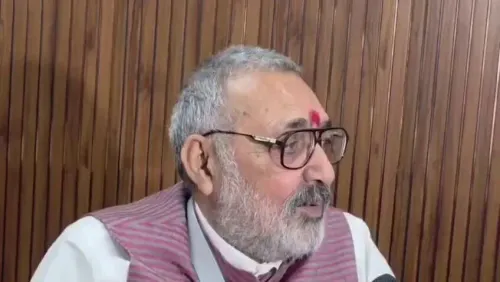
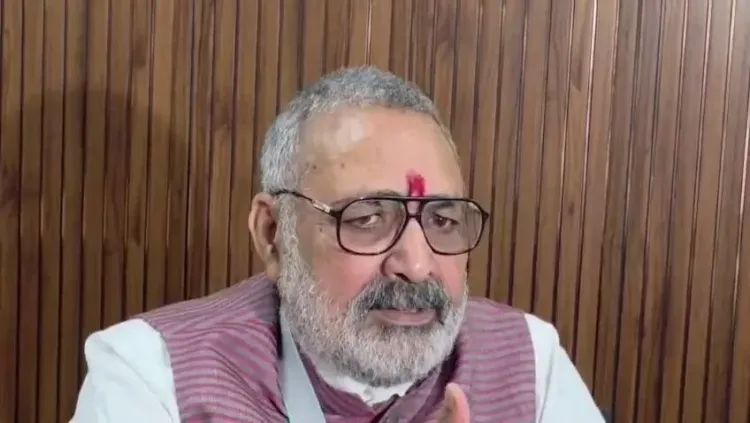
Giriraj Singh accuses Congress of plotting economic blockade
Synopsis
Union Textiles Minister Giriraj Singh accused Congress of conspiring to impose an economic blockade targeting Hindu festivals and traders, claiming youth, farmers, and traders are now united against what he called 'petty politics' aimed at disrupting India's commercial and cultural calendar.
Key Takeaways
Giriraj Singh , Union Textiles Minister and senior BJP leader, accused Congress of plotting an 'economic blockade' to disrupt trade.
Singh claimed the opposition's moves constitute 'petty politics' ( ochhi raajneeti ) targeting Hindu festivals and traders' earnings.
The statement was posted on 26 October 2026 , during peak festive-season commerce — Diwali week.
Singh named youth, traders, and farmers as a unified front opposing Congress's alleged disruption tactics.
The charge fits a recurring BJP rhetorical pattern of framing opposition agitation as an assault on festival commerce and cultural celebrations.
No immediate public response from Congress was available at time of publication.
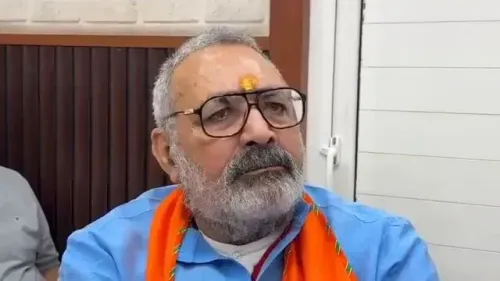
With the festive season in full swing, Union Textiles Minister Giriraj Singh has levelled a sharp broadside at the Indian National Congress, accusing the opposition of engineering what he calls an 'economic blockade' designed to choke trade and hurt Hindu festivals — and warning that the country's youth, traders, and farmers are now rallying against it.
Posting on X on Monday, 26 October 2026, Singh wrote in Hindi: 'Congress Bharat ki aarthik nakaabandi aur kaarobaar thap karne ki saazish rach rahi hai' — 'Congress is conspiring to impose an economic blockade on India and shut down business.' He went on to describe the opposition's moves as 'ochhi raajneeti' — petty politics — aimed squarely at traders' livelihoods and the earnings that flow through Hindu festival seasons.
Festival commerce in the crosshairs
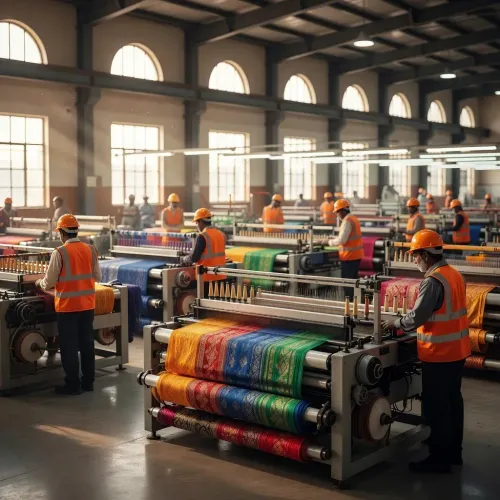
The timing of the charge matters. The October–November window is among the most commercially intense periods in India — Dhanteras, Diwali, and Bhai Dooj together generate billions of rupees in retail, textile, and small-business turnover. For a senior minister who oversees the textiles sector — one of the largest employers in the country — any disruption to that commercial calendar carries weight beyond political point-scoring.
Singh's framing targets a specific political vulnerability: the perception that opposition agitation, if timed to peak shopping weeks, inflicts disproportionate damage on small traders and artisans. His invocation of Hindu festivals in the same breath as economic harm is a deliberate rhetorical move, linking cultural celebration with economic livelihood in a single accusation.
BJP's recurring 'commerce and culture' charge sheet against Congress
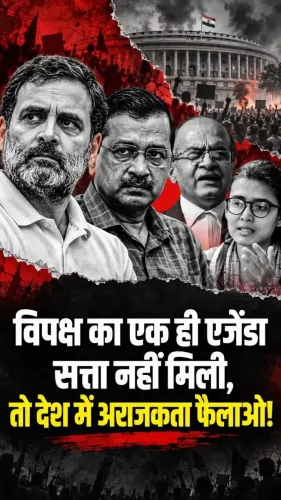
BJP ministers have periodically deployed this exact argument — that Congress-led protests target festivals and markets to maximise economic disruption — typically during bouts of opposition agitation or in the run-up to state elections. The pattern is well-established: frame opposition action not merely as political disagreement but as an assault on ordinary Indians' ability to earn and celebrate.
What is notable here is Singh's explicit roll-call of constituencies — youth, traders, and farmers — presented as a unified front. These three groups cut across caste and class lines and represent an electoral coalition BJP has worked to consolidate since 2014. Naming them together is less a sociological observation than a political mobilisation signal.
Congress yet to respond; parliamentary flashpoint possible
There was no immediate public response from the Congress party to Singh's post as of publication. Opposition reactions and any follow-on debates — in state assemblies or at the national level — will indicate how much traction this particular exchange gains beyond social media.
For now, the minister has drawn his line clearly: the festive season, he argues, is not just a cultural moment but an economic lifeline — and he intends to make any disruption to it a political cost for the opposition to bear.
Point of View
BJP simultaneously activates cultural and economic anxieties — a combination that has proven electorally potent since 2014. The explicit naming of youth, traders, and farmers signals an attempt to consolidate a cross-cutting coalition ahead of what may be an approaching electoral cycle. Congress's silence, if prolonged, cedes the narrative on a commercially sensitive week. The broader arc here is BJP's ongoing effort to position itself as the guardian of both cultural tradition and small-business prosperity — and to define any opposition agitation as an attack on both at once.
NationPress
26 Oct 2026
Frequently Asked Questions
What did Giriraj Singh say about Congress and the economic blockade?
Singh accused Congress of 'conspiring to impose an economic blockade on India and shut down business,' describing it as petty politics targeting Hindu festivals and traders' earnings.
Why did Giriraj Singh post this during the festive season?
The October–November period covering Diwali is among India's most commercially intense weeks; Singh's timing maximises the political impact of accusing Congress of disrupting trade during peak festive commerce.
What is Giriraj Singh's role in the Indian government?
Giriraj Singh is the Union Minister of Textiles, a senior BJP leader, and Lok Sabha MP from Begusarai, Bihar.
Has Congress responded to Giriraj Singh's economic blockade allegation?
No public response from Congress was available at the time of publication.
What groups did Giriraj Singh say are opposing Congress's alleged disruption?
Singh specifically named India's youth, traders, and farmers as unified against what he called Congress's bid to choke trade and harm Hindu festival livelihoods.