Madhya Pradesh high-risk pregnancies: Only 30% reach hospitals in time
Synopsis
Despite registering 6.2 lakh pregnant women on a dedicated portal and identifying nearly two lakh as high-risk, Madhya Pradesh is getting only 30 per cent of them to hospital in time — a stark implementation gap that Health Minister Rajendra Shukla has now flagged directly, even as the state's maternal mortality ratio sits at 135 per one lakh live births.
Key Takeaways
6.2 lakh pregnant women are registered on Madhya Pradesh's Anmol portal ; nearly two lakh have been identified as high-risk.
Only 30 per cent of high-risk pregnancies are admitted to healthcare institutions sufficiently ahead of delivery.
Madhya Pradesh's maternal mortality ratio stands at 135 per one lakh live births (SRS data, 2022-24).
The state reported 93.4 per cent institutional deliveries and 90.6 per cent first-trimester registration up to September 2026. e-Sanjeevani facilitated 59,914 general and 10,890 specialist teleconsultations between April and September 2026.
Deputy CM Rajendra Shukla directed officials to tighten timely identification, follow-up, and field-worker accountability across maternal health programmes.
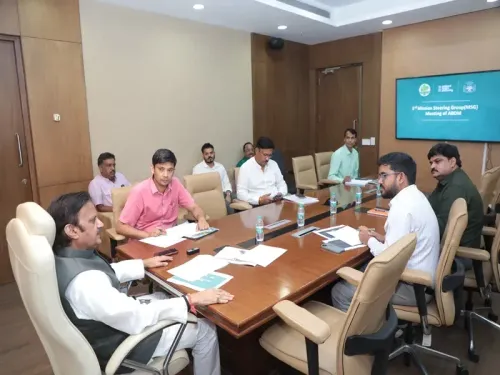
Madhya Pradesh has identified nearly two lakh high-risk pregnancies out of 6.2 lakh pregnant women registered on the state's Anmol health monitoring portal, yet only around 30 per cent of these high-risk cases are being admitted to healthcare institutions sufficiently ahead of delivery. The gap surfaced during a review meeting of National Health Mission (NHM) programmes held in Bhopal on 28 October 2026.
Review Meeting and Directives
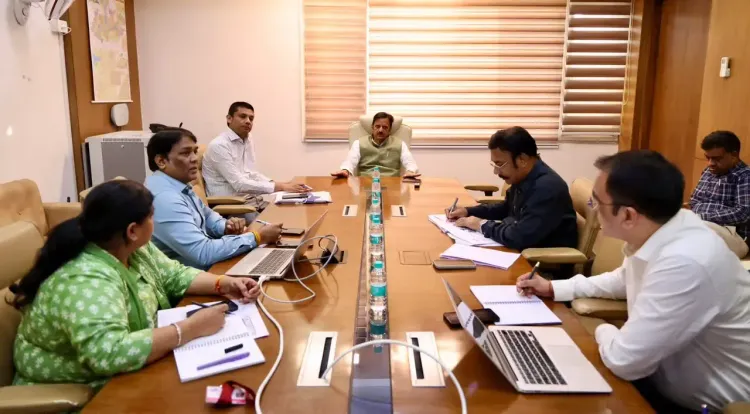
The NHM review was chaired by Deputy Chief Minister and Health Minister Rajendra Shukla, who directed officials to strengthen timely identification, follow-up, and treatment of high-risk pregnancies across the state. Shukla stressed that responsibilities of both officials and field health workers must be clearly defined, and that implementation of maternal and child health programmes should be monitored on a regular basis.
He also directed officials to ensure timely registration of pregnant women and completion of all scheduled antenatal check-ups. Screening under the Pradhan Mantri Surakshit Matritva Abhiyan was highlighted as a priority, along with greater community awareness about routine medical examinations and institutional deliveries.
How the Monitoring System Works
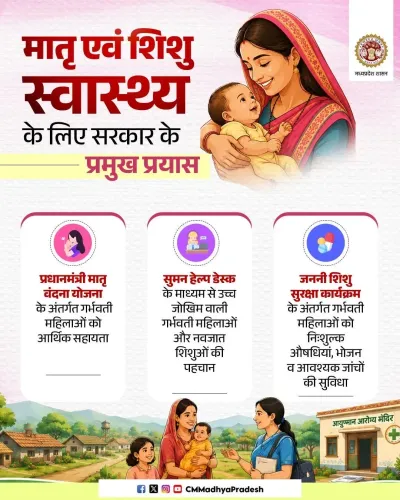
Follow-up of the identified high-risk pregnancies is being tracked through the Suman Integrated Command Centre, which shares real-time information with ASHA workers and district-level officials. The Anmol portal serves as the central registry, aggregating data across districts to flag vulnerable cases early. Despite this infrastructure, the 30 per cent timely-admission figure points to persistent last-mile gaps in translating digital tracking into physical care.
Key Maternal Health Statistics
According to Sample Registration System (SRS) data for 2022-24, Madhya Pradesh recorded a maternal mortality ratio (MMR) of 135 deaths per one lakh live births — a figure that underscores the urgency of improving institutional delivery rates. The state reported 90.6 per cent first-trimester registration of pregnant women and 93.4 per cent institutional deliveries up to September 2026 in the current financial year.
To support maternity care, Madhya Pradesh currently operates 35 obstetric intensive care units, 109 first referral units, and 229 birth waiting homes. For newborn and paediatric care, the state has 62 Special Newborn Care Units, 200 Newborn Stabilisation Units, 24 Mother Newborn Care Units, 68 Paediatric Intensive Care Units, and 318 Nutrition Rehabilitation Centres.
Telemedicine and Rural Access
Shukla also directed officials to expand specialist access in rural and remote areas through e-Sanjeevani, the Centre's telemedicine platform. Between April and September 2026, e-Sanjeevani facilitated 59,914 general teleconsultations and 10,890 specialist consultations in the state. The minister called for addressing service availability gaps, ensuring necessary equipment is in place, and regularly reviewing uptake of the facility.
Child Health and Nutrition Gaps
The Deputy Chief Minister additionally called for strengthening treatment facilities for newborns and critically ill children, along with intensifying programmes to address malnutrition, anaemia, diarrhoea, and pneumonia — conditions that remain disproportionately prevalent in the state's rural and tribal belt. This comes amid broader national concern over stalled progress on under-five mortality in central Indian states. How swiftly the directives translate into field-level action will determine whether Madhya Pradesh can meaningfully reduce its MMR in the coming years.
Point of View
Especially for a state that has already built the digital scaffolding — portal, command centre, ASHA network — to catch these cases early. The infrastructure exists; the last-mile conversion does not. Madhya Pradesh's MMR of 135 is among the higher readings in the country, and no amount of portal registrations will move that number if digital alerts do not translate into physical follow-through. The review meeting's directives are welcome, but directive-heavy NHM meetings have a long precedent in Indian public health without commensurate outcome shifts. The real accountability test is whether field-worker responsibilities are now tied to measurable admission targets — not just awareness campaigns.
NationPress
29 Oct 2026
Frequently Asked Questions
How many high-risk pregnancies have been identified in Madhya Pradesh?
Nearly two lakh high-risk pregnancies have been identified among the 6.2 lakh pregnant women registered on the state's Anmol health monitoring portal. However, only around 30 per cent of these women are being admitted to healthcare institutions sufficiently ahead of delivery.
What is Madhya Pradesh's maternal mortality ratio?
According to Sample Registration System data for 2022-24, Madhya Pradesh recorded a maternal mortality ratio of 135 deaths per one lakh live births. This figure is among the higher MMRs recorded by major Indian states.
What is the Anmol portal and how does it work?
The Anmol portal is a state-run digital health monitoring system on which pregnant women in Madhya Pradesh are registered. It flags high-risk cases, and follow-up is coordinated through the Suman Integrated Command Centre, which shares alerts with ASHA workers and district officials.
What steps has the government announced to address the gap?
Deputy Chief Minister and Health Minister Rajendra Shukla has directed officials to ensure timely identification, antenatal check-up completion, and screening under the Pradhan Mantri Surakshit Matritva Abhiyan. He also called for expanding rural specialist access via e-Sanjeevani and strengthening newborn care and nutrition programmes.
How many teleconsultations has e-Sanjeevani conducted in Madhya Pradesh?
Between April and September 2026, e-Sanjeevani facilitated 59,914 general teleconsultations and 10,890 specialist consultations in Madhya Pradesh. The health minister has directed officials to address equipment and service gaps to scale up the facility further.