Madhya Pradesh to take Ayushman Bharat Digital Mission to remotest areas
Synopsis
Madhya Pradesh has quietly built one of India's larger ABDM footprints — 5.86 crore ABHA IDs, 20,000 registered health facilities, and 1.07 crore digital OPD tokens — and Deputy CM Rajendra Shukla is now pushing to extend that digital health net to the state's remotest corners, including AYUSH practitioners who serve millions in areas beyond the reach of mainstream hospitals.
Key Takeaways
Deputy CM Rajendra Shukla on 8 July committed to extending ABDM digital health services to every citizen in Madhya Pradesh , including remote areas.
Nearly 5.86 crore ABHA IDs have been generated in the state, according to ABDM CEO Arvind Kumar Shah .
Around 20,000 health institutions are registered under the Health Facility Registry (HFR) and nearly 18,000 professionals under the Health Professional Registry (HPR) .
The 'Scan and Share' facility is live in 533 health institutions , with over 1.07 crore digital OPD tokens generated.
Officials have been directed to fast-track registration of doctors, nurses, dentists and AYUSH practitioners across the state.
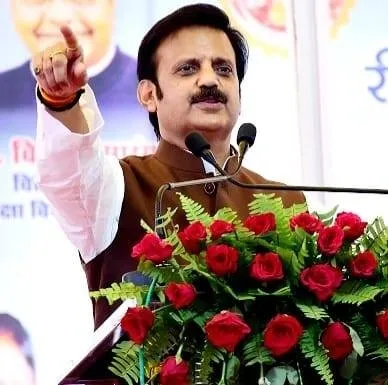
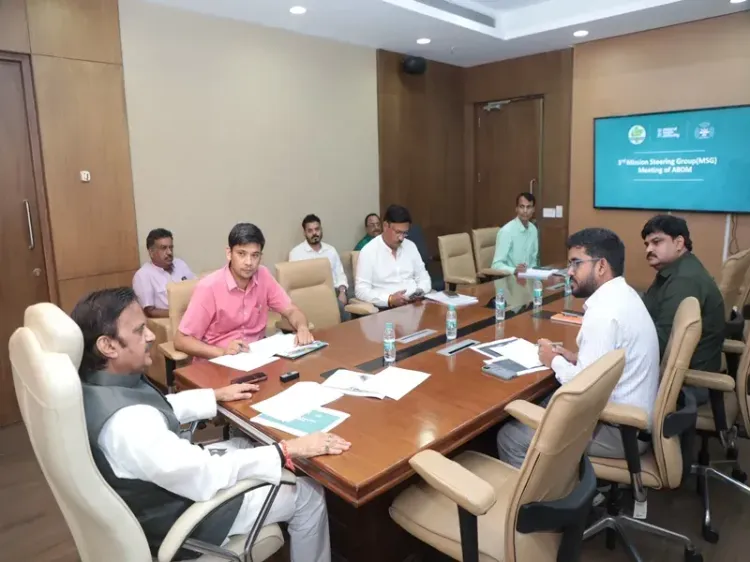
Madhya Pradesh is set to extend digital health services to every resident — including those in the state's most remote corners — under the Ayushman Bharat Digital Mission (ABDM), Deputy Chief Minister Rajendra Shukla announced on Wednesday, 8 July. Shukla made the commitment while chairing a review of the mission's implementation, reaffirming the state government's goal of building a fully integrated digital health ecosystem.
Key Developments
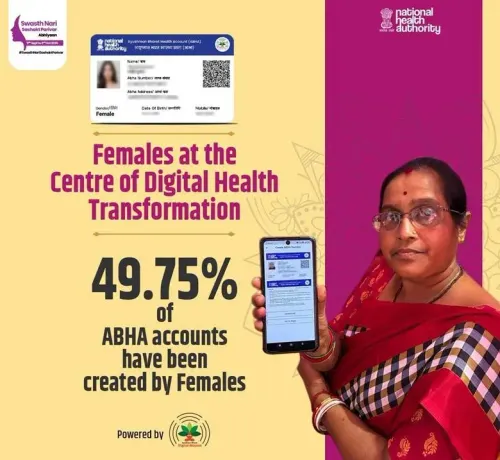
According to ABDM CEO Arvind Kumar Shah, Madhya Pradesh has already generated nearly 5.86 crore ABHA IDs — the unique digital health identities that allow citizens to securely access and share their medical records. Around 20,000 health institutions have been registered under the Health Facility Registry (HFR), while close to 18,000 healthcare professionals have enrolled in the Health Professional Registry (HPR).
The HPR is building a verified digital database of licensed practitioners, while the HFR integrates hospitals, clinics, laboratories, pharmacies and wellness centres into the broader digital health network.
Scan and Share Facility
The state has operationalised a 'Scan and Share' facility across 533 health institutions, through which more than 1.07 crore digital OPD tokens have been generated to date. Patients can scan a hospital's QR code via the ABHA app, share their details with consent, and receive a digital token — cutting waiting times at outpatient departments significantly.
What the Government Said
'The objective of the Ayushman Bharat Digital Mission is to develop an integrated and interconnected digital health ecosystem in the country. Through this mission, citizens are being provided with a unique digital health identity — the ABHA ID — enabling them to securely access and share their health records,' Shukla said.
He added: 'Our priority is to ensure that every citizen, including those living in remote areas, benefits from digital healthcare. Technology should make health services more accessible, efficient and transparent.'
Shukla directed officials to fast-track the registration of government and private health institutions, as well as doctors, nurses, dentists, AYUSH practitioners and other healthcare professionals. He also underscored the need for structured training, technical support and continuous monitoring to accelerate adoption.
Impact on Citizens
The ABDM's rollout in Madhya Pradesh is significant given the state's vast rural and tribal belts, where access to organised healthcare has historically been limited. Digital health IDs and the HFR-HPR framework aim to improve continuity of care by ensuring patient records travel with the individual rather than staying locked in a single facility.
Notably, the push to register AYUSH practitioners alongside allopathic professionals signals an intent to bring the full spectrum of recognised healthcare into the digital fold — a step that could meaningfully expand coverage in areas where AYUSH providers are the primary point of care.
What's Next
Officials indicated the government is working to bring every eligible institution and healthcare professional into the digital ecosystem. Further expansion of the 'Scan and Share' facility and deeper penetration of ABHA ID registration in underserved districts are expected to be the next milestones for the state's ABDM implementation.
Point of View
But the harder metric is active usage: how many of those IDs are being used to actually share records across facilities. The inclusion of AYUSH practitioners in the HPR is underreported and potentially the most consequential move, since in tribal and rural MP they are often the first and only point of care. The real test of this digital ecosystem is not registration counts but whether a patient's record follows them from a village AYUSH centre to a district hospital — a continuity gap that has persisted for decades.
NationPress
7 Oct 2026
Frequently Asked Questions
What is the Ayushman Bharat Digital Mission (ABDM)?
The Ayushman Bharat Digital Mission is a central government initiative that creates a nationwide integrated digital health ecosystem. It assigns citizens a unique ABHA ID to securely store and share health records, and registers health facilities and professionals through the HFR and HPR frameworks.
How many ABHA IDs have been generated in Madhya Pradesh?
Nearly 5.86 crore ABHA IDs have been generated in Madhya Pradesh, according to ABDM CEO Arvind Kumar Shah. The state has also registered around 20,000 health institutions and nearly 18,000 healthcare professionals under the mission.
What is the 'Scan and Share' facility under ABDM?
The Scan and Share facility allows patients to scan a hospital's QR code through the ABHA app, share their details with consent, and receive a digital OPD token — reducing waiting time at outpatient departments. It is currently operational in 533 health institutions in Madhya Pradesh, where over 1.07 crore digital OPD tokens have been generated.
Who is covered under Madhya Pradesh's ABDM push?
The initiative covers all citizens of Madhya Pradesh, with a specific emphasis on those in remote and underserved areas. Healthcare professionals included range from doctors and nurses to dentists and AYUSH practitioners, alongside government and private health institutions.
What has Deputy CM Rajendra Shukla directed officials to do?
Deputy CM Rajendra Shukla has directed officials to expedite registration of all government and private health institutions and healthcare professionals under ABDM. He also stressed the need for training, technical support and regular monitoring to drive adoption of digital health services across the state.