Mecca Pact sidelines China in Middle East security realignment
Synopsis
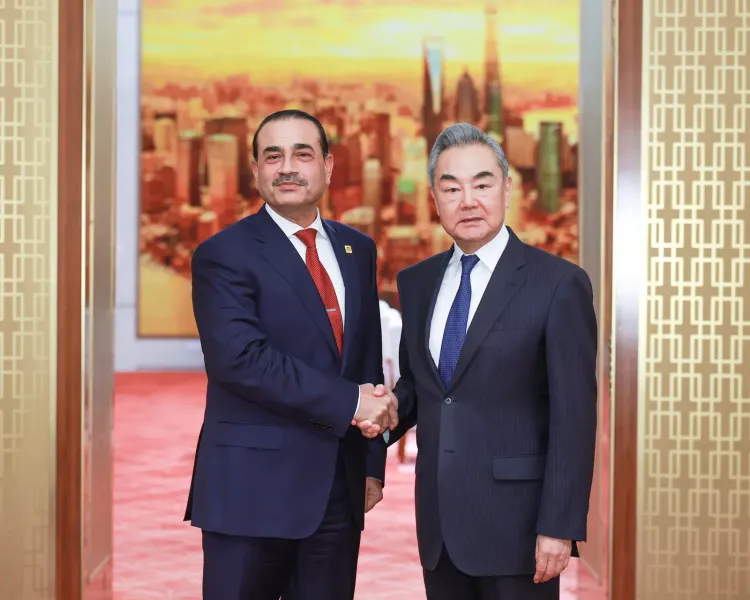
China spent years positioning itself as the indispensable broker of Middle East stability — but the Mecca Joint Defence Agreement, signed without Beijing's involvement, suggests that multipolar moment is arriving on everyone else's terms. The pact traps China between Iran and a new Sunni security bloc, with no seat at the table it helped build.
Key Takeaways
The Mecca Joint Defence Agreement was signed on 7 August by Saudi Arabia , Turkey , and Pakistan — with no Chinese role.
According to The Cairo Review of Global Affairs , the pact gives China 'no seat, no veto, and no visibility' in the new Gulf security architecture.
China's Middle East strategy relied on balancing Iran and Saudi Arabia simultaneously — a posture the pact's hard-bloc formation now undermines.
Iran is expected to read the Sunni-majority coalition as encirclement, forcing Beijing into an impossible choice between Tehran and the pact's signatories.
The report concludes that China's celebrated broker role from 2023 has been 'sawed down to a stool' by the new regional alignment.
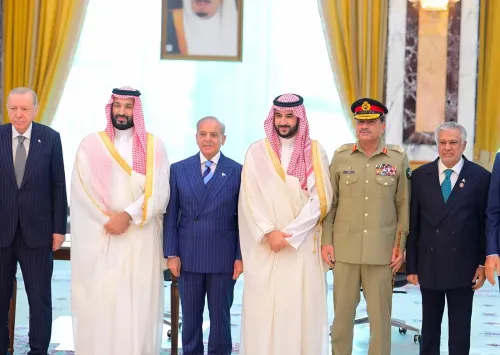
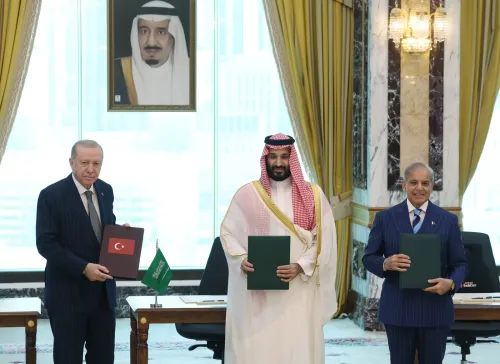
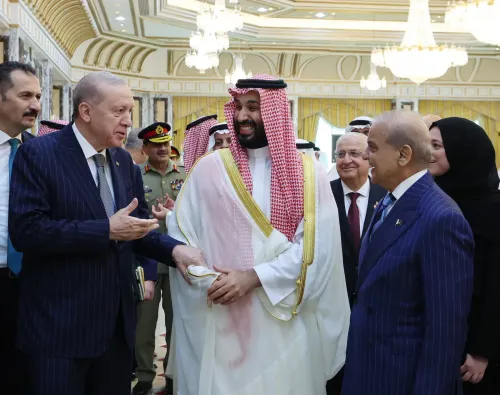
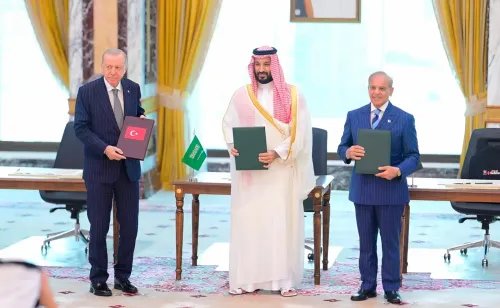
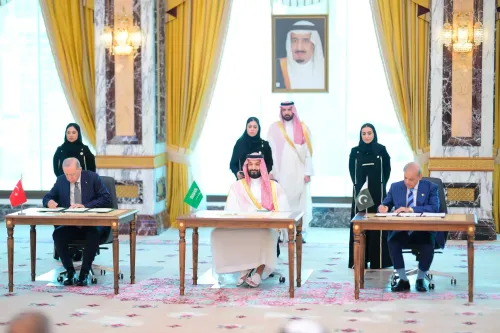
The Mecca Joint Defence Agreement, signed on 7 August by Saudi Crown Prince Mohammed bin Salman, Turkish President Recep Tayyip Erdogan, and Pakistani Prime Minister Shehbaz Sharif, may rhetorically validate China's multipolar worldview — but according to an analysis by The Cairo Review of Global Affairs, it simultaneously exposes the strategic hollowness at the heart of Beijing's Middle East positioning. The post-American regional order China long championed is now materialising without Chinese leadership, oversight, or meaningful involvement.
Two Readings, One Uncomfortable Truth
The agreement has generated sharply divergent interpretations among foreign-policy analysts. The first — described as fashionable in Washington think tanks and echoed with quiet satisfaction in Chinese commentary — holds that the pact is another nail in the coffin of American dominance in the Gulf, and therefore, almost by definition, a gain for Beijing.
The second reading is far less comfortable for China. As the Cairo Review analysis put it, 'China has just watched three of its most important Muslim-world partners build a security arrangement in which China has no seat, no veto, and no visibility.' The report argues that both interpretations cannot hold simultaneously, and the gap between them raises questions that will shadow Chinese policy for years.
The Central Dilemma for Beijing
The analysis poses two pointed questions at the core of China's strategic predicament: Does a pact that visibly weakens Washington's hold on Gulf security automatically serve Chinese interests, or does it merely flatter Chinese vanity? And can Beijing live with a multipolar regional environment it did not design, does not lead, and cannot steer — particularly when that world is taking shape on its own western flank, among nations whose religious identity touches China's most sensitive domestic nerve?
According to the report, the Mecca Pact may appear to work in Beijing's favour in the short term. Over the long run, however, it could prove deeply unsettling — emerging as one of the more quietly damaging developments China has encountered in a decade of largely favourable drift in the Middle East.
The Iran Trap
Beijing's discomfort is reportedly most acute on the question of Iran. China's Middle East strategy has rested on a delicate balancing act: buying Iranian oil at a discount, cultivating a partnership with Saudi Arabia, and positioning itself as the broker that reconciled the two in 2023. That posture assumed a region without hard security blocs.
The Mecca Pact has solidified exactly such a bloc. Despite assurances from its signatories that the agreement targets no specific country, Tehran is widely expected to read it as encirclement — a Sunni-majority defence coalition formalised in the middle of a conflict in which Iran is already under severe pressure. The Cairo Review analysis describes the bind starkly: 'If a battered, isolated Iran leans harder on Beijing, China inherits the cost of propping up a pariah. If China courts the pact's members instead, it betrays the one Middle Eastern state most committed to it.'
The Broker's Chair Is Gone
The report's most striking image is its conclusion on China's diplomatic standing: 'The broker's chair Beijing occupied so proudly in 2023 is being sawed down to a stool.' The 2023 Saudi-Iran normalisation, brokered by China, was widely celebrated as a landmark of Chinese diplomatic reach. The Mecca Pact, according to the analysis, has substantially eroded that symbolic capital — not by reversing the normalisation, but by rendering it strategically irrelevant as the region's power architecture hardens around new alignments that exclude Beijing.
How China recalibrates its Middle East engagement in the months ahead will be closely watched by analysts tracking the evolving geometry of great-power competition in the region.
Point of View
But it was premised on a fluid, bloc-free region where China could play all sides. That premise is now gone. What is emerging instead is a structured Sunni security architecture — with Turkey's NATO credentials and Pakistan's nuclear weight — that has its own centre of gravity and owes China nothing. The Iran dilemma is not peripheral; it is the load-bearing contradiction of China's entire Middle East position. Beijing cannot credibly back Tehran and simultaneously deepen ties with Riyadh and Ankara. The pact forces that choice into the open, and there is no clean answer.
NationPress
22 Aug 2026
Frequently Asked Questions
What is the Mecca Joint Defence Agreement?
The Mecca Joint Defence Agreement is a security pact signed on 7 August by Saudi Crown Prince Mohammed bin Salman, Turkish President Recep Tayyip Erdogan, and Pakistani Prime Minister Shehbaz Sharif. It formalises a Sunni-majority defence coalition in the Middle East, though its signatories have stated it targets no specific country.
Why does the Mecca Pact pose a problem for China?
China has no seat, veto, or visibility in the new pact, despite Saudi Arabia, Turkey, and Pakistan being among its most important Muslim-world partners. The agreement creates a hard security bloc that undermines Beijing's strategy of simultaneously balancing Iran and Gulf Arab states without committing to either side.
How does the pact affect China's relationship with Iran?
Tehran is expected to view the Sunni-majority coalition as encirclement, particularly given the ongoing conflict in which Iran is under pressure. This forces China into a bind: supporting Iran risks alienating the pact's members, while courting the pact means abandoning the Middle Eastern state most aligned with Beijing.
What was China's broker role in 2023 and how has it changed?
In 2023, China brokered a normalisation agreement between Saudi Arabia and Iran, positioning itself as the region's indispensable diplomatic intermediary. The Mecca Pact, according to The Cairo Review analysis, has substantially eroded that standing by creating a new security architecture that excludes Beijing entirely.
Does the Mecca Pact benefit China by weakening US influence in the Gulf?
Analysts are divided. One reading holds that any weakening of American dominance in the Gulf benefits China by default. The Cairo Review analysis argues this flatters Chinese vanity rather than serving Chinese interests, since Beijing did not design, lead, or shape the new order now taking form.