Mecca Defence Pact: Vague terms, no clear trigger risk making it rhetorical
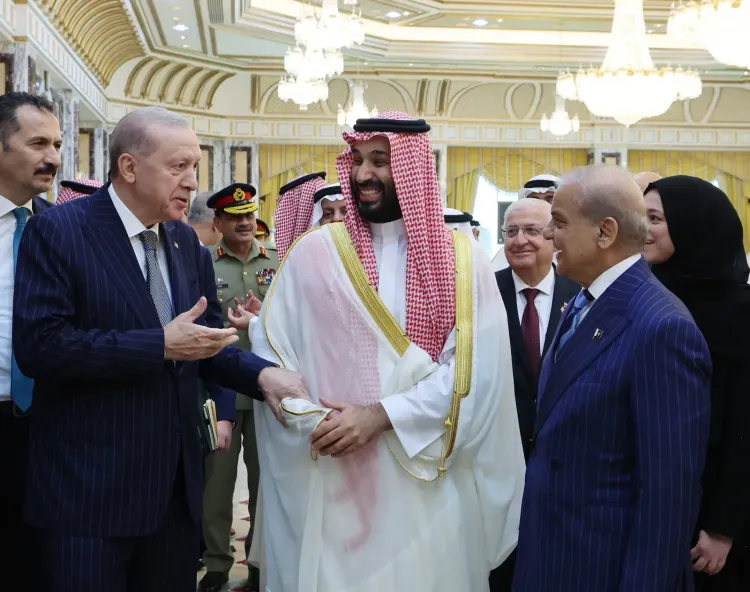
Synopsis
The Mecca Defence Pact invokes NATO-style language but lacks NATO's architecture — no defined aggression threshold, no clear military trigger, no joint command. With Pakistan's own track record of stopping short of direct engagement, and Saudi Arabia quietly building nuclear and diplomatic fallbacks, this agreement may say more about the three countries' anxieties than their actual collective resolve.
Key Takeaways
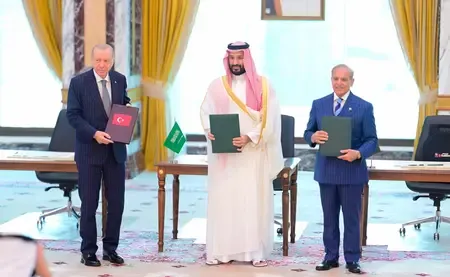
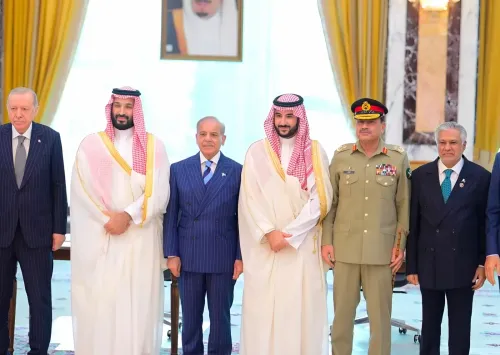
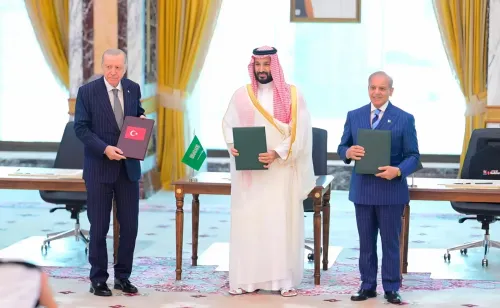
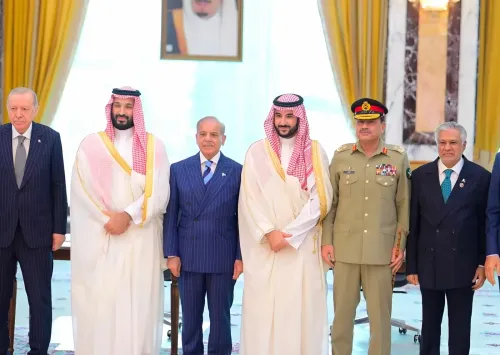
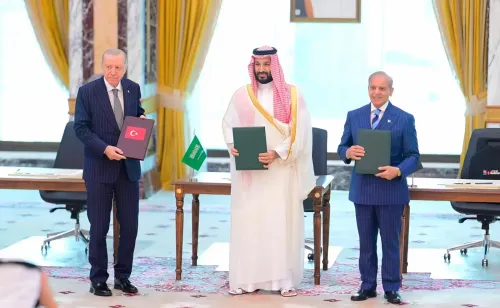
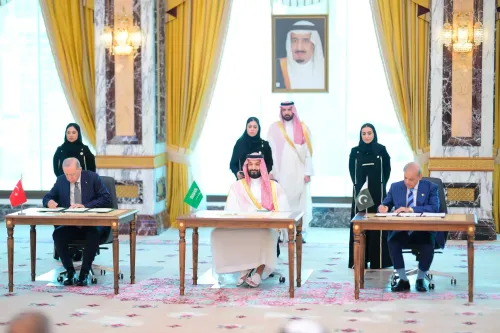
The Mecca Joint Defence Agreement was signed on 7 August 2025 by Pakistan , Saudi Arabia , and Turkey in Mecca, Saudi Arabia .
The pact uses NATO Article 5-style language but contains no binding obligation for any signatory to enter armed conflict if another is attacked.
Pakistan deployed troops in Saudi Arabia during Iranian strikes but did not directly engage Iran militarily, raising credibility doubts about the new pact.
Saudi Arabia has signed a civil nuclear deal with the US that excludes the IAEA Additional Protocol , suggesting Riyadh is building independent security fallbacks.
Analysts warn the agreement risks remaining largely rhetorical without defined aggression thresholds, military triggers, and force-coordination mechanisms.
The Mecca Joint Defence Agreement, signed on 7 August 2025 in Mecca, Saudi Arabia, by Pakistan, Saudi Arabia, and Turkey risks remaining largely symbolic unless it clearly defines what constitutes aggression, specifies the circumstances that would trigger a military response, and establishes a concrete framework for force coordination, according to an analysis published in Bulgaria-based Modern Diplomacy.
What the Pact Actually Says
The trilateral agreement is not a conventional military alliance in any structured sense. Analysts describe it as a 'backup plan' — a hedge by three middle powers preparing for a world in which major-power security guarantees can no longer be taken for granted. Critically, the pact contains no explicit obligation for any signatory to enter armed conflict if another member is attacked.
The agreement does invoke language strikingly similar to Article 5 of NATO, declaring that an attack on one member is an attack on all three. But according to the Modern Diplomacy report, that parallel breaks down quickly. 'Simply declaring that an attack on one is an attack on all does not, on its own, create a strong deterrent. Instead, it reads more like a political statement — one vague enough to let each country decide for itself how far it is willing to go if another member comes under attack,' the report noted.
Pakistan's Track Record Raises Credibility Questions
The report points to Pakistan's existing defence commitments as a reason for scepticism. Islamabad did deploy troops in Saudi Arabia during Iranian attacks on Gulf targets, but stopped short of directly engaging Iran militarily, even as Tehran repeatedly struck Saudi territory. 'If an explicit bilateral mutual-defence commitment produced a defensive deployment but not direct military engagement, there is little reason to expect a looser trilateral agreement — one that now also has to account for Turkey's separate strategic priorities — to produce anything firmer,' the analysis stated.
The three signatories face divergent security threats, maintain different strategic interests, and hold distinct relationships with global powers. That divergence, analysts argue, is precisely what makes a collective-response commitment difficult to operationalise.
Saudi Arabia's Shifting Security Calculus
The agreement emerges against the backdrop of the US-Iran conflict, during which Riyadh has grown increasingly sceptical of Washington's reliability as a security guarantor. Iranian missile strikes on Gulf oil infrastructure laid bare the vulnerability of Saudi Arabia's critical assets, even under the US security umbrella.
Notably, Saudi Arabia has also signed a civil nuclear cooperation agreement with Washington that does not include the IAEA's Additional Protocol — the mechanism that enables the most rigorous international inspection of nuclear activities. According to the report, this signals that Riyadh is actively constructing its own strategic fallback options rather than depending solely on US protection.
The Structural Gap: Vagueness as a Design Flaw
The core problem identified in the analysis is architectural. Without a defined threshold for what constitutes aggression, a clear tripwire for collective action, and a joint command or coordination mechanism, the pact's deterrent value remains untested and, critics argue, overstated. This is less an alliance and more a statement of intent — one whose credibility will depend entirely on future political will rather than binding legal or military structures.
Whether the three countries can bridge their divergent strategic priorities to give the agreement operational substance will be the defining test of the Mecca pact in the months ahead.
Point of View
Decades of interoperability, and — crucially — a nuclear umbrella. None of that exists here. What the three signatories share is anxiety about major-power reliability, not a common threat or a common adversary. Saudi Arabia worries about Iran; Pakistan's threat calculus is India-centric; Turkey's strategic priorities run through NATO, the EU, and Central Asia simultaneously. A declaration that 'an attack on one is an attack on all' means very different things to each of them. Until the pact is operationalised with binding triggers and a joint command, it functions more as a diplomatic signal than a security guarantee — and adversaries are likely to read it exactly that way.
NationPress
26 Sept 2026
Frequently Asked Questions
What is the Mecca Joint Defence Agreement?
The Mecca Joint Defence Agreement is a trilateral security pact signed on 7 August 2025 in Mecca, Saudi Arabia, by Pakistan, Saudi Arabia, and Turkey. It declares that an attack on one member is an attack on all three, but analysts note it lacks binding military obligations, defined aggression thresholds, and a joint coordination mechanism.
How does the Mecca pact compare to NATO's Article 5?
The pact uses language similar to NATO's Article 5 collective-defence clause, but without NATO's institutional backing — no integrated command, no interoperability framework, and no nuclear umbrella. Analysts argue this makes the commitment a political statement rather than a credible deterrent.
Why does Pakistan's track record matter for the pact's credibility?
Pakistan deployed troops in Saudi Arabia during Iranian attacks on Gulf targets but stopped short of direct military engagement with Iran. If an explicit bilateral defence commitment did not produce direct intervention, analysts say a looser trilateral agreement is unlikely to produce a firmer response.
Why is Saudi Arabia seeking alternative security arrangements?
Riyadh has grown increasingly sceptical of US security guarantees, particularly after Iranian missile strikes exposed vulnerabilities in Gulf oil infrastructure despite US protection. Saudi Arabia has also signed a civil nuclear deal with Washington that excludes the IAEA Additional Protocol, signalling it is building independent strategic options.
What would the pact need to become an effective alliance?
According to analysts, the Mecca pact would need a clear definition of what constitutes aggression, explicit circumstances that trigger a collective military response, and a concrete framework for coordinating the armed forces of all three countries before it could function as a credible deterrent.