Mecca Agreement lacks binding ideology, report flags Pakistan-Saudi-Turkey pact contradictions
Synopsis
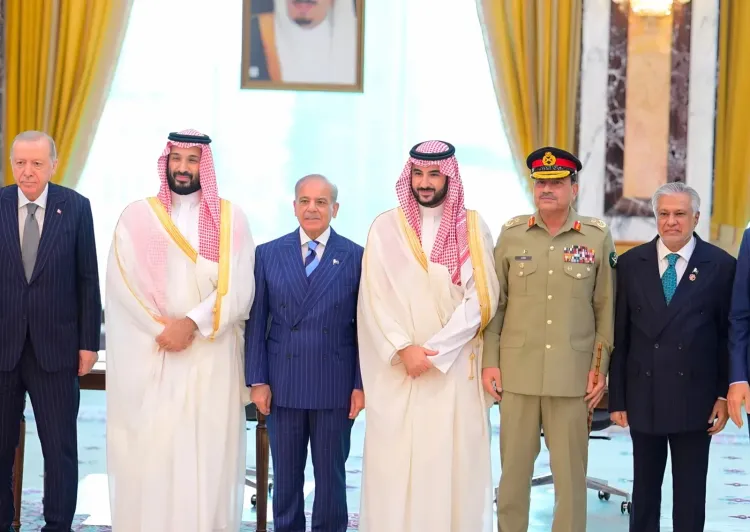
The Mecca Joint Defence Agreement — billed as a NATO-equivalent for Pakistan, Saudi Arabia, and Turkey — may be more diplomatic optics than operational reality. A new analysis finds no shared values, no common adversary, and a glaring ideological fault line: Saudi Arabia sees political Islam as a regime threat, while Turkey champions it. The pact's Article 5-style clause has never been tested, and history — Pakistan's parliament rejecting Saudi Arabia's Yemen request — suggests solidarity is far from automatic.
Key Takeaways
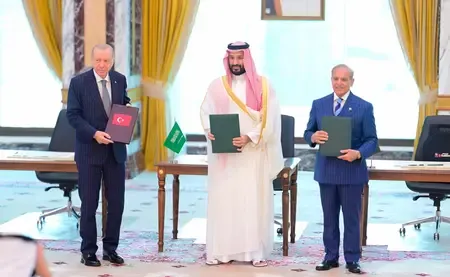
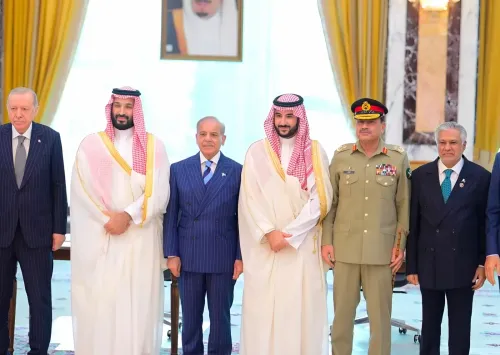
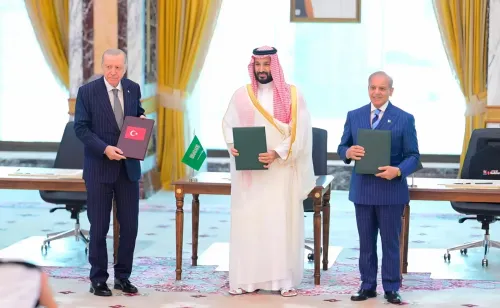
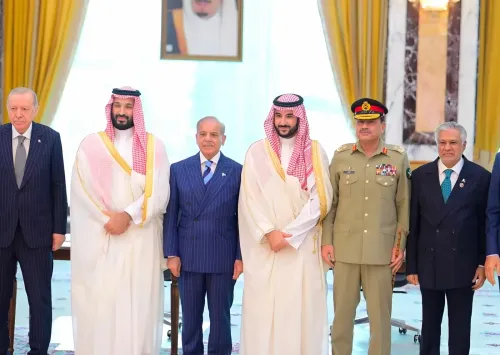
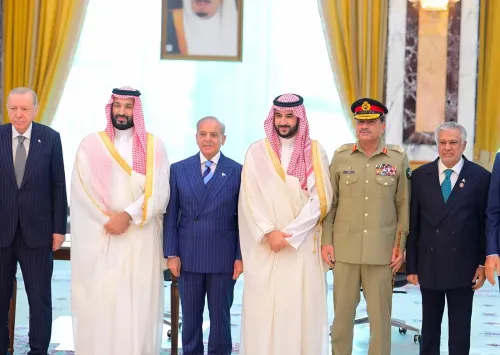
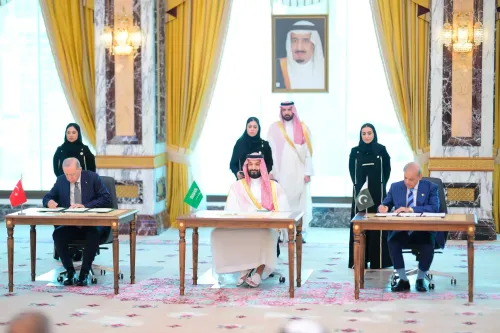
Saudi Arabia , Turkey , and Pakistan signed the Mecca Joint Defence Agreement in early August , modelled on NATO's Article 5 collective defence clause.
A report by Geopolitical Monitor warns the pact lacks shared values, a common adversary, and any binding political ideology.
Saudi Arabia's deepening ties with India raise doubts about whether Riyadh would back Pakistan in a future conflict with New Delhi .
Historical precedent is unfavourable: Pakistan's parliament previously voted against joining Saudi Arabia's Yemen campaign despite a direct request.
Saudi Arabia views political Islam and the Muslim Brotherhood as a regime threat — a direct ideological contradiction with Turkey's championing of that ideology.
A new geopolitical analysis has raised serious questions about the durability of the Mecca Joint Defence Agreement signed by Saudi Arabia, Turkey, and Pakistan in early August, warning that the trilateral pact lacks the ideological cohesion and shared threat perception that have historically held successful military alliances together. The report, published by Canada-based Geopolitical Monitor, argues that without a common adversary or unified values, the pact faces a fundamental question of what will ultimately hold it together.
Origins of the Pact
The agreement emerged against the backdrop of the Iran war, which has significantly disrupted Middle Eastern geopolitics. According to the report, US bases across the Gulf have been repeatedly targeted, and Washington has been unable to fully reopen the Strait of Hormuz for maritime traffic and energy shipments. This has prompted regional powers to diversify their defence partnerships away from the United States, with the Mecca Agreement representing the most visible demonstration of that strategic shift.
The pact is being promoted as a NATO-like security arrangement, featuring a clause modelled on NATO's Article 5 — treating an armed attack on any one of the three signatories as an attack on all. However, analysts note that the comparison to NATO may be misleading.
Deep Contradictions Within the Grouping
The report highlights that several members of the grouping maintain deep ties with adversaries of fellow signatories. A pointed example: Saudi Arabia has significantly strengthened its relationship with India over the past decade. The analysis asks whether Riyadh would support Pakistan in a future conflict with New Delhi — a question that remains unanswered.
Historical precedent adds further doubt. When Saudi Arabia previously requested that Pakistan contribute troops, ships, and aircraft to the Yemen war, Pakistan's parliament voted against joining the conflict. The report notes that each country evaluates questions of war and peace through the lens of its own national interests, casting uncertainty over whether the three nations would genuinely assist one another — and to what extent — if the Article 5-equivalent clause were ever triggered.
No Ideological Glue
The analysis draws a sharp contrast with NATO, which it describes as the benchmark for a successful military alliance — one built on shared democratic values, a commitment to human rights, and the rule of law. The Mecca Agreement, the report argues, lacks any comparable binding political ideology.
The three signatories represent starkly different political systems. Saudi Arabia is characterised as a theocracy that seeks to maintain its position as the foremost Islamic state while simultaneously pursuing internal reforms. Pakistan is described as a military-backed democracy that deploys religion as a policy tool. Turkey is identified as a strained democracy that champions the ideology of political Islam.
Critically, the report flags a direct ideological fault line: Saudi Arabia views political Islam — particularly the Muslim Brotherhood — as a threat to its own regime, while Turkey has historically been associated with movements aligned with that ideology. This internal contradiction, analysts argue, could prove corrosive over time.
What Analysts Are Watching
The Mecca Agreement's longevity will likely depend on whether the three countries can subordinate their divergent national interests to collective security commitments — something that past experience suggests is far from guaranteed. Observers note that the pact's NATO framing may serve more as a diplomatic signal to Washington than as a credible operational defence architecture. How the agreement holds up under real-world pressure — particularly if any signatory faces a conflict involving a third party with ties to another member — will be the defining test.
Point of View
Existential adversary and a common democratic identity — neither of which exists here. The Saudi-Turkey ideological fault line over political Islam is not a peripheral detail; it is a structural crack. More telling is the Yemen precedent: Pakistan's parliament overrode a direct Saudi request, demonstrating that national interest will trump alliance obligation when the stakes are real. The agreement may be best read as a collective signal of Gulf diversification away from US dependence rather than a credible mutual defence commitment — and policymakers in New Delhi, Washington, and Tehran are likely reading it exactly that way.
NationPress
13 Oct 2026
Frequently Asked Questions
What is the Mecca Joint Defence Agreement?
The Mecca Joint Defence Agreement is a trilateral security pact signed by Saudi Arabia, Turkey, and Pakistan in early August, featuring a clause modelled on NATO's Article 5 that treats an armed attack on any one signatory as an attack on all three. It emerged amid disruptions caused by the Iran war and growing Gulf interest in diversifying defence partnerships away from the United States.
Why do analysts doubt the pact will hold?
Analysts flag the absence of shared values, a common adversary, or a unifying ideology — the three pillars that have historically held military alliances together. Historical precedent reinforces the concern: Pakistan's parliament voted against joining Saudi Arabia's Yemen campaign despite a direct request, suggesting national interest will override alliance obligations.
What is the ideological contradiction within the Mecca Agreement?
Saudi Arabia views political Islam — particularly the Muslim Brotherhood — as a direct threat to its regime, while Turkey champions the ideology of political Islam. This puts two of the three signatories on opposite sides of one of the region's most consequential ideological divides.
Does Saudi Arabia's relationship with India complicate the pact?
Yes. Saudi Arabia has significantly deepened its ties with India over the past decade, raising an unresolved question: would Riyadh back Pakistan in a future conflict with New Delhi? The report highlights this as one of the most glaring contradictions within the grouping.
How does the Mecca Agreement compare to NATO?
Unlike NATO — which is built on shared democratic values, human rights commitments, and a unified threat perception — the Mecca Agreement brings together a theocracy, a military-backed democracy, and a strained democracy with divergent ideological orientations. The report argues this absence of ideological glue makes a direct NATO comparison misleading.