Makkah Defence Pact: Saudi Arabia, Turkey, Pakistan eye new West Asia order
Synopsis
Signed on 7 August 2025, the Makkah Joint Defence Agreement between Saudi Arabia, Turkey, and Pakistan is already facing its first real tests — Houthi attacks and Iran strikes on Saudi soil — without triggering the automatic military response its language implies. The pact's true driver may be economic as much as strategic: both Turkey and Pakistan were shut out of IMEC, and a new security architecture means a new seat at the development table.
Key Takeaways
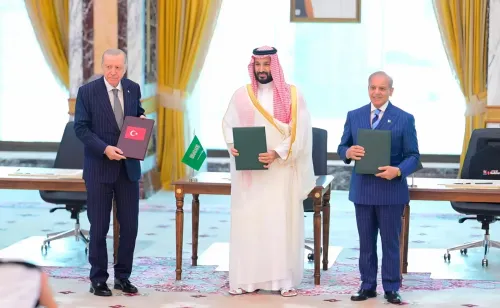
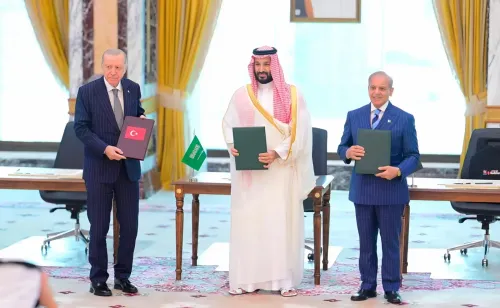
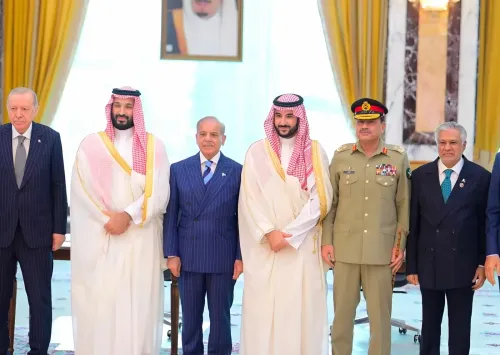
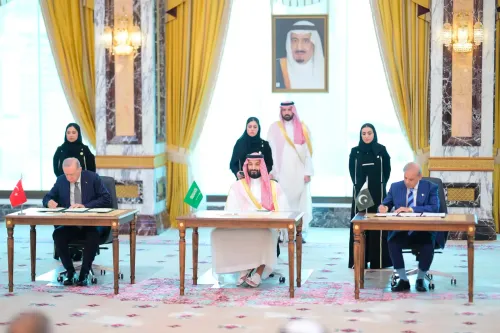
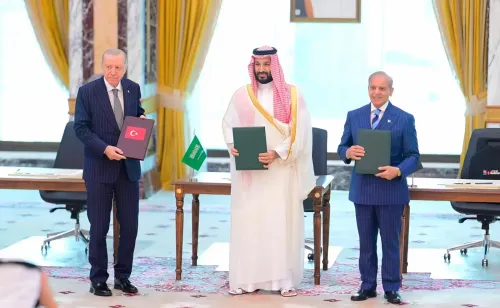
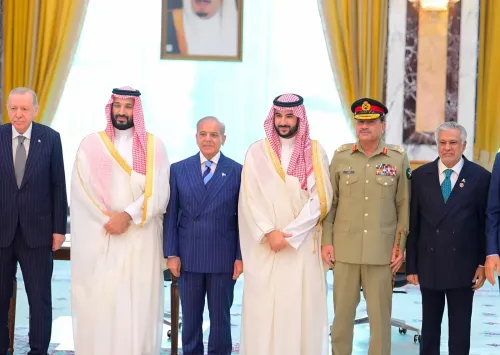
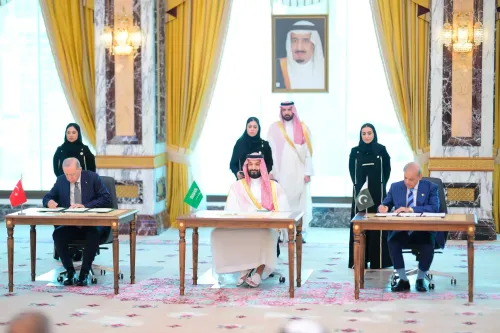
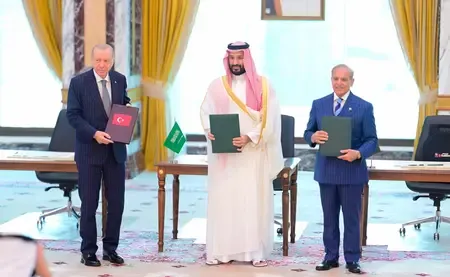
The Makkah Joint Defence Agreement between Saudi Arabia , Turkey , and Pakistan was signed on 7 August 2025 in Mecca.
The pact's collective-defence language — compared to NATO's Article 5 — has not yet triggered direct military action despite Houthi attacks and Iranian strikes on Saudi soil .
Analysts say the accord lacks clearly defined activation thresholds , limiting its operational effectiveness.
Both Turkey and Pakistan were excluded from the India-Middle East-Europe Economic Corridor (IMEC) ; the pact is partly seen as a strategic response to that exclusion.
Foreign Ministers of all three countries met on the sidelines of UNGA in New York to discuss possible actions under the treaty.
The Arab Centre for Research and Policy Studies assesses the alliance as likely remaining a political-security framework focused on intelligence sharing and joint exercises rather than automatic military obligations.
The Makkah Joint Defence Agreement, signed by Saudi Arabia, Turkey, and Pakistan in Mecca on 7 August 2025, is drawing intense scrutiny for its strategic implications amid the deepening crisis in West Asia. The pact reportedly commits all three signatories to treat an armed attack on any one member as an attack on all — a collective-defence principle that analysts have compared to NATO's Article 5 clause.
First Tests: Iran and Houthi Attacks
The agreement has already faced its earliest stress tests. Iran's retaliatory strikes on Saudi Arabian soil, and more significantly, escalating Houthi attacks, have placed the pact's collective-defence commitments under the spotlight. Crucially, however, neither Pakistan nor Turkey entered direct combat operations in response. Analysts suggest the accord lacks clearly defined activation thresholds, leaving member states cautious about being drawn into a broader regional conflagration.
What Each Signatory Brings to the Table
Pakistan, with its large conventional armed forces and nuclear deterrent, has come under scrutiny for simultaneously trying to balance its relations with Iran — a neighbour with which it shares deep religious and economic ties. Turkey contributes a rapidly expanding defence-industrial base and decades of NATO-linked operational experience. Saudi Arabia, for its part, brings substantial financial resources and outsize geopolitical influence across the Gulf. According to analysts, the trio's complementary strengths make the alliance theoretically potent, though differences in strategic priorities and threat perceptions remain a limiting factor.
IMEC Exclusion and the Economic Undercurrent
A commentary published on Diwan, Middle East Insights — a Carnegie platform — offers a revealing economic dimension to the accord. With many Gulf states increasingly viewing the American military presence in the region as a liability, Turkey and Pakistan reportedly saw an opening to position themselves as alternative security guarantors. Both nations were notably excluded from the India-Middle East-Europe Economic Corridor (IMEC), announced at the 2023 G20 summit in New Delhi, which builds trade routes that deliberately bypass their territories. According to Pakistani officials speaking privately, IMEC was reportedly a topic of discussion in Mecca in the run-up to the agreement's emergence. Turkey and Pakistan also recognised an opportunity to scale their military-industrial complexes with Saudi funding, the commentary noted.
Diplomatic Activity Around UNGA
Media reports indicate that the three signatories are preparing for an urgent meeting of their military chiefs, widely seen as a potential activation test for the pact. On the sidelines of the United Nations General Assembly (UNGA) in New York on Thursday, the Foreign Ministers of all three countries convened to assess the situation and explore possible actions under the treaty. The meeting signals that diplomatic momentum around the pact is accelerating, even as questions about its operational teeth remain unresolved.
Assessments: Political Signal or Real Architecture
The Qatar-based Arab Centre for Research and Policy Studies, in an assessment published on the Doha Institute for Graduate Studies website in the same month the pact was signed, concluded that differences in priorities and strategic outlooks would likely confine the agreement to a political-security alliance centred on intelligence sharing, joint training and exercises, air and missile defence cooperation, and joint defence production — rather than a fully operational collective-defence mechanism. Separate independent assessments oscillate between viewing the accord as a foundation for a new regional security architecture and treating it primarily as a political signalling tool designed to reassure partners and deter adversaries without creating automatic military obligations.
More constructively, Saudi Arabia and Pakistan are reportedly already cooperating to help bring an end to US-Iranian hostilities, while Turkey is reportedly mediating between the Afghan Taliban and Pakistan to resolve outstanding border disputes. If the three nations can align — or at least coordinate — their positions on a significant number of regional issues, the Mecca accord could ultimately be remembered as the moment a new West Asian security order was born.
Point of View
Collective defence remains a press-release commitment. The deeper question is whether Saudi Arabia, which funds and anchors the alliance, has the appetite for the regional entanglements that a genuine mutual-defence framework would demand.
NationPress
25 Sept 2026
Frequently Asked Questions
What is the Makkah Joint Defence Agreement?
The Makkah Joint Defence Agreement is a collective-defence pact signed by Saudi Arabia, Turkey, and Pakistan in Mecca on 7 August 2025. It reportedly commits the three countries to treat an armed attack on any one member as an attack on all, drawing comparisons to NATO's Article 5 mutual-defence principle.
Has the Makkah pact been activated in response to Houthi or Iranian attacks?
No. Despite Iran's retaliatory strikes on Saudi soil and escalating Houthi attacks, neither Pakistan nor Turkey entered direct combat operations. Analysts attribute this to a lack of clearly defined activation thresholds within the agreement.
Why did Turkey and Pakistan join Saudi Arabia in this defence pact?
Beyond security motivations, both Turkey and Pakistan were excluded from the India-Middle East-Europe Economic Corridor (IMEC), announced at the 2023 G20 summit in New Delhi. According to a Carnegie Diwan commentary, the new security architecture was partly driven by the desire to access economic benefits and regain relevance in global development corridors. There was also an opportunity to expand their military-industrial complexes with Saudi funding.
What do analysts say about the pact's effectiveness?
Assessments are divided. The Qatar-based Arab Centre for Research and Policy Studies concluded the pact will likely remain a political-security alliance focused on intelligence sharing, joint training, and missile defence — not automatic military obligations. Others see it as a potential foundation for a new regional security order if the three nations can coordinate consistently.
What diplomatic activity is happening around the Makkah pact right now?
Foreign Ministers of Saudi Arabia, Turkey, and Pakistan met on the sidelines of the UN General Assembly in New York on Thursday, 25 September 2025, to discuss the regional situation and possible actions under the treaty. Reports also indicate the three countries are preparing an urgent meeting of their military chiefs.