Mecca Agreement: Why Pakistan-Saudi-Turkey alliance is unlikely to last
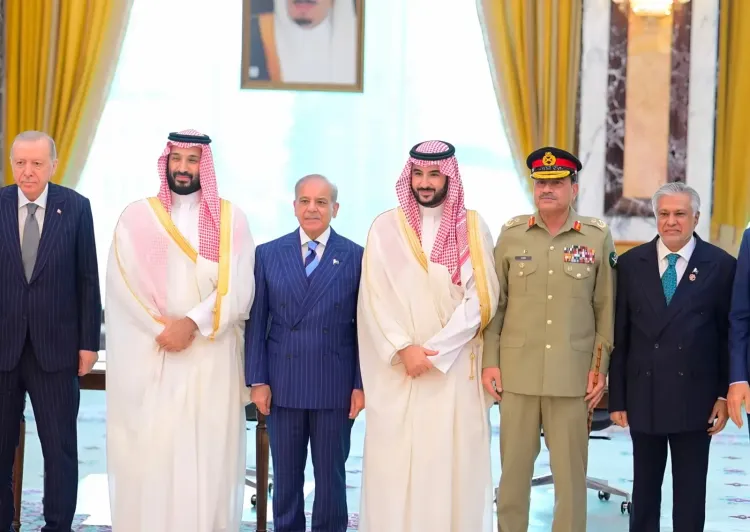
Synopsis
Signed in August 2024, the Mecca Agreement between Pakistan, Saudi Arabia, and Turkey was billed by some as a landmark Muslim-world realignment — but analysts say it is a textbook case of a reactionary, identity-driven grouping with no shared threat, no collective defence clause, and a history of inter-member rivalry. India's model of strategic autonomy stands in sharp contrast.
Key Takeaways
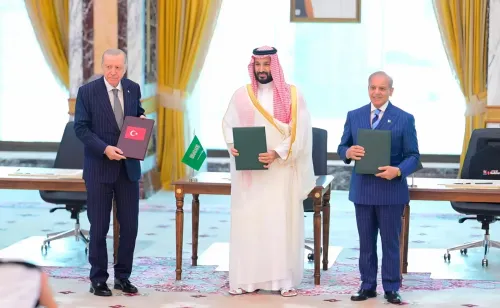
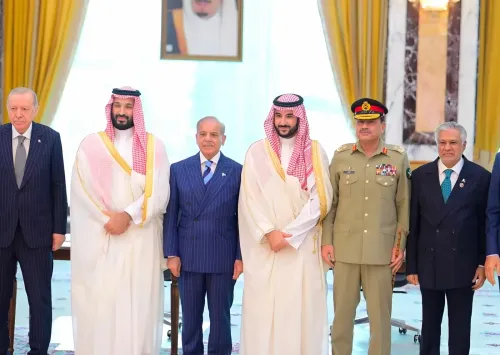
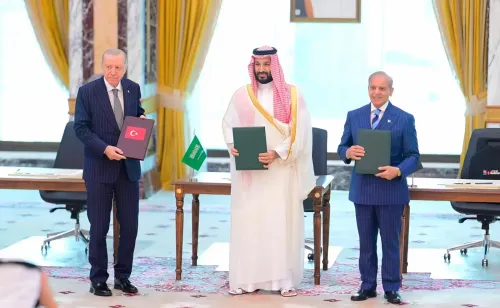
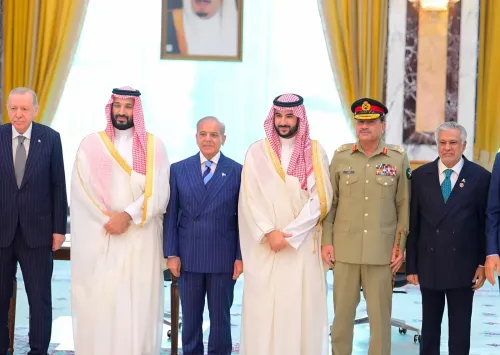
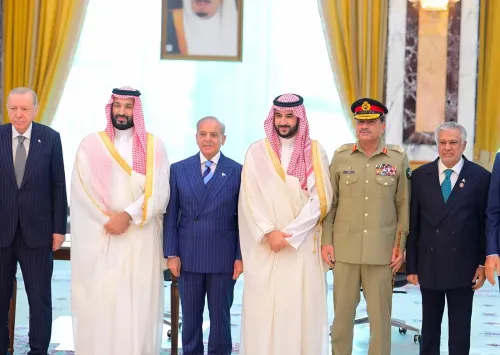
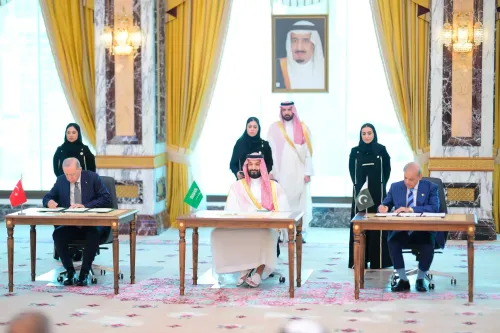
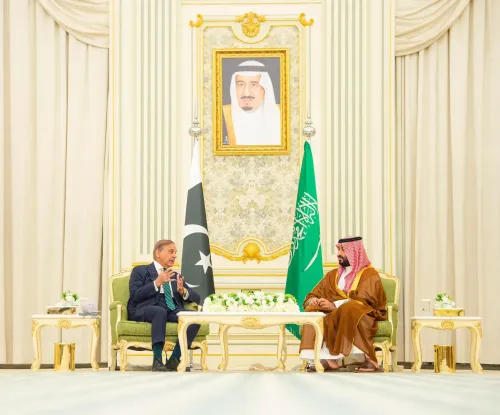
The Mecca Agreement was signed on 7 August 2024 in Mecca among Pakistan , Saudi Arabia , and Turkey .
Analysts argue the alliance lacks the foundational requirements of durability: a shared threat , a collective defence commitment , and a long-term policy roadmap .
All three signatories had to reassure Iran that the agreement was not directed at Tehran — underscoring the alliance's limited strategic scope.
In 2019 , Pakistan and Turkey backed a Malaysia -led push to challenge Saudi Arabia's leadership of the Muslim world at the Kuala Lumpur Summit .
India's strategic autonomy is cited as a counter-model — prioritising verifiable security and economic interests over reactive, identity-based alignments.
No regional Muslim country from West Asia , apart from Saudi Arabia itself, has joined the Mecca Agreement grouping.
The Mecca Agreement, signed on 7 August 2024 in the holy city of Mecca among Pakistan, Saudi Arabia, and Turkey, has generated considerable debate among analysts — but experts argue it falls well short of the foundational requirements of a durable alliance. Rather than being anchored in shared strategic threats or long-term policy goals, critics contend the grouping is a reactionary, identity-driven alignment that is unlikely to withstand the test of time.
What Makes an Alliance Work
Strategic analysts note that the bedrock of any meaningful alliance is a shared threat perceived as sufficiently serious by all parties involved. The classic template is the Cold War alignment between the United States and Western Europe against the Soviet threat — a case where threat perception, geographic relevance, and cost-sharing aligned clearly. Alliances can also be short-lived and goal-specific, as demonstrated by the US-Soviet-UK partnership during World War II, formed solely to defeat Nazi Germany and dissolved soon after.
The key variables, according to analysts, are: clarity of the threat, its relevance across all allied partners, and the willingness of each partner to bear costs — including military ones — in service of the alliance's goals.
The Core Problem with the Mecca Agreement
The Mecca Agreement, analysts argue, fails on most of these counts. Pakistan, Saudi Arabia, and Turkey are non-contiguous nations belonging to three distinct regions — South Asia, the Arabian Peninsula, and Southeastern Europe/Anatolia — each with markedly different regional dynamics and security concerns.
Pakistan's principal threat perception centres on India. Saudi Arabia's security environment is shaped by its rivalry with Iran and the threat from Houthi forces. Turkey's most pressing security challenges are largely internal, specifically the Kurdish insurgency. Notably, all three had to send assurances to Tehran that the agreement was not directed at Iran — an early signal of its limited scope.
There is also no clear collective defence clause — no formal commitment that an attack on one member constitutes an attack on all. Analysts point out that this absence makes the alliance more symbolic than substantive.
Contradictions and Historical Fault Lines
The grouping's credibility is further complicated by the alliance members' own fractious recent history. In 2019, Pakistan and Turkey joined a Malaysia-led campaign specifically aimed at challenging Saudi Arabia's dominance as the leader of the Muslim world, culminating in the Kuala Lumpur Summit. Saudi Arabia's sharpest critic at that summit was the United Arab Emirates (UAE) — and today, Saudi Arabia and the UAE are reportedly engaged in a proxy conflict in Sudan.
Analysts also question the logic of shared religious identity as a strategic glue. Turkey was the first Muslim country to recognise Israel in 1949, though bilateral ties deteriorated sharply after 2008. A parallel tripartite military cooperation framework involving Israel, Greece, and Cyprus presents its own contradictions — Turkey's potential military action against Cyprus raises questions about how, or whether, Israel would respond, given that there is no collective defence obligation binding the three.
Moreover, the two powers most consistently aligned with the Palestinian cause — the only apparent shared concern of the Mecca Agreement signatories — are Iran and the Houthis, both adversaries of Saudi Arabia.
India's Strategic Autonomy as a Counter-Model
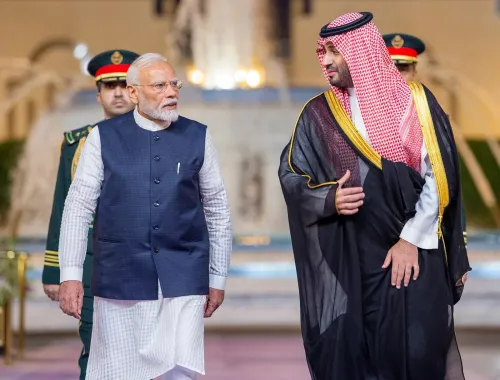
Analysts cite India's consistent policy of strategic autonomy as a counterpoint to identity-driven or reactionary groupings. New Delhi has maintained deep economic and defence ties with Washington without adopting US positions on countries like Cuba, Iran, or China. India's security and economic interests, as defined by New Delhi itself, drive its alignment decisions — not external pressure or shared ideological or religious identity.
This approach, experts note, allows India to avoid generating unnecessary arms races or threat perceptions that can destabilise regions rather than secure them.
Outlook
The Mecca Agreement, as it stands, represents political signalling more than a structural shift in regional security architecture. Without a credible shared threat, a collective defence commitment, and a long-term policy roadmap, analysts expect the grouping to remain largely ceremonial. Whether any of the three countries takes concrete steps to operationalise the alliance will be the real test of whether it evolves beyond its reactionary origins.
Point of View
Not strategy. The absence of a collective defence clause is not an oversight; it reflects the reality that none of the three would plausibly go to war for the others. Shared religious identity has historically proven to be a weak substitute for shared interests — the Muslim world's own fault lines, from the Iran-Saudi rivalry to the 2019 Kuala Lumpur episode, make that plain. India's strategic autonomy model is instructive precisely because it is interest-driven and disciplined: New Delhi has resisted both the pressure to join US-led coalitions against Iran and Beijing, and the temptation of identity-driven groupings. The Mecca Agreement's real risk is not that it provokes a counter-alliance, but that it creates inflated expectations that lead to miscalculation.
NationPress
24 Sept 2026
Frequently Asked Questions
What is the Mecca Agreement?
The Mecca Agreement is a political and military cooperation pact signed on 7 August 2024 in Mecca among Pakistan, Saudi Arabia, and Turkey. It was presented by some as a landmark alignment of major Muslim nations, though analysts widely characterise it as a political signalling exercise rather than a substantive security alliance.
Why do analysts believe the Mecca Agreement will not last?
Analysts argue the agreement lacks the core attributes of a durable alliance: a clearly shared threat, a formal collective defence commitment, and a long-term strategic roadmap. The three countries are non-contiguous, face distinct regional threats, and have a recent history of working against one another — most notably at the 2019 Kuala Lumpur Summit.
Which countries are in the Mecca Agreement and what are their individual threats?
Pakistan's primary threat perception centres on India; Saudi Arabia's on Iran and the Houthis; and Turkey's most pressing challenges are internal, relating to Kurdish insurgency. Because these threats do not overlap, there is no clear mechanism by which the alliance would be activated in practice.
How does India's approach differ from the Mecca Agreement model?
India's policy of strategic autonomy prioritises verifiable security and economic interests over identity-driven or reactive alignments. New Delhi maintains close ties with the United States on defence and trade without adopting Washington's stances on Iran, Cuba, or China — a model analysts argue is more durable than groupings built on shared religious or political identity.
What is the parallel Israel-Greece-Cyprus military cooperation, and does it face similar problems?
Israel, Greece, and Cyprus have pursued a separate tripartite military cooperation framework, but analysts note it faces analogous credibility issues. With no collective defence obligation, it remains unclear whether Israel would intervene if Turkey, for instance, took military action against Cyprus — particularly given the complex history between Ankara and Tel Aviv.