Pakistan expands Middle East military role as Afghan, India fronts remain unresolved
Synopsis
Pakistan has signed a collective defence pact with Saudi Arabia and Turkey, committed forces for rapid deployment under it, and is reportedly providing equipment and advisers for Saudi operations against the Houthis — all while conducting fresh airstrikes in Afghanistan and managing a fragile post-2025 standoff with India. An EU Reporter analysis argues this is strategic overreach driven by military establishment ambition, not a parliamentary mandate.
Key Takeaways
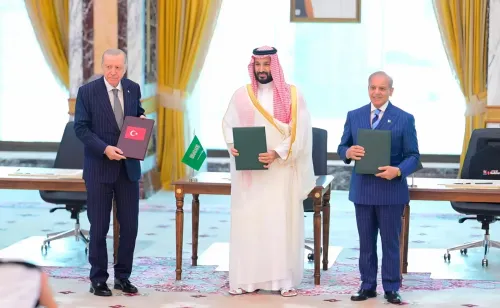
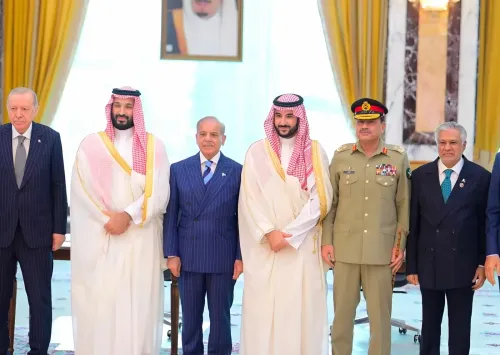
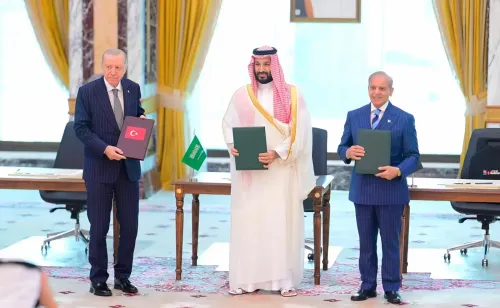
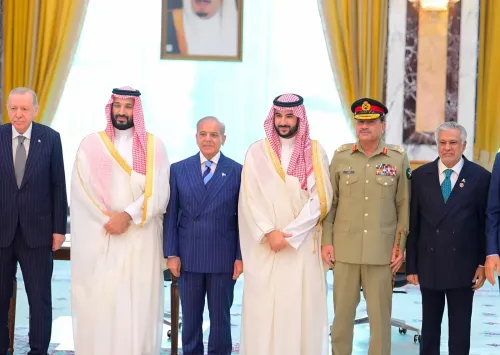
Pakistan , Saudi Arabia , and Turkey signed the Mecca Joint Defence Agreement on 7 August 2026 , establishing a mutual-defence clause.
On 5 October 2026 , Pakistan and Turkey agreed to rapid military deployment to Saudi Arabia under the pact.
Pakistani support for Saudi operations against the Houthis reportedly already includes military equipment, advisers, and operational assistance.
Pakistan conducted fresh airstrikes in Afghanistan in late September 2026 , with the TTP threat keeping the western frontier active.
A fragile de-escalation with India following a 2025 military confrontation remains under strain, with the Indus Waters Treaty dispute unresolved.
Analysts warn the expansion lacks parliamentary accountability , contrasting with Pakistan's 2015 decision to stay neutral on Yemen after open legislative debate.
Pakistan is deepening its military commitments in the Middle East even as it struggles to manage active or fragile fronts on its own borders, according to an analysis published in EU Reporter. The report highlights a widening gap between Islamabad's strategic ambitions and its capacity to handle simultaneous security pressures at home.
The Mecca Joint Defence Agreement
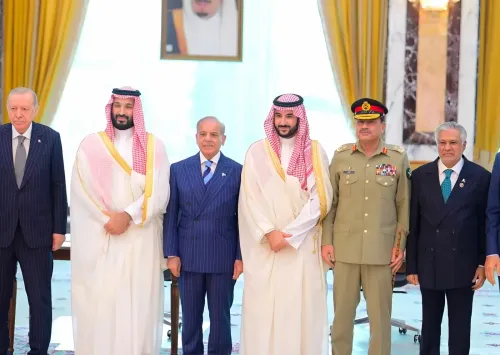
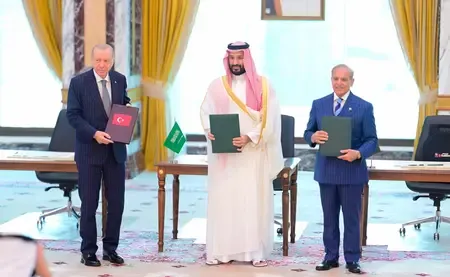
On 7 August 2026, Saudi Arabia, Pakistan, and Turkey signed the Mecca Joint Defence Agreement, a collective security pact under which an attack on any one signatory would be treated as an attack on all three. Pakistan's Ministry of Foreign Affairs described the agreement as reflecting the three nations' shared commitment 'to further strengthen their collective security and to promote peace, security, and stability in the region and beyond.'
On 5 October 2026, Islamabad and Ankara agreed to the rapid deployment of military forces and capabilities to Saudi Arabia under the pact. According to the EU Reporter analysis, Pakistani support for Riyadh's operations against the Houthis has already moved beyond diplomatic solidarity to 'military equipment, advisers and operational assistance.'
Pakistan's Multiple Unresolved Fronts
The EU Reporter analysis, authored by Dimitra Staikou, underlines a stark paradox in Islamabad's posture. In late September 2026, Pakistan carried out fresh airstrikes inside Afghanistan, as its confrontation with the Taliban government and the threat from the Tehrik-i-Taliban Pakistan (TTP) turned the western frontier into what the report calls 'an active theatre of conflict.'
To Pakistan's east, the report notes that a fragile de-escalation with India following a serious military confrontation in 2025 'remains under strain,' with the dispute over the Indus Waters Treaty still unresolved. The combined picture, the analysis argues, is of a country simultaneously managing live hostilities on one border, a strained relationship on another, and now choosing to expand its military obligations in the Gulf.
The 2015 Precedent and What Changed
The current trajectory draws sharp contrast with 2015, when Saudi Arabia requested Pakistani military support for its intervention in Yemen. At the time, the matter was debated in Pakistan's parliament, and lawmakers chose neutrality — explicitly citing fears that involvement could damage ties with Iran and inflame sectarian tensions between Shia and Sunni communities inside Pakistan.
The EU Reporter analysis argues that no comparable parliamentary debate has shaped the current engagement. 'Pakistan's involvement today can increase through defence commitments, military coordination, advisors and material support, without parliamentary accountability in which elected lawmakers decide where the red line of the country lies,' Staikou wrote.
Questions of Accountability and Strategic Overreach
The analysis raises pointed questions about whose interests are driving the deepening Gulf engagement. Staikou wrote: 'In 2026, by contrast, there is a danger that the ambitions of the military establishment — regional influence, strategic prestige and the army's emergence as an indispensable security partner for the Gulf monarchies — are being presented as the interests of the country itself. But the interests of Pakistan's generals are not, by definition, the interests of Pakistan.'
Critics argue this represents a form of strategic overreach that risks stretching Pakistan's military and diplomatic bandwidth beyond what the country can sustainably bear. Whether Islamabad can manage simultaneous commitments in Afghanistan, a recovering but tense relationship with India, and an expanding Gulf role — all without a clear parliamentary mandate — is a question that analysts say will only grow more pressing as the Houthi conflict continues to escalate.
Point of View
A still-fragile eastern front with India, and now a deepening Gulf commitment is a textbook case of strategic overreach — and the absence of parliamentary scrutiny makes it more dangerous, not less. The 2015 Yemen debate showed that elected institutions can act as a check on military adventurism; the current trajectory bypasses that check entirely. Saudi Arabia's interest in Pakistani military capacity is obvious; what vital Pakistani national interest is served by gradual entanglement in yet another theatre is far less clear. If the Mecca Pact obligations escalate and a domestic security crisis deepens simultaneously, Islamabad may find it has committed to more fronts than it can resource or explain to its own citizens.
NationPress
13 Oct 2026
Frequently Asked Questions
What is the Mecca Joint Defence Agreement?
The Mecca Joint Defence Agreement is a collective security pact signed by Saudi Arabia, Pakistan, and Turkey on 7 August 2026, under which an attack on any one signatory is treated as an attack on all three. Pakistan's Ministry of Foreign Affairs described it as aimed at strengthening collective security and promoting stability in the region.
What military support is Pakistan providing to Saudi Arabia against the Houthis?
According to the EU Reporter analysis, Pakistan's support has moved beyond diplomatic solidarity and now includes military equipment, advisers, and operational assistance. Pakistan has not yet deployed combat forces to fight in Yemen, but the analysis warns that involvement can deepen without formal parliamentary authorisation.
Why does Pakistan's Gulf expansion matter given its situation in Afghanistan?
Pakistan carried out fresh airstrikes inside Afghanistan in late September 2026 as the TTP threat keeps its western frontier in active conflict. Expanding Gulf commitments simultaneously stretches military bandwidth and raises questions about Islamabad's capacity to manage multiple fronts — a concern highlighted in the EU Reporter analysis.
How does the current situation compare to Pakistan's 2015 Yemen decision?
In 2015, Saudi Arabia's request for Pakistani military support in Yemen was debated in parliament, and lawmakers voted for neutrality, citing risks to ties with Iran and domestic sectarian stability. Critics argue that the 2026 commitments are being made without equivalent parliamentary oversight, marking a significant shift in how such decisions are reached.
What is the status of Pakistan's relationship with India amid these developments?
A fragile de-escalation between Pakistan and India following a serious military confrontation in 2025 remains under strain, with the Indus Waters Treaty dispute still unresolved. The concurrent Afghanistan and Gulf pressures mean Islamabad is managing three simultaneous security challenges with limited diplomatic bandwidth.