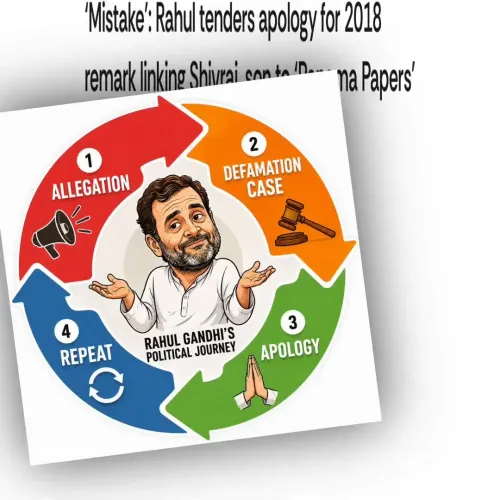
Shekhawat targets Rahul Gandhi in sharp 2004 'launch year' jibe
Synopsis
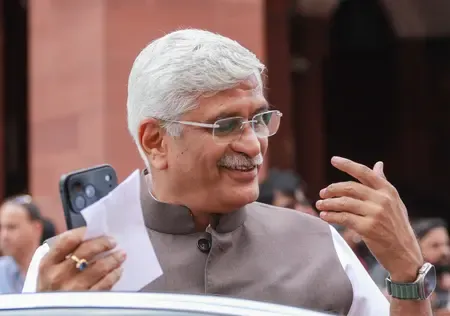
Culture Minister Gajendra Singh Shekhawat fires a creative broadside at Rahul Gandhi, contrasting Gandhi's 2004 political debut with global success stories launched the same year and accusing him of treating the Prime Ministership as a family inheritance.
Key Takeaways
Gajendra Singh Shekhawat , Union Culture and Tourism Minister, posted a pointed comparison on X on October 13, 2026 targeting Rahul Gandhi's 2004 political debut.
The post listed success stories from the same era — MS Dhoni, Facebook, Gmail, YouTube, Google Maps, Priyanka Chopra, Maruti Swift, and Mahindra Scorpio — as contrasts to Gandhi's political record.
Shekhawat accused Gandhi of 'peddling lies' and treating the Prime Ministership as a family heirloom rather than an earned mandate.
Rahul Gandhi first won Parliament from Amethi, Uttar Pradesh in the 2004 general elections , the same cycle that brought the Congress-led UPA to power.
The post is consistent with the BJP's established social-media strategy of framing dynasty versus democratic mandate as a central political contrast.
No official response from the Indian National Congress has been issued at the time of publication.
In a pointed political broadside, Union Culture and Tourism Minister Gajendra Singh Shekhawat took to X on Tuesday, October 13, 2026, drawing an elaborate — and deliberately unflattering — comparison between Rahul Gandhi's entry into electoral politics in 2004 and a roster of global and Indian success stories born in the same era.
The 'Class of 2004' Shekhawat assembled
Shekhawat's post lined up MS Dhoni's international cricket debut, the launch of Facebook, Gmail, YouTube, and Google Maps alongside milestones like Priyanka Chopra's Miss World win and the arrival of the Maruti Suzuki Swift and Mahindra Scorpio on Indian roads. Each entry, he noted, 'went on to become a global brand or a historic success story.' The implicit punch line lands hard: every other 'launch' from that window transformed something — cricket, communication, navigation, pop culture. Rahul Gandhi, Shekhawat argues, did not.
The minister did not spare words in his closing line, writing that Gandhi — 'after two decades in politics' — is 'still peddling lies and projecting himself as the rightful choice for Prime Minister, as though the country's top job were a family heirloom rather than a mandate earned from the people.' The dynastic-succession charge is a well-worn BJP talking point, but the creative framing here gives it fresh packaging.
The 2004 backdrop: Rahul Gandhi's Amethi debut
Rahul Gandhi first won a Lok Sabha seat from Amethi, Uttar Pradesh in the 2004 general elections — the same cycle that swept the Indian National Congress-led United Progressive Alliance to power at the centre. His entry into Parliament was always understood, in both friendly and hostile quarters, as the beginning of a grooming arc toward the country's top job. That arc, Shekhawat now argues, has stretched two decades without delivery.
Congress has long countered such attacks by pointing to Gandhi's role in opposition accountability and his 'Bharat Jodo' campaigns. The party has not yet publicly responded to this specific post.
BJP's social-media playbook and where this fits
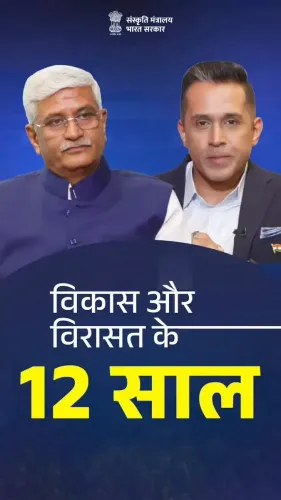
This is textbook BJP social-media strategy: reframe a political argument as pop-cultural comparison, keep the humour dry, and let the contrast do the rhetorical work. Senior ministers and MPs regularly deploy such posts to seed a narrative cycle that then runs through party handles and supporter networks. Shekhawat, a Lok Sabha MP from Jodhpur and a minister with high visibility, carries enough institutional weight to give the post immediate traction.
The timing — mid-political cycle, well ahead of any immediate election — suggests the post is less about a specific vote and more about sustaining a long-running character attack on the Congress president. The dynasty-versus-mandate binary has been a central BJP frame since at least 2014, and posts like this refresh it for a social-media generation that barely remembers the 2004 Lok Sabha results.
Point of View
The minister modernises the argument for a younger audience that engages more with MS Dhoni and Google Maps than with UPA-era governance debates. The post carries no immediate policy consequence, but its real function is brand maintenance — keeping the 'Gandhi family heirloom' narrative alive and searchable between election cycles. Congress's silence on this specific post, if sustained, cedes the framing on social media, which is increasingly where political perception is built before votes are ever cast.
NationPress
14 Oct 2026
Frequently Asked Questions
Why did Gajendra Singh Shekhawat compare Rahul Gandhi to MS Dhoni and Facebook?
Shekhawat used the comparison to highlight what he called the contrast between 2004-era 'launches' that became historic successes and Rahul Gandhi's political debut that same year, arguing Gandhi has not delivered results in two decades. It is a rhetorical device to frame Gandhi as underperforming relative to his era.
When did Rahul Gandhi first enter Parliament?
Rahul Gandhi first won a Lok Sabha seat from Amethi, Uttar Pradesh in the 2004 general elections.
What is Gajendra Singh Shekhawat's position in the government?
Gajendra Singh Shekhawat is the Union Minister of Culture and Tourism in the central government and a Lok Sabha MP representing Jodhpur, Rajasthan.
Has Congress responded to Shekhawat's 2026 post about Rahul Gandhi?
No official response from the Indian National Congress has been issued in response to this specific post at the time of publication.
What is the BJP's main political argument against Rahul Gandhi?
The BJP has consistently argued that Rahul Gandhi's political prominence stems from dynastic succession rather than an independently earned democratic mandate — a charge Gandhi and the Congress have repeatedly rejected.