Shekhawat Hails Modi's Rise as Proof of India's Democratic Strength
Synopsis
Union Minister Gajendra Singh Shekhawat on June 19, 2026, invoked PM Modi's rise from tea seller to Prime Minister as proof of Indian democracy's strength, sharing a video post on X that reinforces the BJP's long-standing narrative of merit-based mobility over dynastic politics.
Key Takeaways
Union Minister Gajendra Singh Shekhawat posted on X on June 19, 2026 , celebrating India's democracy through PM Modi's personal story.
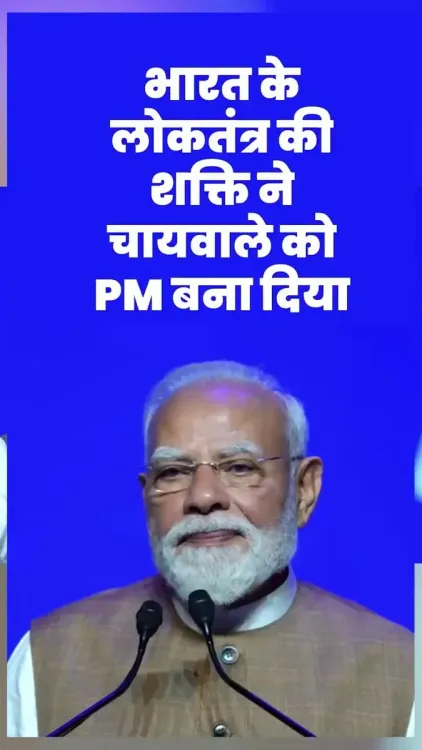
His Hindi post translates as: 'This is the strength of India's democracy, which has brought a tea seller this far.' The post references PM Narendra Modi 's well-known background as a child tea seller in Gujarat before entering politics.
The 'chaiwala' narrative has been central to BJP 's political communication since Modi's election as Prime Minister in 2014 .
Shekhawat is a senior BJP leader and Lok Sabha MP from Jodhpur, Rajasthan , serving as Union Minister of Culture and Tourism.
The post was accompanied by a video and is aimed at aspirational citizens and youth from modest backgrounds.
Union Culture and Tourism Minister Gajendra Singh Shekhawat on Friday, June 19, 2026, invoked the story of Prime Minister Narendra Modi's humble origins to celebrate the power of Indian democracy, sharing a video post on X that quickly drew attention across political circles.
Context
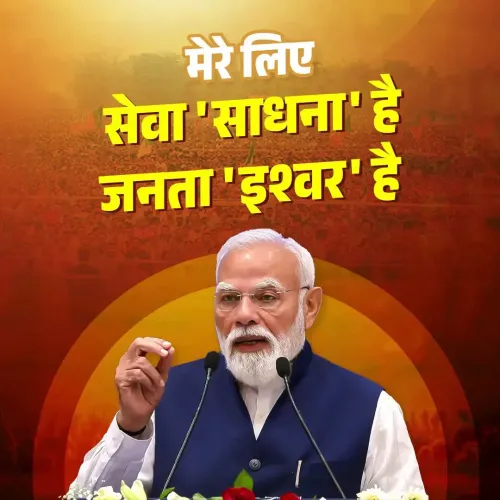
Shekhawat's post, written in Hindi, states: 'Ye Bharat ke loktantra ki shakti hai, jisne ek chaiwale ko yahan tak pahuncha diya.' — 'This is the strength of India's democracy, which has brought a tea seller this far.' The remark is a direct reference to Prime Minister Narendra Modi, who famously sold tea as a child on railway platforms in Gujarat before rising through state and national politics.
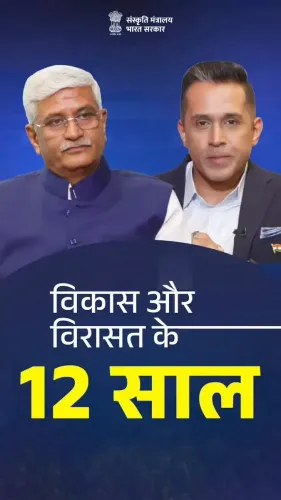
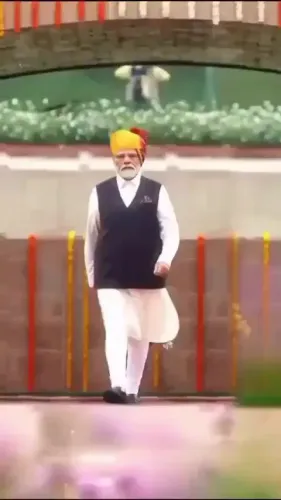
The post was accompanied by a video, the contents of which could not be independently verified at the time of publication. Shekhawat, a senior BJP leader and Lok Sabha MP from Jodhpur, Rajasthan, is among the party's prominent voices on themes of democratic aspiration and cultural identity.
Policy Backdrop
The 'chaiwala' narrative has been a defining thread in BJP's political communication since Modi was elected Prime Minister in 2014. The party has consistently used his journey — from a modest, lower-middle-class background in Vadnagar, Gujarat, to serving as Chief Minister of Gujarat from 2001 and then ascending to the country's highest executive office — as a living argument for merit-based mobility over dynastic privilege.
This framing has been deployed repeatedly in election campaigns, parliamentary speeches, and cultural messaging to contrast the BJP's leadership with political families seen as emblematic of inherited power. Statements of this nature also align with the party's broader effort to position Indian democracy as uniquely capable of enabling social and economic uplift for citizens from any background.
Stakeholders and Impact
The message resonates most directly with aspirational youth and first-generation professionals from smaller towns and rural India, who form a significant portion of the BJP's electoral base. For them, the Prime Minister's personal biography functions as both political symbol and social proof.
Civil society observers note that such statements, when amplified by senior ministers, reinforce a particular reading of democratic legitimacy — one grounded in personal achievement rather than lineage. Critics from opposition parties have in the past challenged this narrative, arguing that structural barriers continue to limit genuine upward mobility for large sections of society. No fresh opposition response to this specific post was available at the time of publication.
What's Next
Shekhawat's post arrives as the Ministry of Culture and Tourism continues its mandate of promoting India's democratic and cultural heritage on national and international platforms. Statements from the ministry on themes of democratic values are expected to intensify ahead of key national anniversaries and parliamentary sessions. How the broader political discourse responds to this renewed invocation of the chaiwala narrative will be worth watching in the weeks ahead.
Point of View
Not lineage. By amplifying this message as a senior Cabinet minister rather than a party functionary, the statement carries institutional weight and signals that the narrative remains central to the party's self-presentation heading into future electoral cycles. It also subtly frames the ongoing debate about dynastic politics without naming any opponent, a technique the BJP has refined over more than a decade. The post's video component suggests a deliberate multimedia push, likely aimed at younger, mobile-first audiences who respond to visual storytelling over text-heavy political messaging.
NationPress
19 Sept 2026
Frequently Asked Questions
What did Gajendra Singh Shekhawat post on X on June 19 2026?
Shekhawat posted a Hindi message stating 'This is the strength of India's democracy, which has brought a tea seller this far,' accompanied by a video, in an apparent tribute to PM Modi's rise from humble origins.
What is the chaiwala reference in Indian politics?
The 'chaiwala' or tea seller reference points to PM Narendra Modi, who sold tea as a child at railway stations in Gujarat before becoming Chief Minister of Gujarat and later Prime Minister of India in 2014.
Why does the BJP invoke Modi's tea seller background?
The BJP uses Modi's personal journey from a modest background to the Prime Minister's office to argue that Indian democracy enables merit-based upward mobility, contrasting it with what the party describes as dynastic politics.
Who is Gajendra Singh Shekhawat?
Gajendra Singh Shekhawat is a senior BJP leader, Union Minister of Culture and Tourism, and Lok Sabha MP from Jodhpur, Rajasthan.
What is the significance of such statements from a Cabinet minister?
When a serving Cabinet minister, rather than a party spokesperson, invokes the chaiwala narrative, it carries institutional weight and signals that the message is part of the government's broader cultural and democratic communication strategy.