Shekhawat slams Rahul Gandhi over remarks on India's youth
Synopsis
Union Minister Gajendra Singh Shekhawat publicly rebuked Rahul Gandhi on 30 May 2026, accusing the Leader of the Opposition of making 'absurd and sensational allegations' on youth issues and contrasting Gandhi's approach with PM Modi's stated commitment to India's youth.
Key Takeaways
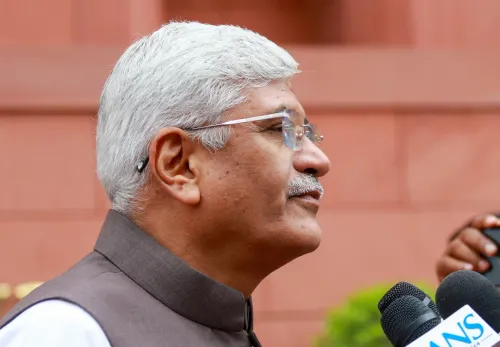
Gajendra Singh Shekhawat , Union Minister of Culture and Tourism, attacked Rahul Gandhi in a post on X on 30 May 2026 .
Shekhawat accused Gandhi of 'immaturity and irresponsibility' in handling sensitive issues concerning India's youth.
The minister argued that Gandhi's statements 'weaken public trust' and 'trivialise the genuine concerns of lakhs of aspirants and their families.' Shekhawat contrasted Gandhi's approach with PM Narendra Modi 's leadership, framing Modi as the candidate India's youth trust.
The exchange reflects a broader pattern of BJP-Congress clashes over youth employment, education, and recruitment integrity that has intensified since the 2024 general elections .
The formal role of Leader of the Opposition — held by Gandhi since 2024 — carries parliamentary expectations of factual, evidence-based critique that Shekhawat argued Gandhi is failing to meet.
Union Culture and Tourism Minister Gajendra Singh Shekhawat on Saturday, 30 May 2026, sharply rebuked Congress leader and Leader of the Opposition Rahul Gandhi, accusing him of making 'absurd and sensational allegations' on issues concerning India's youth. The BJP minister, in a post on X, called Gandhi's approach 'immature and irresponsible' and said such statements weaken public trust rather than strengthen democracy.
Context
Shekhawat's post was a direct response to a statement made by Rahul Gandhi on matters relating to India's youth — covering concerns such as employment, education, and recruitment. While the specific Gandhi statement was not quoted verbatim, Shekhawat characterised it as 'childish politics and reckless rhetoric.' The Union Minister wrote: 'A Leader of Opposition is expected to present facts, not make absurd and sensational allegations merely for political attention.'
Gandhi, who formally assumed the role of Leader of the Opposition in the Lok Sabha following the 2024 general elections — in which the Indian National Congress significantly increased its parliamentary strength — has been a consistent critic of the government's record on youth employment and examination integrity.
Policy Backdrop
The position of Leader of the Opposition carries formal constitutional and parliamentary recognition in India, with an expectation that the role-holder holds the government accountable through factual critique. Shekhawat's post directly challenged Gandhi's fulfilment of that expectation, arguing that 'such statements do not strengthen democracy; they weaken public trust and trivialise the genuine concerns of lakhs of aspirants and their families.'
BJP-Congress exchanges over youth unemployment, education access, and competitive examination integrity have been a recurring feature of Indian political discourse. Ministers from portfolios outside core economic ministries — including Culture and Tourism — have increasingly participated in such rebuttals via social media, amplifying the ruling party's messaging beyond designated spokespersons.
Stakeholders and Impact
At the centre of the political exchange are India's youth — particularly the large number of students and job aspirants preparing for government examinations and competitive recruitment processes. Shekhawat framed Prime Minister Narendra Modi's leadership as the credible anchor for this demographic, contrasting it with what he described as Gandhi's 'childish politics.' The post concluded: 'India's youth trust Hon'ble PM Modi's leadership and commitment towards their future, not Rahul Gandhi's childish politics and reckless rhetoric on every issue.'
For aspirants and their families, the political back-and-forth underscores that youth employment and examination policy remain high-stakes electoral terrain, with both parties seeking to position themselves as the more credible voice on these concerns.
What's Next
The exchange is likely to continue as parliamentary sessions and committee discussions on education and employment-related legislation approach. With several state assembly elections on the horizon where youth unemployment is a prominent campaign issue, both the BJP and Congress are expected to sharpen their respective narratives. Whether Gandhi responds directly — or whether the Congress party issues a formal counter — will determine how far this particular cycle of political messaging escalates.
Point of View
While simultaneously positioning PM Modi as the aspirational anchor for a demographic — India's youth — that both parties are actively courting. The fact that a minister from a non-core portfolio like Culture and Tourism is leading the rebuttal suggests a coordinated, party-wide social media response rather than a spontaneous individual reaction. For Rahul Gandhi, the exchange underscores the double-edged nature of the LoP role: greater formal standing invites greater scrutiny of the quality of opposition critique. The youth employment and examination integrity debate is unlikely to dissipate before the next round of state elections, making this skirmish a preview of a larger campaign-season battle.
NationPress
20 Sept 2026
Frequently Asked Questions
Why did Gajendra Singh Shekhawat attack Rahul Gandhi?
Shekhawat attacked Rahul Gandhi on 30 May 2026, accusing him of making 'absurd and sensational allegations' about issues concerning India's youth instead of presenting facts, which he said weakens public trust in democracy.
What did Shekhawat say about Rahul Gandhi's role as Leader of the Opposition?
Shekhawat argued that a Leader of the Opposition is expected to present facts and hold the government accountable through evidence-based critique, not make sensational claims for political attention.
What is the BJP-Congress dispute over India's youth about?
The dispute centres on youth employment, education access, and competitive examination integrity — issues on which both parties have traded accusations, with the BJP highlighting central government schemes and the Congress pointing to implementation gaps.
When did Rahul Gandhi become Leader of the Opposition?
Rahul Gandhi formally assumed the role of Leader of the Opposition in the Lok Sabha following the 2024 general elections, in which the Indian National Congress significantly increased its parliamentary seat count.
Is Gajendra Singh Shekhawat a BJP leader?
Yes, Gajendra Singh Shekhawat is a senior BJP leader, Union Minister of Culture and Tourism, and Lok Sabha MP from Jodhpur, Rajasthan.