Shekhawat Dares Opposition to Debate NEET, Youth Issues in Parliament
Synopsis
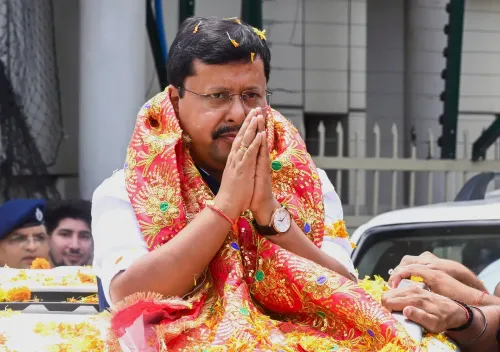
Union Culture and Tourism Minister Gajendra Singh Shekhawat on 23 July 2026 shared remarks by BJP leader Nitin Nabin issuing an open challenge to Congress and Rahul Gandhi to debate NEET, students, and youth policy on the Parliament floor, accusing the opposition of fleeing discussion to hide their 'dual character'.
Key Takeaways
Gajendra Singh Shekhawat shared a challenge by BJP leader Nitin Nabin daring the opposition to debate youth and NEET issues in Parliament on 23 July 2026 .
The NDA government declared it is 'fully prepared' to answer every question on students, youth, and NEET on the parliamentary floor.
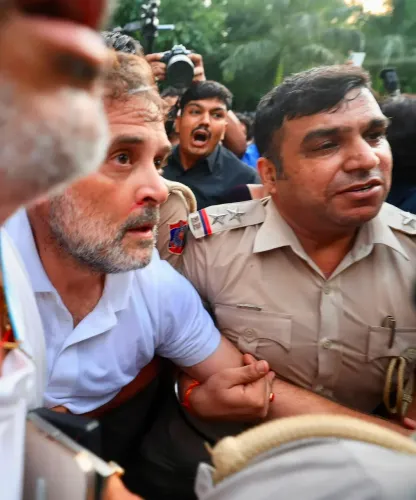
Congress and Rahul Gandhi were accused of avoiding floor debates to conceal contradictory positions on youth welfare.
The opposition was alleged to view youth as 'stone-pelters', while PM Modi and the NDA frame them as startup founders and unicorn builders.
Startup India (2016) and Atmanirbhar Bharat (2020) were cited as evidence of the government's youth empowerment record.
The challenge signals potential parliamentary pressure for a formal NEET debate in the current session.
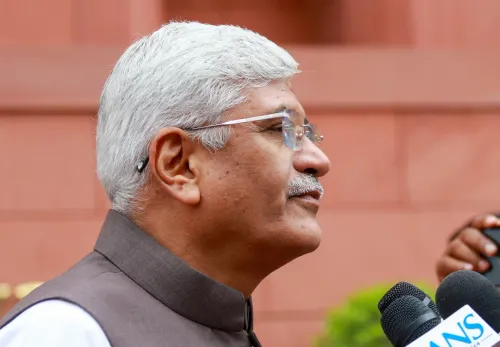
Union Culture and Tourism Minister Gajendra Singh Shekhawat on Thursday, 23 July 2026, issued an open challenge to the Congress and the broader opposition, daring them to participate in a floor debate on students, youth welfare, and NEET in Parliament. Sharing remarks by BJP leader Nitin Nabin, Shekhawat accused the opposition of deliberately avoiding parliamentary discussion to conceal what he called their 'dual character' on youth issues.
Context
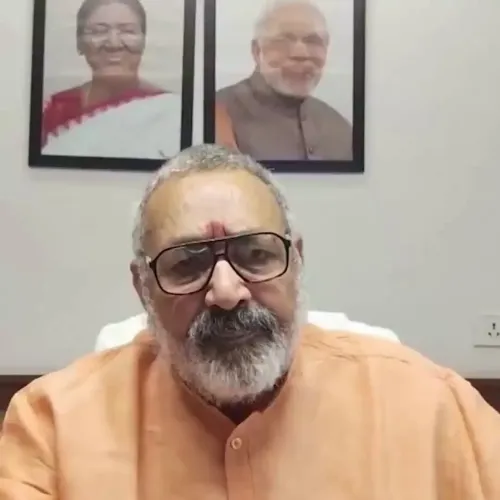
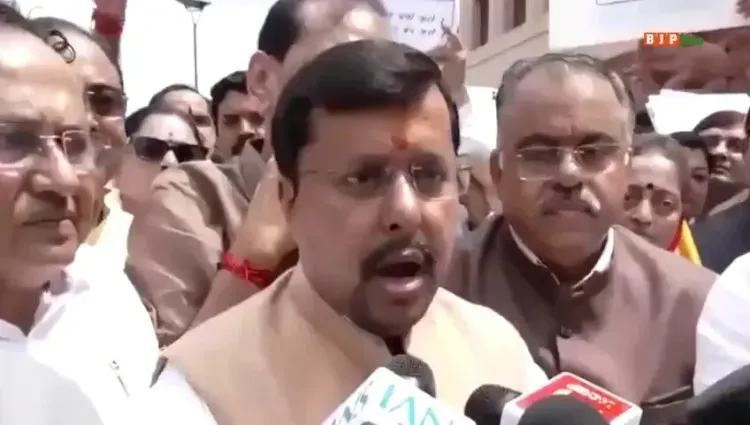
The post quotes Nitin Nabin, who stated: 'NDA sarkar poori tarah se yuvaon ke bhavishya ke liye, charcha ke liye taiyar hai' ('The NDA government is fully prepared to discuss the future of youth and answer every question'). Nabin alleged that Congress and Rahul Gandhi, along with the entire opposition, are 'fleeing from discussion' because a parliamentary debate would expose their contradictory positions.
The statement extends a direct public challenge: 'Come, discuss students, youth, NEET — every subject on the floor of Parliament.' Nabin added that the opposition's history has been one of 'inciting youth' rather than empowering them, contrasting this with the NDA's stated agenda of securing young India's future.
Policy Backdrop
NEET — the National Eligibility cum Entrance Test — has remained a flashpoint in Indian education politics, with opposition parties repeatedly demanding parliamentary debate on its administration and fairness. The ruling NDA coalition has consistently countered by offering floor debates while highlighting its youth-centric economic agenda.
The Startup India initiative, launched in 2016, and the Atmanirbhar Bharat campaign, announced in 2020, form the policy backbone of the government's youth narrative. Prime Minister Narendra Modi has positioned both schemes as proof that today's Indian youth are builders of unicorns and a self-reliant economy — not, as the post puts it, 'stone-pelters' as the opposition allegedly frames them.
Stakeholders and Impact
The sharpest immediate stakes are for medical aspirants and youth entrepreneurs, two constituencies whose concerns — exam integrity and startup ecosystems — sit at the centre of this political argument. Any scheduled parliamentary discussion on NEET reforms would directly affect lakhs of students preparing for medical entrance examinations each year.
The opposition's counter-narrative, as characterised in the post, centres on systemic failures in examination administration. The government's rebuttal points to startup growth and unicorn creation as evidence of a thriving youth economy under NDA governance since 2014.
What's Next
Attention now turns to the ongoing parliamentary session, where the government's open challenge effectively puts pressure on the opposition to either engage in a floor debate on NEET and youth policy or face accusations of avoidance. Any formal motion or discussion tabled in either House will be closely watched by student groups and education policy observers.
Broader rollout updates on Startup India and Atmanirbhar Bharat schemes, alongside any legislative movement on examination reform, will determine whether this political exchange translates into concrete policy action for India's youth.
Point of View
NEET — into an opposition-accountability narrative rather than a substantive reform discussion. By framing the challenge as a dare, the BJP pre-empts criticism: if the opposition debates, the government claims readiness; if they abstain, the government claims vindication. The 'stone-pelter versus unicorn-founder' binary is a deliberate rhetorical device that has been refined over multiple sessions to consolidate urban, aspirational youth as a core NDA constituency. Whether this exchange produces any legislative movement on examination reform or remains a political performance will be the real test of its significance.
NationPress
22 Oct 2026
Frequently Asked Questions
What did Gajendra Singh Shekhawat say about NEET debate in Parliament?
On 23 July 2026, Minister Shekhawat shared remarks by BJP leader Nitin Nabin challenging Congress and Rahul Gandhi to come to the Parliament floor and debate NEET, students, and youth issues, accusing the opposition of avoiding discussion to hide contradictions in their position.
Why is NEET a controversial topic in Indian politics?
NEET, the National Eligibility cum Entrance Test for medical admissions, has been contested on grounds of fairness, regional language access, and administrative integrity, making it a recurring flashpoint between the ruling NDA and opposition parties in parliamentary sessions.
What is Atmanirbhar Bharat and how does it relate to youth?
Atmanirbhar Bharat, announced by PM Modi in 2020 , is a campaign to build a self-reliant Indian economy, with youth entrepreneurs and startup founders positioned as its primary drivers alongside the earlier Startup India initiative launched in 2016 .
Who is Nitin Nabin and what did he say?
Nitin Nabin is a BJP leader whose statement was shared by Minister Shekhawat. He accused the opposition of fleeing parliamentary debate on youth issues and alleged that Rahul Gandhi and his 'clan' have a history of inciting youth rather than empowering them.
Will there be a Parliament debate on NEET in 2026?
The NDA government has issued an open challenge for a floor debate on NEET and youth policy, but no formal debate has been confirmed. The current parliamentary session will be watched closely to see if either side tables a motion for discussion.