Pakistan eyes Mecca defence pact as anti-India, anti-Israel front: Report
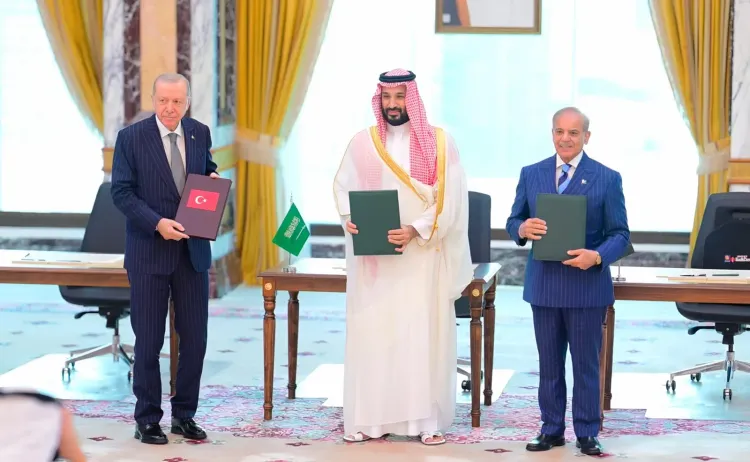
Synopsis
Pakistan's Defence Minister named Israel and India as the enemies of the Mecca Joint Defence Agreement within hours of it being signed — a framing the pact's official text carefully avoided. The move puts Saudi Arabia in an immediate bind: it can live with a defensive pact against Iran, but joining a bloc defined by hostility to Israel or India — a key Riyadh ally — is a different matter entirely.
Key Takeaways
Pakistan is reportedly attempting to reframe the Mecca Joint Defence Agreement with Saudi Arabia and Turkey as a military front against Israel and India .
Defence Minister Khawaja Asif publicly named Israel and India as adversaries within hours of the pact being signed — a step the agreement's text conspicuously avoided.
The pact unites three Sunni-majority nations with a combined population of roughly 380 million under a collective defence clause.
Saudi Arabia faces the sharpest internal contradiction: Riyadh is a strong ally of India and had been considering joining the Abraham Accords before October 2023 .
The India-Middle East-Europe Economic Corridor depends on Saudi-Israeli cooperation, which an anti-Israel pact reading would undermine.
The analysis was authored by Italian geopolitical expert Sergio Restelli and published in The Times of Israel .
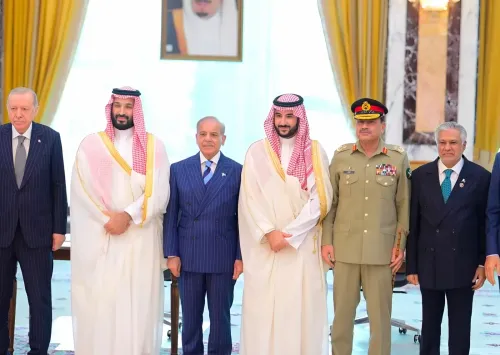
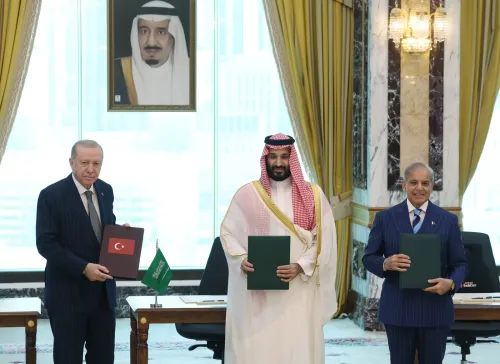
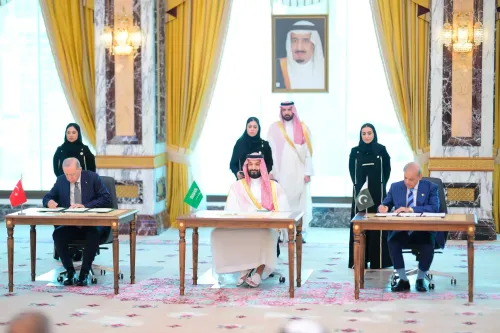
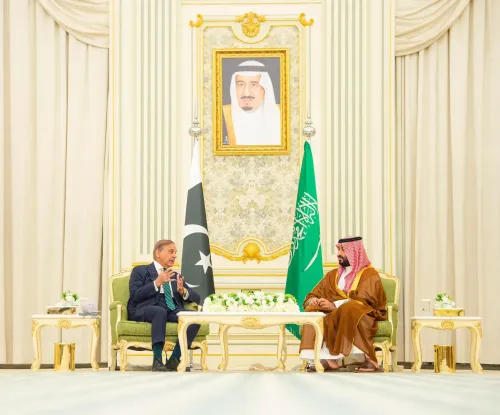
Pakistan is reportedly attempting to reframe the Mecca Joint Defence Agreement — signed with Saudi Arabia and Turkey — from a limited mutual defence arrangement into a broader anti-Israel and anti-India military coalition, according to an analysis published in The Times of Israel by Italian geopolitical expert Sergio Restelli.
What Triggered the Concern
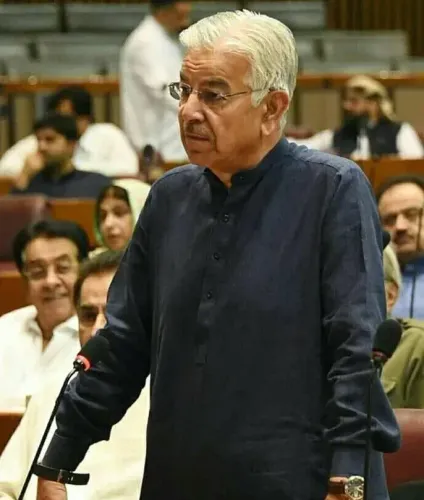
Within hours of the three-nation pact being signed in Mecca, Pakistan's Defence Minister Khawaja Asif publicly named the alliance's adversaries — a step the agreement's carefully worded official text had deliberately avoided. According to Restelli, Asif called on Muslim nations to unite militarily against Israel, arguing that the threat posed by the Jewish state extended beyond Palestine to the Muslim world at large. Asif also placed India in the same frame of adversarial states.
'Asif called for Muslim countries to unite against Israel and advocated a united military front, arguing that the threat posed by the Jewish state extended beyond Palestine to the Muslim world as a whole,' Restelli wrote. He noted that Pakistani politicians have 'frequently adopted strongly anti-Israel and strongly anti-semitic positions,' but added that what distinguishes Asif's latest remarks is their timing — coming immediately after Islamabad entered a potentially historic collective defence arrangement.
What the Mecca Pact Actually Says
The Mecca Joint Defence Agreement unites three Sunni-majority nations with a combined population of roughly 380 million. Its core provision is a collective defence clause: an armed attack on any one member is to be treated as an attack on all three. On paper, Restelli noted, the pact is 'directed against nobody in particular.' Pakistan, he argued, appears intent on giving it a far more expansive — and contentious — purpose.
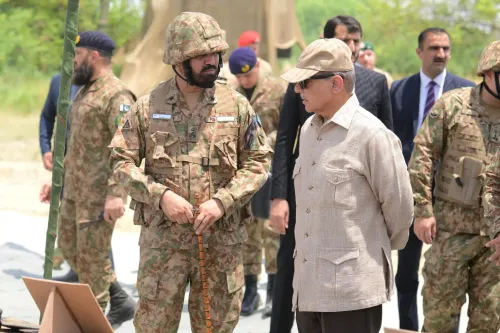
'Islamabad has repeatedly advocated stronger military coordination between Muslim countries, and Asif himself has spoken about the need for Muslim states to develop collective security arrangements,' Restelli observed. With limited economic leverage, Pakistan's primary contributions to the alliance are its army, Chinese weaponry, and nuclear arsenal.
Saudi Arabia's Delicate Balancing Act
The analysis highlights that the three member states have fundamentally different relationships with Israel — and that Saudi Arabia's position is the most complex. While Riyadh does not recognise Israel, Saudi-Israeli normalisation remains a logical next step in the Abraham Accords process and a cornerstone of the emerging economic architecture linking India, the Gulf, and Europe.
'Projects such as the India-Middle East-Europe Economic Corridor ultimately become far more viable in a region where Saudi Arabia and Israel can cooperate,' Restelli wrote, noting that Riyadh had seriously considered joining the Abraham Accords before the Hamas attack in October 2023. An explicitly anti-Israel reading of the Mecca pact, he argued, would make that normalisation considerably harder.
Saudi Arabia would also find it difficult to align with a bloc that Islamabad defines as confronting India — a strong Saudi ally. 'The kingdom must simultaneously manage its position as a leader of the Islamic world, its support for Palestinian statehood, its strategic relationship with Washington and the possibility of eventually normalising relations with Israel,' Restelli stated.
The First Test for the New Alliance
Restelli concluded that Pakistan's framing creates the alliance's first significant internal test almost immediately after its formation. Saudi Arabia could plausibly join a mutual defence arrangement with Pakistan and Turkey against threats from Iran and the Houthis — but joining a military bloc whose purpose Islamabad defines as confronting Israel or India is a fundamentally different proposition for Riyadh.
Whether Saudi Arabia pushes back against Pakistan's expansive interpretation — or allows the ambiguity to persist — will be an early indicator of how much strategic coherence this new three-nation alliance actually possesses.
Point of View
And naming enemies is how it asserts relevance. The real question is whether Saudi Arabia, which has far more to lose, will allow Pakistan to define the alliance's purpose or will quietly reassert the pact's deliberately vague defensive framing. Riyadh's silence — or pushback — in the coming weeks will reveal whether this is a genuine trilateral security architecture or a Pakistani rebranding exercise that Saudi Arabia tolerates without endorsing.
NationPress
25 Sept 2026
Frequently Asked Questions
What is the Mecca Joint Defence Agreement?
The Mecca Joint Defence Agreement is a mutual defence pact signed by Pakistan, Saudi Arabia, and Turkey, uniting three Sunni-majority nations with a combined population of roughly 380 million. Its core clause treats an armed attack on any one member as an attack on all three, though its official text does not name any specific adversary.
Why is Pakistan accused of trying to reframe the Mecca pact?
Pakistan's Defence Minister Khawaja Asif publicly called for Muslim nations to unite militarily against Israel and India within hours of the pact being signed — going well beyond the agreement's carefully worded, adversary-neutral text. Geopolitical analyst Sergio Restelli argues this reflects Islamabad's desire to give the alliance a broader anti-India and anti-Israel purpose.
Why does this put Saudi Arabia in a difficult position?
Saudi Arabia is a strong ally of India and had been considering joining the Abraham Accords before the Hamas attack in October 2023. An explicitly anti-Israel or anti-India interpretation of the pact would conflict with Riyadh's strategic interests, including the India-Middle East-Europe Economic Corridor, which depends on Saudi-Israeli cooperation.
Who authored the analysis and where was it published?
The analysis was written by Sergio Restelli, described as an Italian political advisor, author, and geopolitical expert, and published in The Times of Israel.
What does Pakistan bring to the Mecca alliance?
According to the analysis, Pakistan's primary contributions to the alliance are its army, Chinese weaponry, and nuclear arsenal, given its limited economic leverage relative to Saudi Arabia and Turkey.