Pakistan's defence pacts under scrutiny: More alliances, fewer results
Synopsis
Pakistan signed two major defence frameworks within weeks — the Mecca Joint Defence Agreement with Saudi Arabia and Turkey, and the Badr MoU with Turkey, Qatar and Indonesia. Analysts warn Islamabad is navigating an irreconcilable Saudi-Qatar rivalry with limited economic and military resources, accumulating pacts faster than it can demonstrate results.
Key Takeaways
Pakistan signed the Badr Memorandum of Understanding with Turkey , Qatar , and Indonesia in Doha on 21 October , covering military production and defence industrial cooperation.
The Mecca Joint Defence Agreement , signed in August by Pakistan , Saudi Arabia , and Turkey , establishes a framework for mutual military assistance.
Geopolitical expert Sergio Restelli warns the simultaneous partnerships with Saudi Arabia and Qatar — long-standing rivals — create 'an obvious contradiction' for Islamabad .
The 2017 Gulf crisis and subsequent Al-Ula reconciliation of 2021 left deep strategic divergences between Riyadh and Doha unresolved.
Analysts argue Pakistan's limited economic, industrial, and military resources cast doubt on its ability to honour commitments across multiple frameworks simultaneously.
Restelli concludes that Pakistan currently has 'considerably more agreements to display than results to demonstrate.'
Pakistan's bid to anchor itself at the centre of an emerging defence network spanning Muslim-majority nations — from the Mediterranean to Southeast Asia — has drawn sharp scrutiny, with analysts warning that Islamabad's strategic overreach may undercut the very influence it is seeking to project.
The Pacts in Question
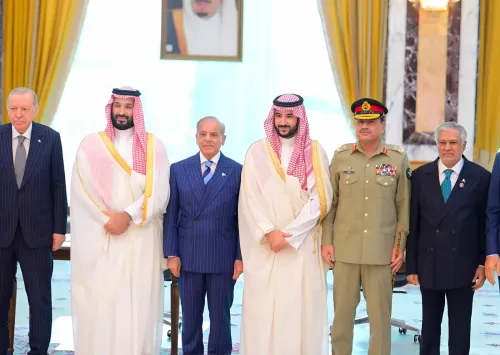
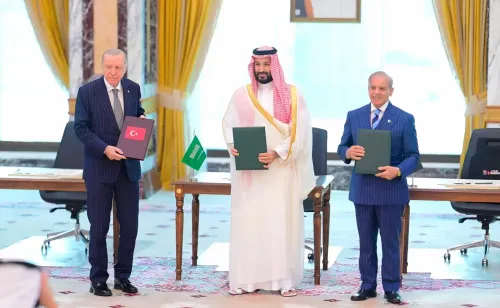
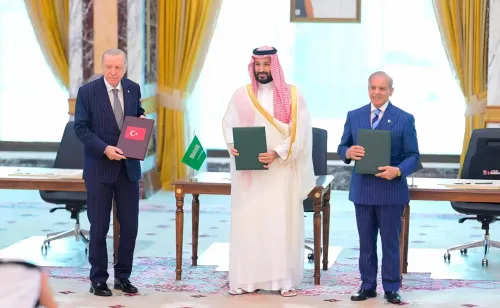
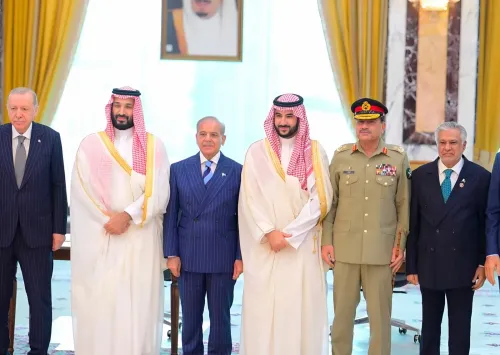
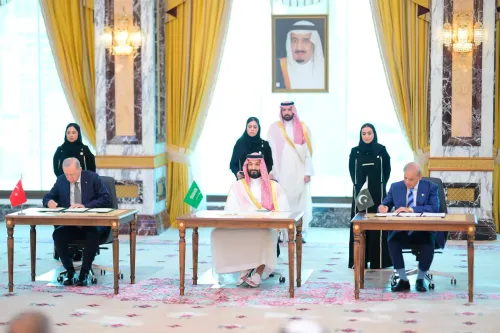
On 21 October, Pakistan joined Turkey, Qatar, and Indonesia in signing the Badr Memorandum of Understanding in Doha, an agreement designed to strengthen military production, technological cooperation, training, and defence industrial capabilities. The signing came just weeks after the Mecca Joint Defence Agreement concluded in August between Pakistan, Saudi Arabia, and Turkey — a considerably more ambitious framework establishing provisions for mutual military assistance in the event of an attack on a signatory.
Italian political advisor, author, and geopolitical expert Sergio Restelli, writing in The Times of Israel, noted the rapid accumulation of agreements: 'Pakistan has discovered a new enthusiasm for defence alliances.' He argued, however, that 'alliances are not accomplishments in themselves; their significance depends on the security they provide, the threats they deter and the capabilities they help develop.'
The Saudi-Qatar Contradiction
A central tension in Pakistan's expanding partnership architecture lies in the historically fraught relationship between Saudi Arabia and Qatar. The 2017 Gulf crisis, during which Riyadh and its allies imposed a blockade on Doha, exposed deep disagreements over political Islam, relations with Iran, and the regional role of the Muslim Brotherhood. Although the Al-Ula reconciliation of 2021 restored diplomatic ties, according to Restelli, it 'did not eliminate the underlying differences in their foreign policy outlooks.'
For Islamabad, this creates what Restelli described as 'an obvious contradiction.' The Mecca agreement frames a collective deterrence mechanism, yet Pakistan is simultaneously deepening defence ties with Qatar, whose strategic calculations have not consistently aligned with those of Riyadh. Navigating both relationships without alienating either partner will require a degree of diplomatic dexterity that Pakistan has rarely demonstrated at scale, analysts argue.
Ideology, Influence and Institutional Risk
Beyond the bilateral contradictions, Restelli flagged a broader concern: that an expanding web of military partnerships could open pathways to political influence, institutional infiltration, and the gradual legitimisation of actors whose agendas may destabilise the region. He argued that 'the distinction between legitimate defence industrial cooperation and political alignment must therefore remain central to any assessment of the Badr agreement.'
The concern, notably, is not that defence ties inevitably produce ideological alignment, but that the cumulative effect of multiple overlapping frameworks — each carrying its own political freight — can blur lines that are difficult to redraw later.
Resource Constraints and Strategic Credibility
Pakistan's defence ambitions are further complicated by its economic and industrial limitations. Critics argue that Islamabad lacks the financial depth, manufacturing capacity, and military resources to fulfil commitments across multiple frameworks simultaneously. This raises questions about the credibility of the security guarantees embedded in agreements like the Mecca Joint Defence Agreement, whose provisions for mutual military assistance remain, according to Restelli, 'subject to national decisions' — a formulation that preserves flexibility at the cost of certainty.
What Comes Next
Pakistan's strategy appears to rest on the assumption that positioning itself as indispensable to every major regional actor will translate into strategic leverage. Restelli's assessment is more cautious: 'For now, Islamabad has considerably more agreements to display than results to demonstrate. And in its eagerness to appear indispensable to everyone, Pakistan may be stretching itself too thin to be genuinely indispensable to anyone.'
Whether Islamabad can convert its growing pact portfolio into tangible defence-industrial capability and credible deterrence remains the defining question — one that the next phase of implementation across both the Badr MoU and the Mecca framework will begin to answer.
Point of View
The gap between Pakistan's pact portfolio and its actual capacity will become impossible to conceal.
NationPress
31 Oct 2026
Frequently Asked Questions
What is the Badr Memorandum of Understanding signed in Doha?
The Badr Memorandum of Understanding is a defence cooperation agreement signed on 21 October in Doha by Pakistan, Turkey, Qatar, and Indonesia, aimed at strengthening military production, technological cooperation, training, and defence industrial capabilities. It is one of two major defence frameworks Pakistan has joined within a matter of weeks in 2026.
What is the Mecca Joint Defence Agreement and who signed it?
The Mecca Joint Defence Agreement is a mutual defence framework signed in August 2026 by Pakistan, Saudi Arabia, and Turkey. It establishes provisions for military assistance in the event of an attack on a member state, though the nature and extent of that assistance remain subject to each nation's own decisions.
Why is Pakistan's simultaneous partnership with Saudi Arabia and Qatar seen as contradictory?
Saudi Arabia and Qatar have a history of strategic rivalry, most visibly during the 2017 Gulf crisis when Riyadh and allies imposed a blockade on Doha over disagreements on political Islam, Iran, and the Muslim Brotherhood. Although the 2021 Al-Ula accord restored diplomatic ties, the underlying divergences were not resolved, placing Pakistan in the position of simultaneously honouring frameworks built on competing strategic interests.
What are the main concerns about Pakistan's expanding defence alliances?
Analysts raise three principal concerns: first, that a web of military partnerships could open pathways to political influence and institutional infiltration; second, that Pakistan's limited economic, industrial, and military resources make it difficult to fulfil commitments across multiple frameworks; and third, that the agreements risk producing the appearance of strategic importance without the substance to back it up.
Who is Sergio Restelli and why is his analysis significant?
Sergio Restelli is an Italian political advisor, author, and geopolitical expert whose assessment of Pakistan's defence partnerships was published in The Times of Israel. His analysis is significant because it synthesises the contradictions embedded in Islamabad's simultaneous alignment with rival Gulf powers and offers a sceptical reading of whether pact-signing translates into genuine strategic capability.