CM Yogi hails India's lead in global digital revolution
Synopsis
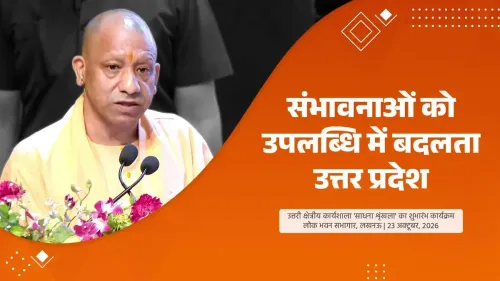
Uttar Pradesh Chief Minister Yogi Adityanath declared on 31 October 2026 that India is leading the global digital revolution. The claim is anchored in a decade of Digital India reforms, UPI's billion-transaction scale, and a DPI model now studied by nations worldwide.
Key Takeaways
CM Yogi Adityanath posted on 31 October 2026 asserting India is leading the global digital revolution.
UPI , launched in 2016 , processes billions of transactions monthly and is regarded as a global benchmark for real-time payments.
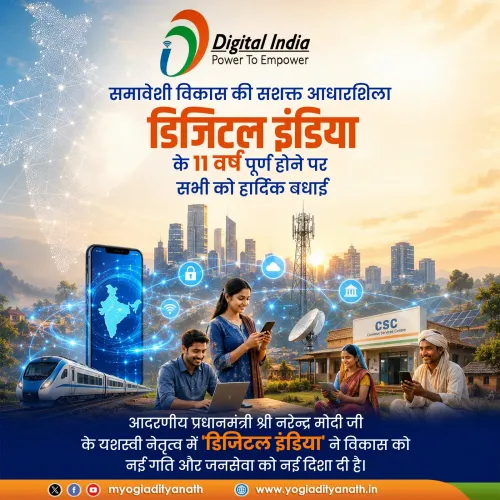
The Digital India programme, launched in July 2015 , built the foundational infrastructure enabling e-governance, financial inclusion, and digital literacy at scale.
Uttar Pradesh , India's most populous state, is a critical implementation ground for national digital programmes under CM Yogi's administration.
India's digital public infrastructure model — built on Aadhaar, UPI, and open APIs — has been formally studied and adopted as a framework by developing nations and discussed at the G20 .
State-level digital service rollouts in UP and new national DPI announcements remain the key developments to watch.
India is no longer catching up to the digital world — it is setting the pace. Uttar Pradesh Chief Minister Yogi Adityanath declared on Saturday, 31 October 2026 that India is actively leading the global digital revolution, a claim backed by a decade of transformative public infrastructure that the rest of the world has begun to study and emulate.
From UPI to Aadhaar: the architecture behind the claim
The assertion is not rhetorical. India's Unified Payments Interface (UPI), launched by the National Payments Corporation of India in 2016, now processes billions of transactions every month — a scale no comparable economy matched at the same speed. Alongside it, the Aadhaar biometric identity system and a stack of open APIs have built what policy circles now call 'digital public infrastructure' (DPI): foundational, interoperable, and available to every citizen.
The Digital India programme, launched in July 2015, was the engine room for all of this — designed to transform India into a digitally empowered society and knowledge economy. A decade on, that ambition has largely materialised in measurable, concrete ways: e-governance portals, direct benefit transfers, and a fintech startup ecosystem that has attracted global investment.
Why Uttar Pradesh sits at the centre of this story
Uttar Pradesh, with a population larger than most countries, is both the biggest test and the biggest proof-point for India's digital ambitions. Under CM Yogi Adityanath, the state has pushed digital service delivery — from land records to welfare disbursements — in a way that directly determines whether national programmes reach the last mile. When UP moves digitally, India's aggregate numbers move with it.
Globally, nations across Africa, Southeast Asia, and Latin America have sent delegations to study India's DPI model, and the G20 under India's presidency formally elevated digital public infrastructure as a framework for developing economies. India did not just build tools for itself — it built a template.
What to watch as state-level rollouts accelerate
The next chapter will be written at the state level. Observers are tracking fresh digital service rollouts in Uttar Pradesh and any new national DPI announcements that could extend India's lead — particularly in areas like AI-enabled governance, digital health, and rural connectivity. CM Yogi's post signals that this narrative will remain politically and administratively front-and-centre in the months ahead.
India built the rails. Now the question is how fast — and how equitably — the trains run.
Point of View
Invoking national digital achievements also serves a local purpose: it aligns Uttar Pradesh's own governance push with a larger success story, lending credibility to state-level reforms. The timing matters too — as India's DPI model gains formal international recognition, domestic political actors across the spectrum are racing to claim ownership of that legacy. Whether state-level execution in UP matches the national headline is the metric that will ultimately define the claim.
NationPress
31 Oct 2026
Frequently Asked Questions
What did CM Yogi Adityanath say about India's digital revolution?
CM Yogi Adityanath stated on 31 October 2026 that India is today leading the digital revolution globally, highlighting the country's rapid strides in digital public infrastructure.
What is the Digital India programme?
Digital India is a flagship central government programme launched in July 2015 to build digital infrastructure, deliver government services electronically, and promote digital literacy across the country.
How has UPI made India a digital leader?
UPI, launched in 2016 by the National Payments Corporation of India, scaled to billions of real-time transactions per month, making India's payment system one of the most advanced and widely studied in the world.
What is India's digital public infrastructure (DPI) model?
India's DPI model refers to the interoperable stack of Aadhaar, UPI, and open APIs that enables e-governance, financial inclusion, and digital services at population scale — a model other nations have begun to adopt.
What digital initiatives is Uttar Pradesh pursuing under CM Yogi?
Under CM Yogi Adityanath, Uttar Pradesh has been pushing digital delivery of services including land records and welfare disbursements, with further state-level digital rollouts expected in the coming months.