CM Dhami: 50% of World's Digital Payments Now in India
Synopsis
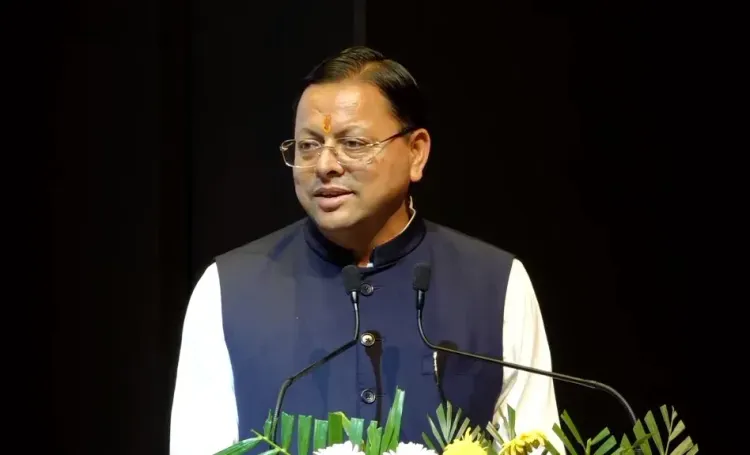
Uttarakhand Chief Minister Pushkar Singh Dhami has claimed that India now accounts for 50 per cent of the world's digital payments, attributing the milestone to the country's expanding digital infrastructure and global stature. The statement, shared by the official CMO account, underscores state-level endorsement of India's fintech success story.
Key Takeaways
The Chief Minister's Office of Uttarakhand shared a statement by CM Pushkar Singh Dhami on 30 May 2026 on India's digital payments dominance.
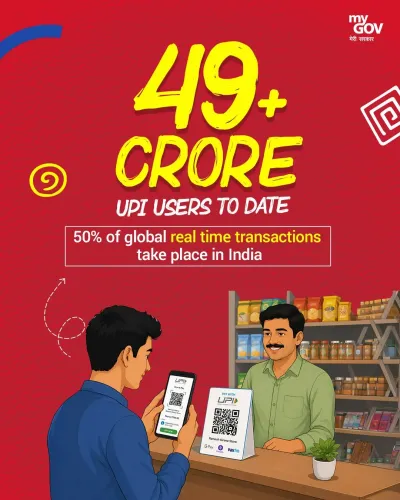
Dhami claimed 50 per cent of the world's digital payments now take place in India.
UPI , launched in 2016 by NPCI , is the primary infrastructure behind India's high-volume real-time payments ecosystem.
The Digital India programme , initiated in 2015 , laid the policy foundation for India's shift toward a cash-light economy.
The 50 per cent global share figure is widely cited by Indian officials but requires verification against international data from bodies such as the Bank for International Settlements .
Upcoming RBI and NPCI annual data releases will be closely watched for independent corroboration of India's digital payments standing.
The Chief Minister's Office of Uttarakhand shared a statement by Chief Minister Pushkar Singh Dhami on Saturday, 30 May 2026, highlighting India's dominance in global digital payments and its growing international stature.
Context
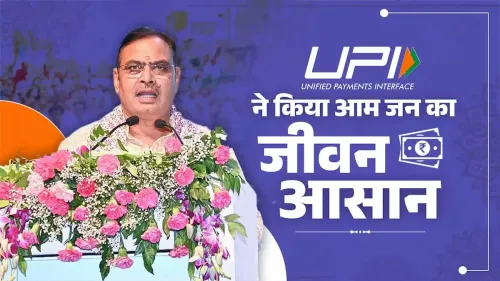
Speaking on the country's digital economy milestones, CM Dhami stated, 'Aaj duniya ka 50 pratishat digital payment Bharat mein ho raha hai' ['Today, 50 per cent of the world's digital payments are happening in India']. He added that India is now registering its 'glorious presence on every platform.' The remarks were amplified through the official Chief Minister's Office account, signalling the state government's alignment with national digital achievement narratives.
Policy Backdrop
India's digital payments ecosystem traces its foundations to the Digital India programme launched in 2015, which set out to expand digital infrastructure and drive financial inclusion across the country. The Unified Payments Interface (UPI), rolled out in 2016 by the National Payments Corporation of India (NPCI), became the primary engine of this growth, enabling instant inter-bank transfers for hundreds of millions of users.
Over the past decade, successive central governments have sustained a policy environment favouring cash-light transactions — through regulatory support, merchant incentive schemes, and aggressive expansion of digital acceptance infrastructure. This sustained push has produced transaction volumes that outpace most other economies in real-time retail payments, drawing comparisons at multilateral forums including the G20.
Stakeholders and Impact
The primary beneficiaries of this digital payments surge are retail merchants and bank customers across India, who have shifted rapidly toward UPI-based transactions for everyday commerce. Small and micro enterprises, in particular, have gained access to formal financial rails without the cost of traditional point-of-sale infrastructure.
State governments like Uttarakhand have a stake in this national narrative as well — digital financial inclusion directly supports local economic activity in both urban centres such as Dehradun and remote hill districts where banking access has historically been limited. CM Dhami's remarks reflect a pattern among state-level leaders of citing national digital metrics to reinforce their own development credentials.
What's Next
Attention will now turn to the next round of data releases from the Reserve Bank of India and NPCI, which will either substantiate or contextualise the claim of a 50 per cent global share in digital payments — a figure that, while widely cited by Indian officials, requires cross-referencing against international benchmarks such as those published by the Bank for International Settlements. Any forthcoming Uttarakhand state budget allocations for fintech adoption or digital literacy programmes would indicate whether the CM's rhetoric is backed by on-ground policy action.
India's digital payments story is far from complete. With smartphone penetration still expanding in rural and hill-state geographies, the next phase of growth will test whether the infrastructure built over the past decade can deepen inclusion beyond urban and semi-urban corridors.
Point of View
If verified, would represent a remarkable concentration of real-time payment volume in a single country and would carry significant weight in multilateral economic diplomacy. However, the absence of a cited source means the figure functions primarily as political messaging rather than a policy announcement. The broader arc here is clear: India's UPI-led digital payments story has become a bipartisan, cross-government talking point that serves both central and state administrations as proof of development delivery.
NationPress
19 Sept 2026
Frequently Asked Questions
Does India really account for 50 percent of global digital payments?
Indian officials, including CM Pushkar Singh Dhami, have cited the figure that India handles 50 per cent of the world's digital payments. While India is widely recognised as the global leader in real-time retail payment volumes — largely due to UPI — the exact percentage share requires verification against the latest data from international bodies such as the Bank for International Settlements.
What is UPI and why is India dominant in digital payments?
UPI, or Unified Payments Interface, is an instant inter-bank payment system operated by the National Payments Corporation of India (NPCI), launched in 2016. Its zero-cost model, smartphone accessibility, and government backing drove mass adoption, making India the world's largest real-time payments market by volume.
What did Uttarakhand CM Pushkar Singh Dhami say about digital payments?
CM Dhami stated that 50 per cent of the world's digital payments are now happening in India and that India is registering its 'glorious presence on every platform.' The statement was shared by the official Chief Minister's Office of Uttarakhand on 30 May 2026.
What is the Digital India programme?
Digital India is a flagship government programme launched in 2015 to expand digital infrastructure, improve internet connectivity, and promote financial inclusion. It provided the policy foundation for initiatives like UPI and the broader shift toward a cash-light economy.
How does Uttarakhand benefit from India's digital payments growth?
Digital payment infrastructure benefits Uttarakhand by extending formal financial access to merchants and residents in remote hill districts where traditional banking has been limited. UPI adoption supports local commerce and aligns with the state's broader development goals.