CM Bhajan Lal Hails UPI for Transforming Digital Payments
Synopsis
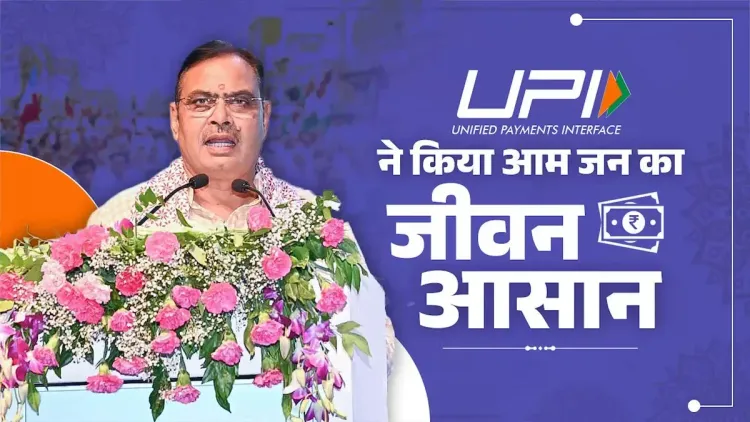
Rajasthan Chief Minister Bhajan Lal Sharma on 1 July 2026 credited UPI with transforming digital transactions for all sections of society, from small shopkeepers to large traders, calling it a catalyst for transparent and seamless everyday commerce.
Key Takeaways
CM Bhajan Lal Sharma publicly praised UPI on 1 July 2026 for making digital payments easy, secure, and fast.
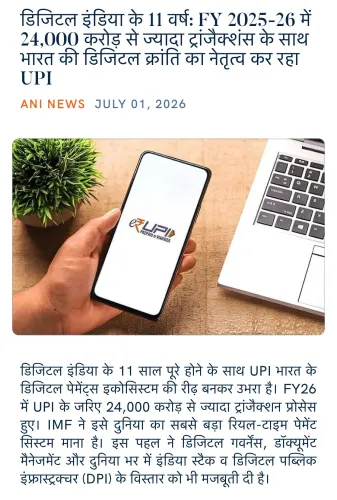
UPI was launched by NPCI on 11 April 2016 and has grown into India's primary real-time retail payment system.
The CM highlighted benefits for small shopkeepers and large traders alike, stressing transparency and ease of transactions.
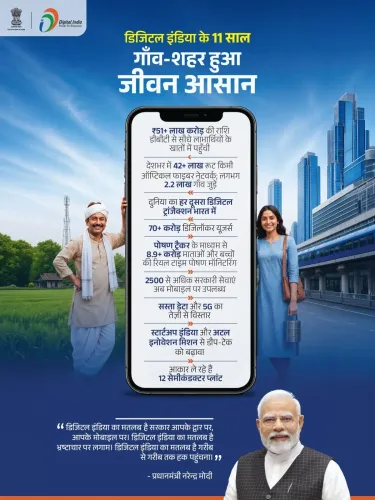
UPI is a core component of the Digital India programme, launched in 2015 , aimed at building a cashless economy.
Rajasthan , with its large informal trading sector, stands to gain significantly from deeper UPI penetration at the grassroots level.
Upcoming RBI guidelines on transaction limits and new UPI use-cases will shape the platform's next phase of expansion.
Rajasthan Chief Minister Bhajan Lal Sharma on Wednesday, 1 July 2026 praised the Unified Payments Interface (UPI) for making digital transactions easier, safer, and faster for ordinary citizens, saying the platform has brought a new wave of convenience to everyday life across India.
Posting in Hindi, CM Sharma wrote: 'UPI ne digital bhugtan ko aasan, surakshit aur tez banakar aamjan ke jeevan mein nayi suvidha ka sanchaar kiya hai' ['UPI has introduced a new convenience into the lives of common people by making digital payments easy, secure, and fast']. He added that today, from small shopkeepers to large traders, every section of society is benefiting from transparent and seamless transactions through the platform.
Context
UPI was formally launched by the National Payments Corporation of India (NPCI) on 11 April 2016, building on earlier digital infrastructure and accelerating sharply after the demonetisation policy push of late 2016. The system enables instant, real-time inter-bank transfers via mobile apps, covering peer-to-peer and merchant payments alike. It has since become the backbone of India's shift toward a cashless, digitally governed economy.
CM Sharma, who took office in December 2023, has regularly highlighted central government digital initiatives in state communications, positioning Rajasthan as an active participant in the broader Digital India programme launched in 2015.
Policy Backdrop
UPI sits at the heart of India's Digital India flagship programme, which aims to transform the country into a digitally empowered society. Successive Union Budgets and Reserve Bank of India (RBI) guidelines have progressively expanded UPI's scope — extending it to feature phones, offline transaction modes, and cross-border payment linkages with partner countries. NPCI, the umbrella body for retail payments infrastructure owned by major banks, continues to develop new use-cases on the platform.
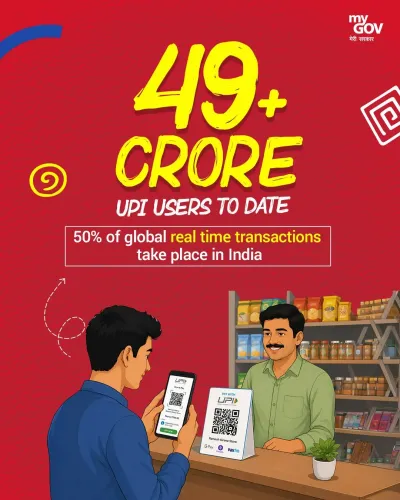
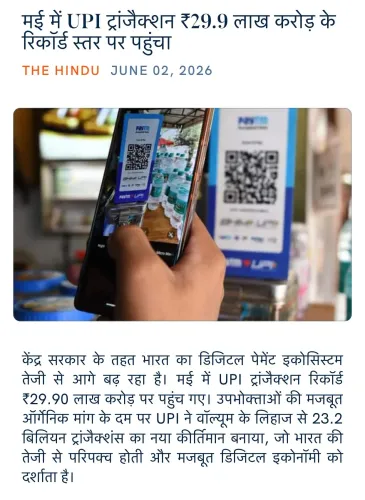
The platform's exponential volume growth since its launch reflects its central role in financial inclusion and the formalisation of India's vast informal economy — precisely the small traders and shopkeepers CM Sharma referenced in his post.
Stakeholders and Impact
The primary beneficiaries of UPI's expansion are small shopkeepers, street vendors, and daily-wage earners who previously operated exclusively in cash. By enabling low-cost, instant settlements without requiring a point-of-sale device, UPI has lowered the barrier to digital commerce for millions of micro-enterprises. Large traders and formal businesses have equally integrated UPI for bulk collections and supplier payments, making it a cross-segment tool.
For Rajasthan — a state with a large rural population and a significant informal trading sector, particularly in tourism, textiles, and handicrafts — wider UPI adoption directly supports economic formalisation and transparent revenue flows at the grassroots level.
What's Next
Attention will turn to the RBI's next set of UPI operating guidelines, which are expected to address revised transaction limits and new use-cases such as credit-on-UPI and expanded offline functionality. State-level digital payments adoption dashboards for Rajasthan will be watched to see whether the government follows its rhetoric with measurable targets. NPCI's ongoing efforts to internationalise UPI — linking it with payment systems in countries across Southeast Asia, the Gulf, and Europe — will also shape the platform's next phase of growth.
Point of View
The statement aligns with the party's broader political messaging around economic inclusion and the visible benefits of formalisation. It also signals Rajasthan's intent to position itself as a model state for digital public infrastructure adoption. The post adds to a consistent pattern of state governments using social media to reinforce the UPI success story as a shared political and policy achievement.
NationPress
30 Sept 2026
Frequently Asked Questions
What did Rajasthan CM Bhajan Lal Sharma say about UPI?
CM Bhajan Lal Sharma said on 1 July 2026 that UPI has made digital payments easy, secure, and fast, benefiting everyone from small shopkeepers to large traders through transparent and seamless transactions.
What is UPI and who runs it?
UPI, or Unified Payments Interface, is India's real-time inter-bank retail payment system developed and operated by the National Payments Corporation of India (NPCI). It was launched on 11 April 2016 and enables instant mobile-based payments.
How has UPI helped small traders and shopkeepers in India?
UPI allows small traders and shopkeepers to accept digital payments without expensive point-of-sale hardware, enabling low-cost instant settlements and bringing them into the formal financial system.
What is the Digital India programme and how does UPI fit into it?
Digital India is a flagship government programme launched in 2015 to build a digitally empowered society. UPI is one of its core components, driving cashless transactions and financial inclusion across the country.
What are the next steps for UPI expansion in India?
The RBI is expected to release new UPI operating guidelines covering higher transaction limits and new use-cases such as credit-on-UPI and offline payments. NPCI is also expanding UPI's international reach to countries in Southeast Asia, the Gulf, and Europe.