UPI handles 49% of global real-time payments, leads world rankings
Synopsis
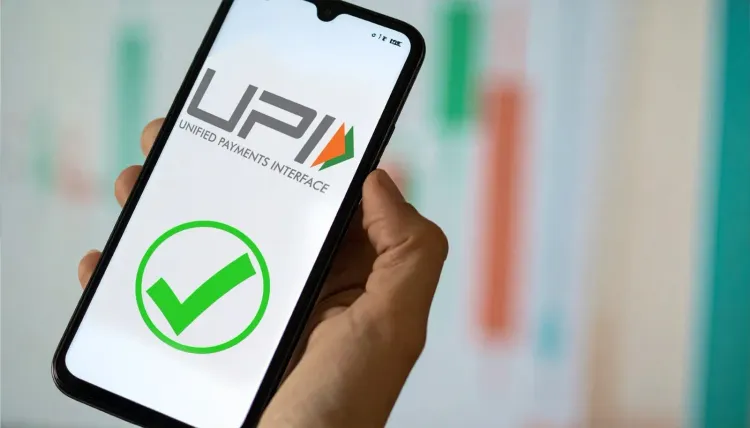
Every second real-time payment processed anywhere in the world now goes through India's UPI — a staggering 49% global share. As Digital India turns 11, this is no longer just a domestic fintech story: with Greece becoming the 10th country to accept UPI, India's payment rails are quietly becoming global infrastructure.
Key Takeaways
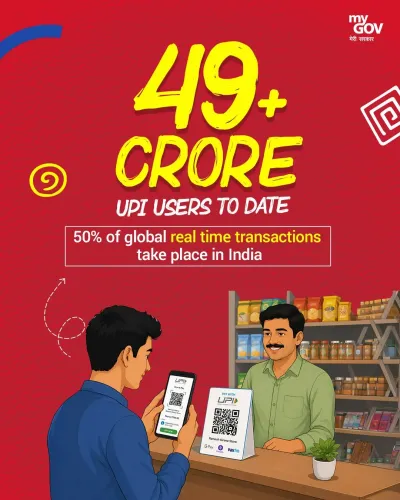
UPI now accounts for nearly 49 per cent of global real-time payment transaction volume, making it the world's largest such system.
Digital India completed 11 years on 1 July 2025 , having launched on 1 July 2015.
Greece became the 10th country to enable UPI services for Indian travellers and businesses.
The Poshan Tracker serves 8.93 crore beneficiaries through 13.3 lakh Anganwadi workers as of May 2026 .
The platform tracks nutrition data for more than 77 million children in real time, with 99.89 per cent Aadhaar verification.
India's Unified Payments Interface (UPI) now processes nearly 49 per cent of the world's real-time payment transaction volume, making it the single largest real-time payments system on the planet, the government announced on Wednesday, 1 July 2025. The milestone was disclosed as the Digital India programme marked 11 years since its launch on 1 July 2015.
UPI's Global Dominance
In practical terms, one in every two real-time digital payment transactions processed anywhere in the world today runs through India's UPI rails. Launched in 2016-17 by the National Payments Corporation of India (NPCI), UPI enables instant person-to-person and person-to-merchant transfers across banks via interoperable digital platforms — without requiring account numbers or IFSC codes.
The government attributed this scale to a combination of Aadhaar-based digital identity, interoperable banking infrastructure, affordable internet access, expanding 5G and optical fibre networks, rising smartphone penetration, and a maturing ecosystem of payment applications. This is the convergence of multiple policy bets placed over a decade, now showing compounding returns.
International Expansion
Greece recently became the 10th country to enable UPI services, allowing Indian travellers and businesses to transact digitally abroad. UPI's international footprint now spans markets across Asia, Europe, and beyond, with further expansion reportedly under discussion with several additional countries.
Notably, India's shift from a predominantly cash-based economy to a digital-first one has not been limited to urban centres. The government said digital payments have extended to remote rural areas, reducing cash dependence across the income spectrum.
Digital India at 11: Beyond Payments
The government also highlighted the role of Digital India in transforming public welfare delivery. The Poshan Tracker, developed under Saksham Anganwadi and Mission Poshan 2.0 by the Ministry of Women and Child Development, has digitised nutrition service delivery nationwide.
As of May 2026, the platform had over 13.3 lakh registered Anganwadi workers serving 8.93 crore beneficiaries — including pregnant women, lactating mothers, young children, and adolescent girls. Nearly 99.89 per cent of beneficiaries have been Aadhaar-verified, according to the government.
Real-Time Nutrition Monitoring
The Poshan Tracker integrates Aadhaar authentication, geo-tagging, geo-fencing, and face recognition for ration distribution. It now maintains a live database tracking nutrition indicators for more than 77 million children, enabling real-time monitoring and data-driven policymaking at scale.
What Comes Next
With UPI's international rollout accelerating and Digital India entering its second decade, the government's focus is expected to shift toward deepening rural digital financial inclusion and expanding cross-border UPI acceptance. The programme's trajectory suggests India's digital public infrastructure model is increasingly being studied — and adopted — as a template by other emerging economies.
Point of View
Yet the domestic policy conversation rarely frames UPI in those terms. The real question is whether India can convert this infrastructure dominance into commercial leverage: licensing fees, data partnerships, or standards-setting influence in multilateral forums. Greece joining as the 10th country is a headline, but the harder work — interoperability with G20 payment rails and CBDC integration — remains unfinished. Digital India's second decade will be defined less by adoption numbers and more by whether this infrastructure translates into durable economic and diplomatic weight.
NationPress
30 Sept 2026
Frequently Asked Questions
What share of global real-time payments does UPI handle?
UPI now processes nearly 49 per cent of the world's real-time payment transaction volume, according to the Indian government, making it the largest real-time payment system globally. In effect, one in every two such transactions worldwide runs through UPI.
How old is the Digital India programme?
Digital India completed 11 years on 1 July 2025, having been launched on 1 July 2015. The government says it has transformed India's digital public infrastructure across payments, identity, and public service delivery.
Which countries have enabled UPI for international payments?
Greece recently became the 10th country to enable UPI services, allowing Indian travellers and businesses to make digital payments abroad. The government has not named all 10 countries, but UPI's international footprint spans markets in Asia and Europe.
What is the Poshan Tracker and how many people does it serve?
The Poshan Tracker is a digital platform developed under Mission Poshan 2.0 by the Ministry of Women and Child Development to digitise nutrition service delivery. As of May 2026, it serves 8.93 crore beneficiaries through 13.3 lakh Anganwadi workers, tracking nutrition data for over 77 million children in real time.
What factors drove UPI's rapid growth?
The government attributes UPI's scale to Aadhaar-based digital identity, interoperable banking infrastructure, affordable internet, expanding 5G and optical fibre networks, rising smartphone penetration, and a growing ecosystem of user-friendly payment apps. Together, these enabled digital transactions to reach both urban and remote rural populations.