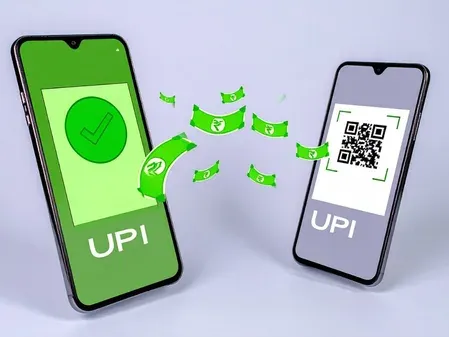
India's UPI Marks 10 Years, Dominates Global Digital Payments with 49% Share
Synopsis
As India's Unified Payments Interface (UPI) celebrates its 10th anniversary, it has emerged as a powerhouse in the digital payments landscape, accounting for 49% of global real-time transactions. Discover how UPI's rapid growth is transforming financial inclusion and setting a global standard.
Key Takeaways
49% of global real-time payments are processed through UPI.
UPI processed 21.70 billion transactions in January 2026.
Recognized as the world's largest real-time payment system by IMF.
UPI has transformed financial inclusion across diverse economic sectors.
International expansion includes countries like UAE and Singapore .
New Delhi, April 11 (NationPress) As the Unified Payments Interface (UPI) of India celebrates its 10th anniversary on Saturday, the government revealed that the nation now holds a significant 49 percent of global real-time payment transactions.
In January 2026, this instant payments framework processed a staggering 21.70 billion transactions, equating to a value of Rs 28.33 lakh crore. Notably, UPI constituted 81 percent of all retail digital transactions within India.
The International Monetary Fund has recognized UPI as the world's largest real-time payment system by volume, having been developed in less than a decade, according to an official statement.
Since its inception, UPI's transaction volume has surged 12,000-fold and its transaction value has increased over 4,000 times. The government emphasized that UPI's true impact extends beyond mere transaction numbers; its influence permeates domestic informal markets, reaching everyone from autorickshaw drivers to village mandis and street vendors.
“A domestic worker can transfer money across states in mere seconds using a basic smartphone. This system gradually bridges the gap between urban and rural, formal and informal sectors—signifying a pivotal movement towards financial inclusion,” the statement elaborated.
India’s digital payments framework has emerged as a global benchmark. Institutions such as the International Monetary Fund and the World Bank have acknowledged its extensive scope, efficiency, and inclusivity.
UPI's operations have also expanded internationally, reaching countries like the United Arab Emirates, Singapore, Bhutan, Nepal, Sri Lanka, France, Mauritius, and Qatar, thus facilitating cross-border transactions and remittances.
“This indigenous system, developed in less than ten years, now stands at the forefront globally. What began as an initiative to include the unbanked has evolved into the gold standard for real-time payments. From long queues to QR codes, India’s journey illustrates the strength of inclusive innovation,” the statement concluded.
Additionally, UPI is transforming into a more comprehensive financial platform. Features like UPI Lite enable rapid, small-value payments, while UPI AutoPay simplifies recurring expenses such as utility bills and subscriptions.
Furthermore, credit options on UPI have broadened by allowing access to pre-approved credit lines, with NBFCs and fintech companies providing loans, facilitating repayments, and presenting customized financial products.
aar/uk
Point of View
The advancements of UPI over the past decade highlight India's commitment to innovation and financial inclusion. The platform not only facilitates transactions but also bridges economic divides, setting a global precedent for digital payment systems.
NationPress
18 Sept 2026
Frequently Asked Questions
How has UPI impacted financial inclusion in India?
UPI has significantly improved financial inclusion by enabling quick and easy money transfers, allowing even those without traditional banking access to participate in the digital economy.
What are some key features of UPI?
Key features of UPI include instant money transfer, bill payments through UPI AutoPay, and small-value payments enabled by UPI Lite.
Which countries have adopted UPI?
UPI has expanded its operations to several countries, including the UAE, Singapore, Bhutan, Nepal, Sri Lanka, France, Mauritius, and Qatar.
How has UPI evolved since its launch?
Since its launch, UPI has grown exponentially, with transaction volumes increasing 12,000-fold and values soaring over 4,000 times, proving its effectiveness and popularity.