CM Yogi marks 12 years of tech-led transformation in India
Synopsis
The Chief Minister's Office of Uttar Pradesh invoked 12 years of technology-driven transformation, quoting CM Yogi Adityanath on India's reshaped identity through digital governance. The statement connects state-level initiatives to the broader Digital India policy arc since 2014.
Key Takeaways
The Chief Minister's Office of Uttar Pradesh posted a statement by CM Yogi Adityanath on June 12, 2026 .
The post credits 12 years of technology-led governance with giving India a new identity and driving comprehensive transformation.
The Digital India programme, launched in July 2015 , is the central policy vehicle underpinning this transformation narrative.
Uttar Pradesh has aligned its administrative initiatives with national digital governance priorities since CM Yogi Adityanath took office in March 2017 .
Key stakeholders include Indian citizens , state governments, and central ministries coordinating on digital infrastructure rollout.
Future focus areas include UP budget allocations for digital infrastructure and new central-state technology coordination mechanisms.
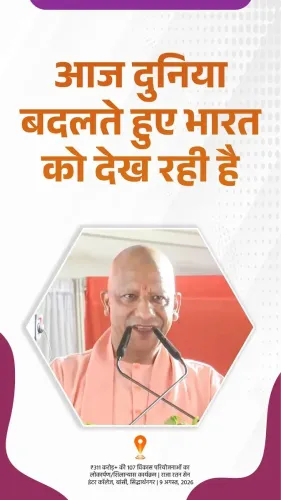
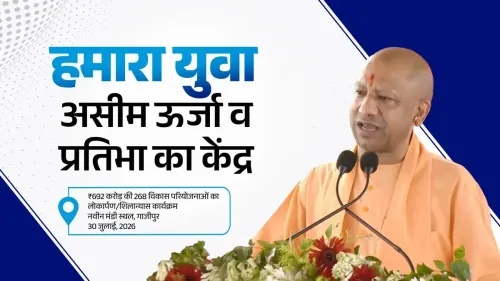
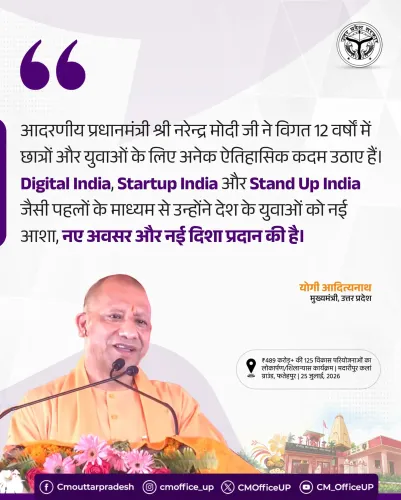
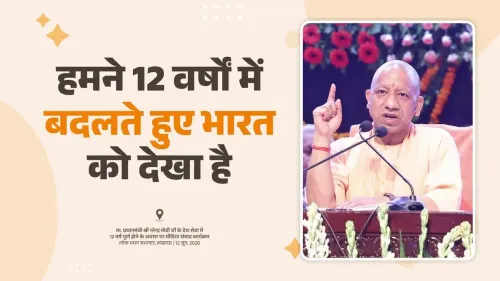
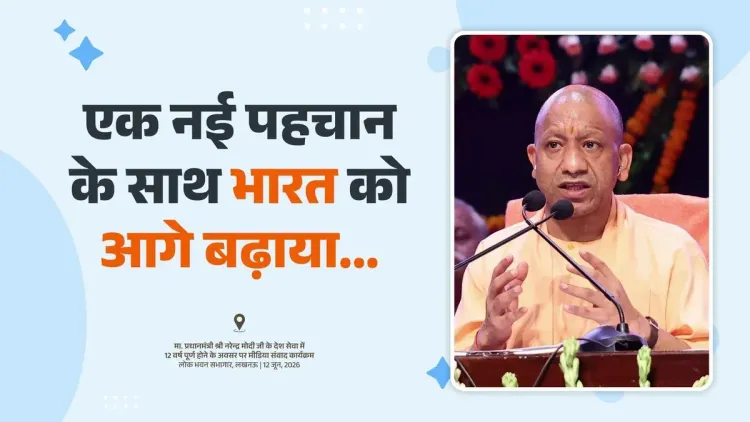
The Chief Minister's Office of Uttar Pradesh, citing Chief Minister Yogi Adityanath, on Friday, June 12, 2026, highlighted 12 years of technology-driven transformation that has reshaped India's identity and propelled its progress on the national and global stage.
Context
The post, shared by the official CMO account, quotes CM Yogi Adityanath as saying: 'टेक्नोलॉजी का उपयोग करते हुए व्यापक परिवर्तन की रणनीति के साथ भारत को नई पहचान देना और आगे बढ़ाना' — translated as 'Giving India a new identity and moving it forward with a strategy of comprehensive transformation using technology.' The statement frames the last 12 years as a period in which this vision moved from aspiration to visible reality.
The reference to 12 years broadly aligns with the period beginning in 2014, when the current central government took office and began a sustained push for digital governance across India's administrative landscape.
Policy Backdrop
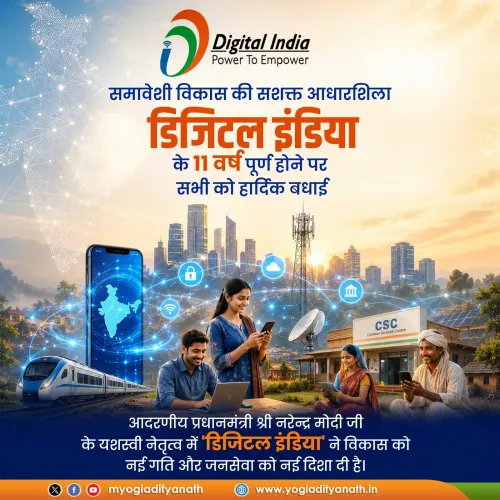
The Digital India programme, launched in July 2015, stands as the flagship expression of this technology-first approach. It aimed to transform India into a digitally empowered society and knowledge economy by expanding broadband connectivity, promoting e-governance, and building digital literacy at scale.
Prime Minister Narendra Modi, who has led the national government since May 2014, has consistently positioned technology integration as a cornerstone of governance reform. Uttar Pradesh, under CM Yogi Adityanath since March 2017, has aligned several of its own administrative initiatives with these central priorities, extending digital service delivery to one of India's most populous states.
From identity systems and direct benefit transfers to e-governance portals and digital infrastructure expansion, the policy lineage reflects a coordinated effort between central and state governments to modernise public administration through technology.
Stakeholders and Impact
The primary beneficiaries of this transformation arc are Indian citizens, particularly those in states like Uttar Pradesh where administrative reach and service delivery have historically faced structural challenges. Digital tools have enabled more efficient targeting of welfare schemes, reduced intermediary leakages, and improved access to government services in remote areas.
State governments have also emerged as key stakeholders, as technology adoption has reshaped how they interact with both the central government and their own populations. The alignment between Lucknow and New Delhi on digital governance priorities has been a defining feature of this period.
What's Next
Observers will be watching Uttar Pradesh's state budget allocations for digital infrastructure in the coming months, as well as any new central-state coordination mechanisms for technology projects that may be announced. The emphasis in CM Yogi's statement on 'comprehensive transformation' suggests continued prioritisation of technology as a governance lever rather than a one-time initiative.
As India moves deeper into the second half of this decade, the question is no longer whether technology will be central to governance, but how quickly its benefits can be extended to every citizen — a benchmark by which both the state and central governments will increasingly be measured.
Point of View
Positioning Uttar Pradesh as a committed partner in India's digital governance project. The statement serves a dual purpose: it reinforces the BJP's technology-and-development brand ahead of any upcoming political cycle, while also staking a claim for UP's role in that story. Framing technology as the instrument of 'comprehensive transformation' elevates it beyond a sectoral policy into an overarching governance philosophy. This kind of retrospective messaging is characteristic of a government consolidating its record and signalling continuity of direction.
NationPress
19 Sept 2026
Frequently Asked Questions
What did CM Yogi Adityanath say about technology and India's transformation?
CM Yogi Adityanath stated that using technology as a strategy for comprehensive transformation has given India a new identity and moved it forward — and that this vision has been realised over the past 12 years.
What is the Digital India programme?
Digital India is a flagship central government programme launched in July 2015 to transform India into a digitally empowered society through e-governance, broadband expansion, and digital literacy initiatives.
How long has CM Yogi Adityanath been Chief Minister of Uttar Pradesh?
Yogi Adityanath has served as Chief Minister of Uttar Pradesh since March 2017, overseeing the state's alignment with national digital governance priorities.
What does '12 years of transformation' refer to in CM Yogi's post?
The 12-year reference broadly corresponds to the period from 2014 onwards, when the current central government began a sustained push for technology-led governance reform across India.
What should we watch for next in UP's digital governance agenda?
Key things to watch include Uttar Pradesh's upcoming state budget allocations for digital infrastructure and any new coordination mechanisms between the state and central government on technology projects.