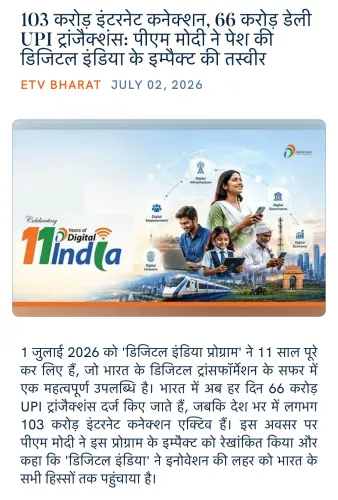
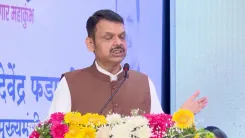
CM Yogi Marks 11 Years of Digital India Mission
Synopsis
Uttar Pradesh Chief Minister Yogi Adityanath marked 11 years of the Digital India programme on 1 July 2026, praising UPI, DBT, and DigiLocker as transformative tools that have made governance transparent and citizen services accessible, while linking the mission to the 'Viksit Bharat' vision.
Key Takeaways
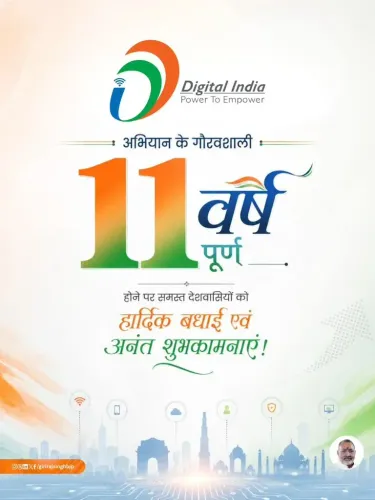
Digital India completed 11 years on 1 July 2026 , launched originally on 1 July 2015 .
CM Yogi Adityanath congratulated citizens and credited PM Narendra Modi's leadership for the programme's success.
Key components highlighted include UPI , DBT , DigiLocker , and digital payment infrastructure.
The Chief Minister linked the mission to the governing motto 'Sabka Saath, Sabka Vikas, Sabka Vishwas aur Sabka Prayas' .
The programme is framed as central to building a 'Viksit Bharat' (Developed India) by 2047 .
Uttar Pradesh has aligned state-level digital initiatives with the national Digital India framework.
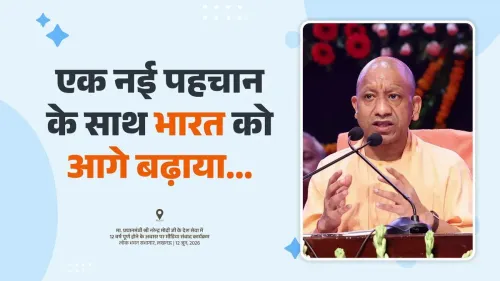
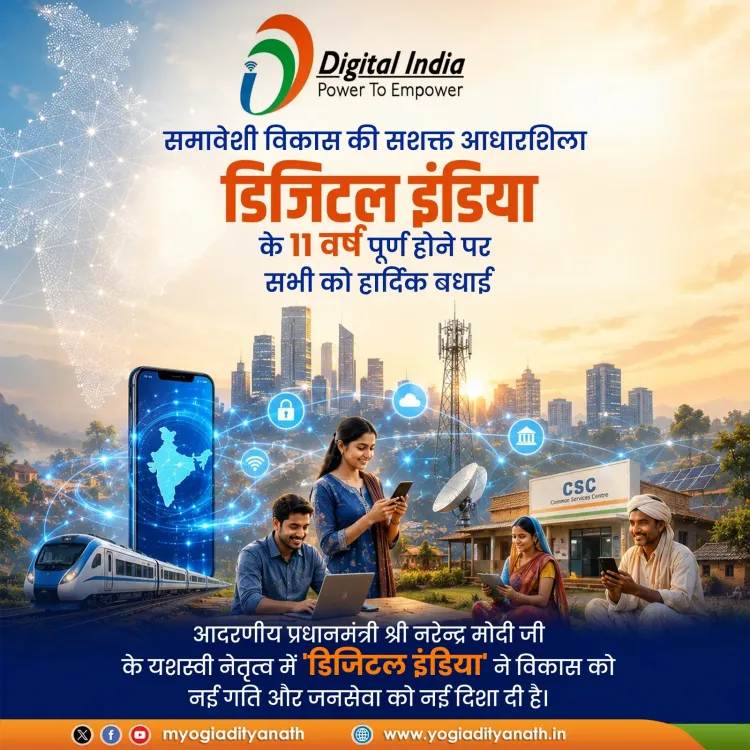
Uttar Pradesh Chief Minister Yogi Adityanath on Wednesday, 1 July 2026 congratulated the nation on the completion of 11 years of the Digital India programme, hailing it as a transformative initiative that has brought convenience, speed, and new opportunities to crores of citizens under the leadership of Prime Minister Narendra Modi.
Context
In his post on X, CM Yogi wrote — 'डिजिटल इंडिया के गौरवशाली 11 वर्ष पूर्ण होने पर देश वासियों को हार्दिक बधाई' — ('Heartfelt congratulations to the countrymen on the glorious completion of 11 years of Digital India'). He credited Prime Minister Modi's 'visionary leadership' for steering a mission that has made governance more transparent, accountable, and people-centric over the past decade-plus.
The Digital India programme was launched on 1 July 2015 by the Narendra Modi-led government with the stated goal of transforming India into a digitally empowered society and knowledge economy. Its anniversary on 1 July 2026 marks the programme's eleventh year in operation.
Policy Backdrop
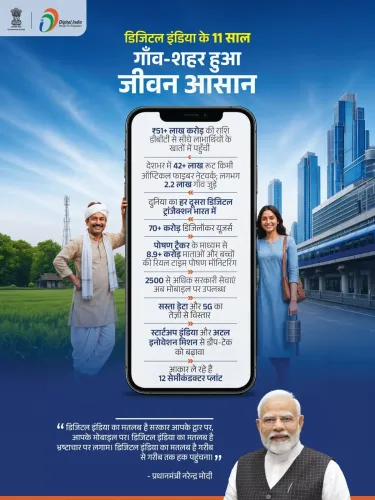
CM Yogi specifically highlighted several flagship components of the programme — Digital Payments, Direct Benefit Transfer (DBT), UPI (Unified Payments Interface), and DigiLocker — as services that have made citizens' lives simpler, safer, and more accessible. He described these tools as pillars of a governance model that has reduced leakages and brought welfare delivery directly to beneficiaries.
UPI, operated by the National Payments Corporation of India (NPCI), has grown into one of the world's largest real-time payments systems, processing billions of transactions monthly. DBT has channelled subsidies and welfare payments directly into beneficiaries' bank accounts, eliminating intermediaries. DigiLocker allows citizens to store and access official documents digitally, reducing dependence on physical paperwork.
The Chief Minister framed the initiative within the ruling party's governing philosophy, invoking the motto 'Sabka Saath, Sabka Vikas, Sabka Vishwas aur Sabka Prayas' ('Together with all, development for all, trust of all, and effort of all'), and linked the programme's success to the broader vision of a 'Viksit Bharat' (Developed India).
Stakeholders and Impact
The Digital India mission spans multiple ministries and departments, with its benefits reaching rural and urban citizens alike. Farmers receiving PM-KISAN payments via DBT, students accessing scholarship funds, and daily-wage workers using UPI-linked accounts are among the direct beneficiaries cited in official government assessments.
Uttar Pradesh, as India's most populous state, has been a significant theatre for Digital India's rollout. The state government under CM Yogi has pushed digital service delivery through initiatives such as the UP Nivesh Mitra portal for business clearances and expansion of Common Service Centres (CSCs) at the gram panchayat level, aligning state-level implementation with the national programme's goals.
What's Next
The eleventh anniversary of Digital India is expected to be marked by the central government with announcements around expanded digital infrastructure, including broadband connectivity in remote areas and deeper integration of Artificial Intelligence in public service delivery. CM Yogi's message signals continued political and administrative alignment between Lucknow and New Delhi on the digital governance agenda.
As India moves toward its 2047 centenary of independence — the 'Viksit Bharat' horizon — digital infrastructure is expected to remain a central pillar of both the BJP's political narrative and the government's policy architecture, with states like Uttar Pradesh playing a decisive role in determining ground-level outcomes.
Point of View
DBT, and DigiLocker, he anchors Uttar Pradesh's own digital governance record within a nationally celebrated success story, lending credibility to both. The invocation of 'Viksit Bharat 2047' signals that Digital India is no longer a standalone scheme but a foundational plank of the party's long-term electoral and development pitch. For the BJP, such coordinated messaging across the Centre and its largest state government serves to consolidate a techno-nationalist identity that resonates with aspirational, upwardly mobile voters.
NationPress
29 Sept 2026
Frequently Asked Questions
When was Digital India launched and how old is it in 2026?
Digital India was launched on 1 July 2015 by Prime Minister Narendra Modi , making it 11 years old as of 1 July 2026 .
What did CM Yogi say about Digital India on its 11th anniversary?
CM Yogi Adityanath congratulated citizens on the programme's anniversary, praised UPI , DBT , and DigiLocker as life-simplifying tools, and credited PM Modi's leadership for making governance more transparent and accountable.
What is UPI and how does it relate to Digital India?
UPI (Unified Payments Interface) is a real-time digital payments system operated by the National Payments Corporation of India (NPCI) and is one of the flagship components of the Digital India programme, enabling instant bank-to-bank transfers via mobile.
What is DBT in the context of Digital India?
DBT (Direct Benefit Transfer) is a mechanism under Digital India that channels government subsidies and welfare payments directly into beneficiaries' bank accounts, reducing leakages and eliminating intermediaries.
What is Viksit Bharat and how does Digital India connect to it?
Viksit Bharat (Developed India) is the central government's vision to make India a fully developed nation by 2047 , the centenary of independence. Digital India is considered a foundational pillar of this goal, providing the infrastructure for transparent governance and economic growth.