Mandaviya Flags Modi's FTA Push for India's Seafood Exports
Synopsis
On Independence Day 2026, Union Minister Mansukh Mandaviya amplified PM Modi's address highlighting how India's Free Trade Agreements are unlocking global markets for seafood exporters, spotlighting a sector the government is positioning as a trade-diplomacy success story.
Key Takeaways
Union Minister Mansukh Mandaviya shared PM Narendra Modi 's Independence Day remark on 15 August 2026 linking FTAs to seafood export growth.
PM Modi stated that Free Trade Agreements have created 'enormous potential' for India's seafood exports and are expanding their global reach.
India has pursued a series of bilateral trade pacts since 2020 , with marine products listed as a priority export category in several agreements.
The India-UAE CEPA (2022) was among the first pacts to extend preferential tariff treatment to Indian seafood.
Coastal fishing communities and seafood processing units stand to benefit directly if lower tariffs improve price competitiveness in partner markets.
Quarterly marine export data and new FTA signings affecting fisheries tariffs will be the sector's key metrics to watch.
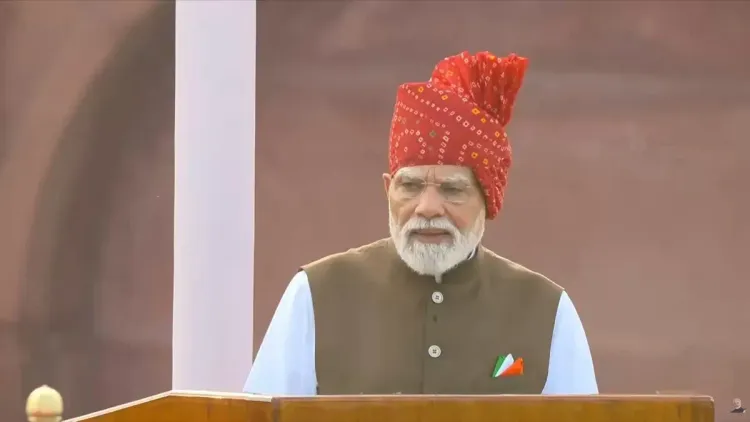
On Independence Day, 15 August 2026, Union Minister Mansukh Mandaviya amplified a pointed remark from Prime Minister Narendra Modi's national address — one that put India's fishing communities and seafood exporters squarely at the centre of the country's trade ambitions.
Quoting the Prime Minister directly, Mandaviya shared: 'FTA ke kaaran hamare Sea food niryaat ki bahut sambhavna bani hai... hamare Sea Food ki duniya bhar mein pahunch badh rahi hai' — 'Because of Free Trade Agreements, enormous potential has opened up for our seafood exports... the global reach of our seafood is growing.'
FTAs as a lever for the fisheries sector
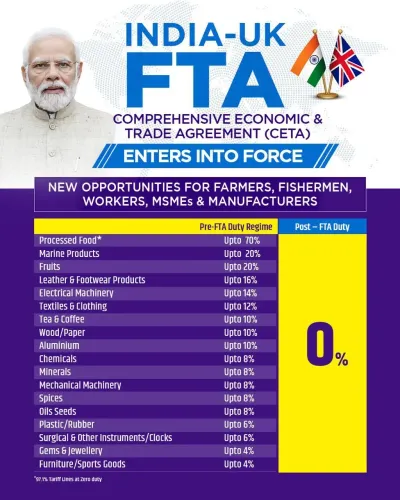
India's push to sign bilateral and comprehensive trade pacts since 2020 has consistently placed marine products among priority export items. The landmark Comprehensive Economic Partnership Agreement (CEPA) with the UAE, signed in 2022, was one of the earliest to extend preferential tariff treatment to Indian seafood — opening a high-value Gulf corridor for exporters.
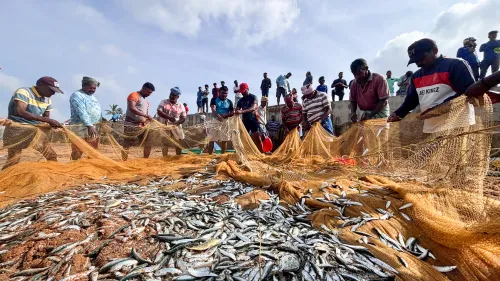
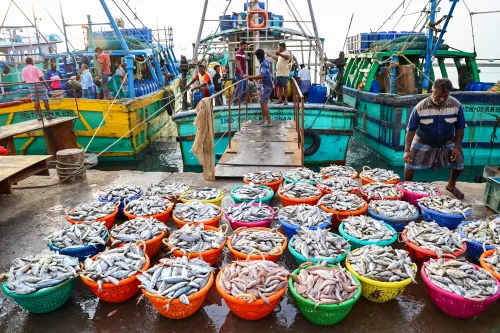
The logic is straightforward: lower tariffs in partner markets translate directly into price competitiveness for Indian shrimp, fish, and processed marine goods on supermarket shelves from Dubai to beyond. For coastal fishing communities, that competitiveness can mean steadier incomes and larger order books.
Why Independence Day messaging matters here
Prime Ministers have long used the Red Fort address to signal which economic stories the government wants the country to own. Singling out seafood exports — a sector dominated by small-scale operators and coastal states — carries a deliberate message: that the gains from trade diplomacy are reaching beyond boardrooms to jetties and processing plants.
Mandaviya's decision to amplify the remark on his own platform underlines how the government is distributing this narrative across ministries, not just through the commerce portfolio.
What exporters and analysts will watch next
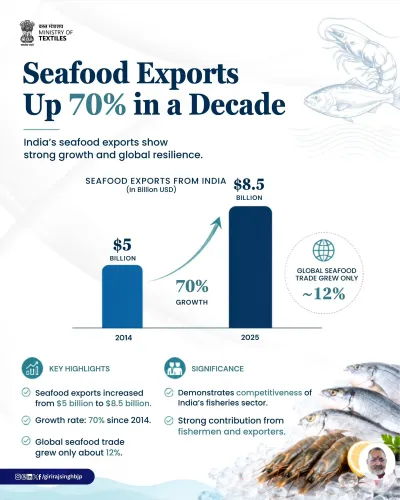
The real test will come in quarterly marine products export data and the fine print of any new FTA signings that affect fisheries tariffs. India's seafood export sector has faced headwinds — quality rejections in some markets, competition from Southeast Asian producers — and the industry will be watching whether the political momentum translates into measurable volume and value gains at the dock.
For now, the Independence Day spotlight on seafood is a signal that the sector's global ambitions have found a voice at the highest level — and that the government intends to keep it there.
Point of View
Coastal constituencies — a politically significant audience. By routing the message through a Labour and Sports minister rather than the Commerce portfolio, the BJP signals that FTA benefits are a whole-of-government story, not a technocratic one. It also quietly pre-empts opposition narratives that trade liberalisation favours large industry over small producers. Whether the political framing holds will depend on whether export data in the coming quarters validates the optimism.
NationPress
30 Sept 2026
Frequently Asked Questions
What did PM Modi say about seafood exports on Independence Day 2026?
PM Modi stated that India's Free Trade Agreements have created enormous potential for seafood exports and that Indian seafood is reaching a growing number of markets worldwide.
How do Free Trade Agreements help India's seafood sector?
FTAs reduce import tariffs in partner countries, making Indian seafood more price-competitive on foreign shelves and opening new markets for exporters of shrimp, fish, and processed marine products.
Which FTA has most benefited Indian seafood exports so far?
The India-UAE Comprehensive Economic Partnership Agreement, signed in 2022, is among the most significant, as it extended preferential tariff treatment to Indian marine products and opened a key Gulf corridor.
Why did Mansukh Mandaviya share PM Modi's seafood export remark?
As a senior Union Minister, Mandaviya amplified the Prime Minister's Independence Day statement to highlight the government's trade policy achievements for coastal and fisheries communities.
What should India's seafood exporters watch for next?
Exporters should track quarterly marine products export data and announcements of new FTA signings that include fisheries tariff concessions, as these will determine whether the political momentum translates into real volume and revenue gains.